The lost magic
We pretend to worship culture, while ruthlessly bulldozing the very artists who keep it breathing, says Sakshi Priya
How will a society preserve its rich culture if it abandons the exact artists keeping it alive? We need to preserve our culture. We need to preserve the artist. We need to present raw talent to a world starving for real magic. Yet, we watch the lost artist wander a city with zero stage left to stand on.
I know fear. I know what it means to sit in deep pain, wanting to speak out, while the soul violently refuses to let a single word escape. Looking at the displaced masters of Kathputli Colony today, I see that exact same suffocating silence hanging over them. Society loves to talk about saving our heritage, yet we willingly abandon the people keeping that history alive. We crave real magic, but we force our most gifted performers to wander a city with absolutely no stage left to stand on.
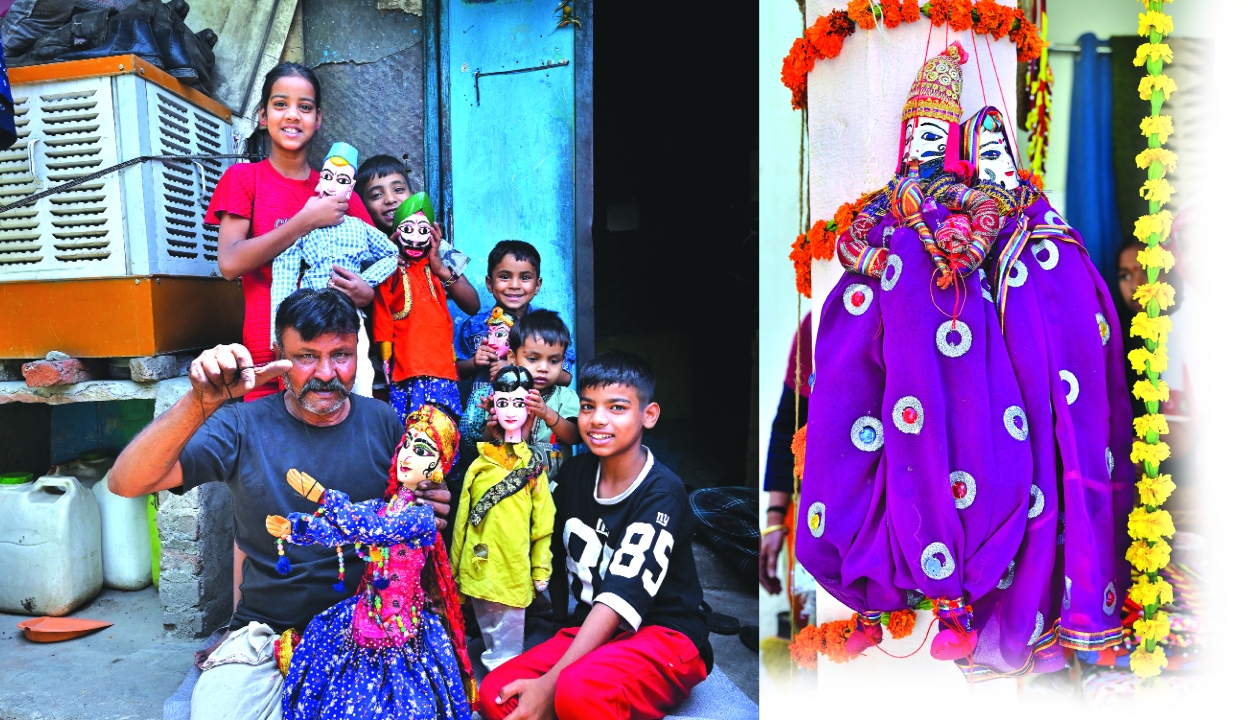
Decades back, wandering families travelling from Rajasthan found a bare patch of earth near Delhi’s Shadipur Depot. They pitched their tents and stayed. Over the years, those fragile tarps grew into a chaotic, dizzying knot of brick walls and tin roofs. Commuters driving past those cramped alleys would label the place a slum and look away, completely blind to the reality breathing inside. The best street performers alive were all in there together, acrobats and magicians and fire-breathers sharing walls and food and air, the whole block so packed and alive it functioned like a single organism. Nobody taught anybody formally. You just lived there and absorbed it, picked it up through proximity and repetition and years of watching someone better than you do the thing you were trying to learn. People flew in from the other side of the world for this, crossing continents just to stand inside those lanes for a few hours and go home different people. Then the bulldozers came.
Eleven agonising years have passed since that violent day. Everything fractured, and everyone scattered. Kathputli Colony is gone entirely, wiped clean off the city map. These performers are now shoved into the dense, suffocating transit camps of Anand Parbat. The wider public moved on quickly, forgetting the demolition and the uprooted talent. Erasing the people guarding our rich history because their address changed remains a catastrophic cultural failure. Wiping out that physical space destroyed an irreplaceable library of memory.
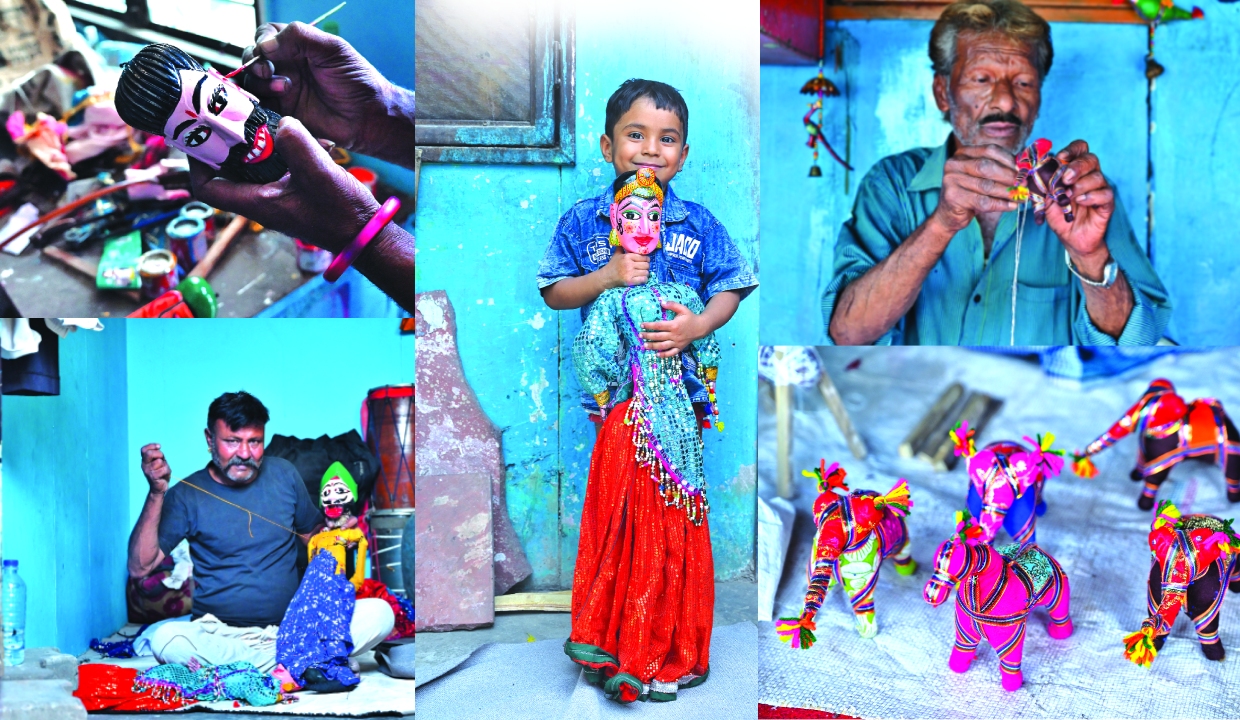
Master puppeteer Prakash Bhat sits in a stifling room in Anand Parbat, remembering a time when his family commanded global respect. “My father was a puppet king in our colony,” Bhat recalls, his voice carrying the heavy weight of a lost empire. “He visited the whole of India and started the Song and Drama Division first. He went to America to perform and build a life there. Rajiv Gandhi was Prime Minister at the time and made a promise, go back to India and your house will be waiting for you. So he went back. The house never came.
Today, those grand stages are a ghost story. Prakash waits hours for a public bus to reach distant wedding gigs, forced to play the drum to put food on the table. His wooden puppets, hand-carved pieces of his own bloodline, sit in unsecured sheds waiting to be stolen. Two months ago, he did a show for two thousand five hundred rupees, left his stage gear in the shed, and came back to find five thousand rupees’ worth of equipment gone. He did a show and walked away poorer. That is what he called a double loss.
These masters have zero room to practice or train the youth, threatening the absolute extinction of their craft. Taking their talent to public areas like Connaught Place or India Gate to earn a living invites immediate police harassment. “I want the government to help us get a pass so that we can perform wherever we want without the police troubling us,” Bhat pleads. Without that basic permission, the younger generation will abandon the art entirely, seeing zero financial future in manipulating strings.
The puppets sitting quietly in dark trunks are what the city left behind when it took everything else. These performers lost their homes, their stages, their income, and any platform they ever had, pushed into concrete boxes and told to be grateful. But something in them refused to go quiet. An old master held up a battered marionette in that half-empty camp and said the only thing left worth saying. An artist carries that thing inside them all the way to the end, and it does not go, not when every promise made to them rotted, not when the walls came down, not when the world moved on and forgot there was ever a name to remember.
Find them a new stage
Families who carried generations of art in their hands were simply scattered overnight, forced to trade their heritage for survival. If we actually care about the stories that built this city’s cultural landscape, we have to help these displaced artists find a new stage. Until then, it is the artists themselves-their calloused hands, their watchful eyes, their quiet mastery-who remain boxed away in the dark. Their old songs will go unsung, waiting for the day we finally ask them to create once more.
Life Bound By Strings
If Kathputli Colony had stayed standing the younger generation would have grown up the way Prakash Bhat’s son grew up, beside the dhol, inside the work, learning by watching and repeating and absorbing it through the walls. That is how this kind of craft lives on, not in classrooms but in proximity, in daily contact with people who have been doing it their whole lives. What is shrinking is not just the art. It is the whole world that made the art possible.