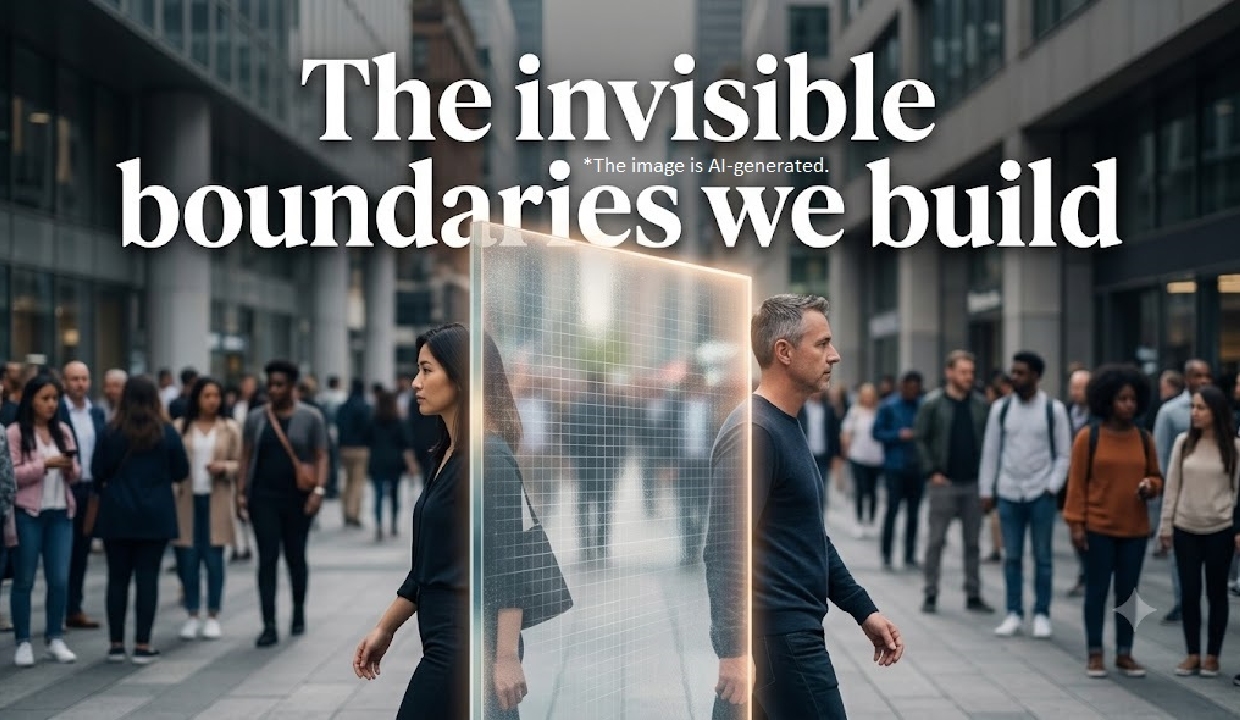
The invisible boundaries we build
Urban India has changed dramatically over the past few decades. Our cities are more prosperous, our homes more comfortable, and our lifestyles more modern than those of previous generations. Yet beneath this visible progress, some older attitudes continue to survive in ways that are often difficult to acknowledge. A few recent discussions within my own residential society brought this reality into sharp focus. One discussion centred around a domestic worker who had left a part-time arrangement to accept a full-time position elsewhere. The response from some residents was revealing. There was an expectation that the community should somehow regulate such movement, as though the worker’s freedom to choose a better opportunity was negotiable.
The same discussion produced another suggestion that was even more troubling. Some residents argued that domestic workers should not use the same lifts as apartment owners. The argument was presented as practicality and convenience. Yet beneath it lay an assumption that certain people, despite working there every day, somehow belonged to a different category. Another discussion arose when a resident discovered that the husbands of certain domestic workers employed in the society had criminal records. The concern for safety was understandable. What puzzled me, however, was the assumption that the actions of those men somehow cast suspicion upon the women themselves. We routinely argue that individuals should be judged on their own merits, yet that principle often appears to weaken when applied across social and economic boundaries.
What struck me was not the existence of such views, but the fact that they were expressed by educated, successful, and professionally accomplished individuals. Economic progress, it seems, does not automatically eliminate social prejudice. Perhaps this is because many forms of discrimination no longer present themselves openly. They survive in subtler ways-in assumptions about status, in expectations about who belongs where, and in beliefs about whose choices deserve respect and whose do not.
The irony is difficult to miss. Many of us rightly expect dignity, fairness, and equal opportunity in our own professional lives. We resist discrimination when it affects us. Yet we sometimes struggle to extend the same principles to those whose lives intersect with ours through work and service. What makes this particularly significant is that such attitudes are no longer confined to inherited social structures. They increasingly appear within gated residential complexes that pride themselves on education, professionalism, and progressive values. The physical distance between people may have narrowed as they live within the same gated complexes, use common facilities, and participate in community events. Yet social distance often remains intact. Old assumptions continue to survive beneath the veneer of modernity and progress. We may share addresses without sharing perspectives. We may inhabit the same community while unconsciously maintaining invisible boundaries between those who belong and those who merely serve. The challenge before urban India is not merely to build better infrastructure, but to build more inclusive communities. Modern urban spaces bring together people from vastly different social and economic backgrounds. The real test is not the quality of their infrastructure, but their capacity to treat every individual with dignity. Progress is not measured only by rising incomes or professional success. It is also measured by our willingness to recognise the humanity of those whom society has traditionally placed on the other side of invisible social boundaries. Modern buildings can bring people closer together, but only mutual respect can make them a truly inclusive and compassionate community.
The writer is a founder of Kala - Krazy About Literature And Arts, is an author, speaker, coach, arbitrator, and strategy consultant; Views presented are personal.
Leave a Comment
Comments (1)
Yes, the irony is difficult to miss. I also agree with your view point that every individual has to be respected and with dignity. But no one treats the other person by their potential. Only a few did it ever. I'm glad that the author empathise with workers on their betterment issue. But why would he think that everyone will care? Money always changes attitude. His views must be personal and should be respected.