The export of skill, the risk of scarcity
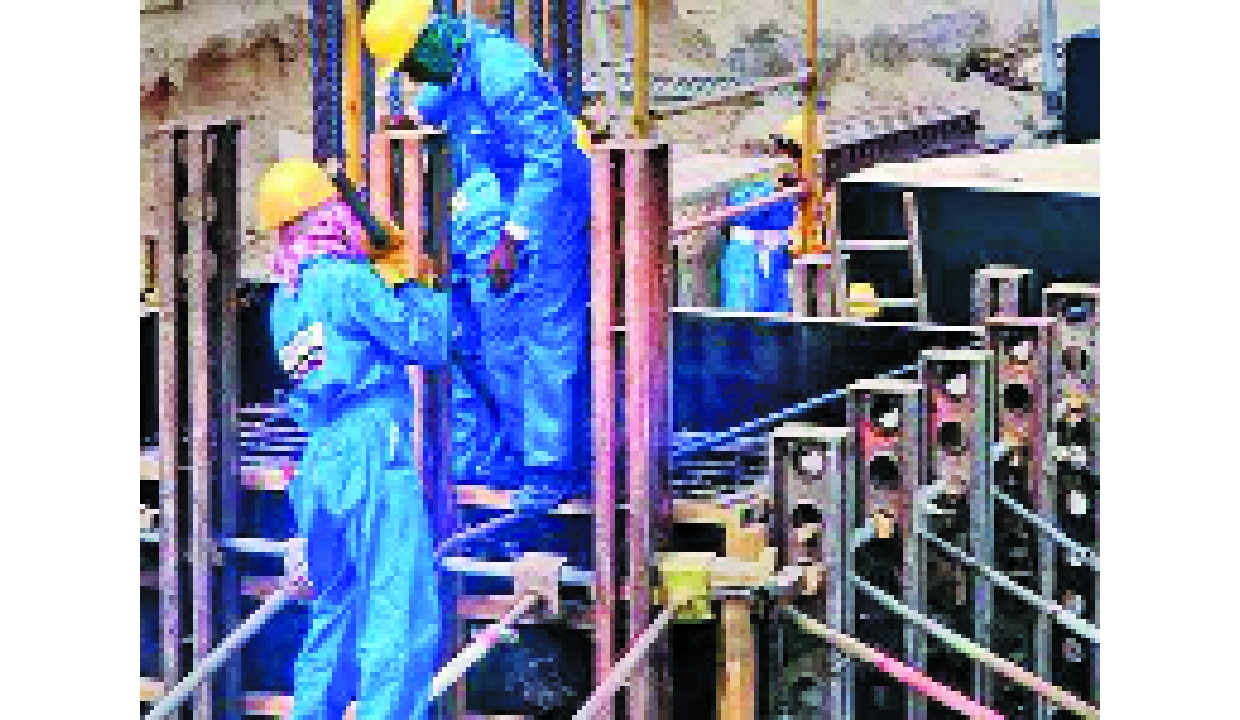
A Russian construction firm trains Indian recruits on-site to fit glass and aluminum because it cannot find enough workers at home. A Japanese care-home operator flies six Indian nurses to Osaka for nine months of language instruction before letting them near a patient. An Israeli builder, stripped of the Palestinian workforce he relied on for decades, tells officials he needs "close to 100,000" Indian workers to restart construction. These are not isolated anecdotes. They are data points in one of the most consequential and under-appreciated labour-market shifts of the decade.
The structural story is demographic, and it is not subtle. Rich countries are ageing faster than their training systems can replace blue-collar workers. In 2023, 75% of EU firms reported difficulty filling skilled roles. Germany faces an annual gap of roughly 200,000 construction workers. Japan projects a shortfall of 570,000 care workers by 2040. Russia, bled by war and out-migration, needs 789,000 more construction workers by 2030 and, according to its own Higher School of Economics, may require over 12 million foreign workers by 2032. Across all these economies, the common denominator is the same missing person: a trained tradesman who does not exist locally.
India exists as the answer. Its working-age population is enormous, its wages are globally competitive, and it already has deep institutional muscle memory for labour migration, built over five decades of sending workers to the Gulf. What is new is the direction of travel. Workers are now heading to Warsaw, Tokyo, Tel Aviv, and Moscow, not merely to Riyadh and Dubai. The numbers validate this shift starkly. In 2021, Russia issued roughly 5,000 work permits to Indians. By 2025, that figure had reached 72,000, nearly one-third of Russia's entire migrant-worker quota. Italy, via its 2026 Flow Decree, has approved nearly 500,000 work permits for 2026-28 targeting construction, agriculture, and hospitality. Japan has signalled plans to recruit 50,000 skilled Indians over five years. India's Ministry of External Affairs has signed mobility agreements with at least ten countries since 2024, including Germany, Italy, France, Japan, Denmark, the UK, and Taiwan.
Here is where the triumphalist reading breaks down. India's own economy needs the same workers the world is recruiting away from it. The construction and real-estate sector alone is projected to require 30 million additional workers by 2030, including 10.5 million skilled tradespeople. Delhi, Mumbai, and Bangalore are building housing, metros, and data parks at a pace that would absorb every available mason and electrician domestically. Knight Frank's analysis suggests that at current trajectories, urban infrastructure projects are already facing delays for want of skilled labour. And a Canadian analysis cited in the underlying data warns bluntly that within five years, India itself could "face shortages of plumbers, electricians, and carpenters as richer countries aggressively recruit the workers they no longer have."
This is the paradox India's policymakers have not yet named clearly enough to address. The country sits at the centre of a global labour arbitrage that benefits its workers and its foreign-exchange account, while simultaneously eating into the skilled-trades base that its own Viksit Bharat ambitions depend on. The $135 billion remittance line is both evidence of success and a signal of structural risk.
The mechanism is straightforward. Wages in Japan or Germany for a trained caregiver or electrician are multiples of prevailing Indian rates. For individual workers, the rational choice is obvious. Training institutions, sensing the premium, will increasingly orient graduates toward export. In a country where vocational education has long been stigmatised relative to white-collar degrees, any market signal that dignifies trades work is welcome. But if the signal flows only outward, India is left with a pipeline that trains workers for others.
India's draft Overseas Workers Bill proposes insurance and grievance mechanisms. It addresses symptoms. The deeper need is a managed labour export framework before flows outrun any governance structure entirely.
Three steps matter. First, extend emigration data infrastructure to non-ECR destinations and make data-sharing a standard clause in every bilateral mobility agreement. The current tracking gap is a national blind spot on a market generating tens of billions in foreign exchange. Second, treat skills training for export as industrial policy. If Germany needs 200,000 construction workers a year and India can supply them, that is a sovereign revenue stream worth engineering with curriculum standards, language certification, and sector-specific pathways. Third, India needs a domestic trades reservation policy.
Some share of trained tradespeople must be priced or incentivised to stay. Subsidised wages for domestic projects, fast-tracked certification for returning migrants, and retention quotas for vocational institutes are all instruments worth reaching for. No rich country depletes its skilled workforce without constraint. India need not either. The global demand for Indian blue-collar labour is structural, not cyclical. It will intensify as the demographics of wealthy nations worsen and India's training system expands. The question is whether it represents India capturing a strategic advantage, or India liquidating one.
Suresh Prabhu is a former union minister and parliamentarian. Shobhit Mathur is the co-founder and vice-chancellor of Rishihood University; Views presented are personal.