The CAPF (General Administration) Bill 2026: A landmark step towards a stronger, more humane and unified security framework for India
In the course of my service from leading anti-Naxal operations as Superintendent of Police in Odisha’s remote and insurgency-affected districts like Koraput, Nabarangpur and Nuapada, to commanding ITBP battalions at altitudes exceeding 15,000 feet along the Indo-Tibetan border, and finally guiding the Odisha Police as Director General, I have witnessed how India’s internal and border security depends on two equally vital pillars: operational synergy across institutions and genuine care for the men and women who serve on the front lines.
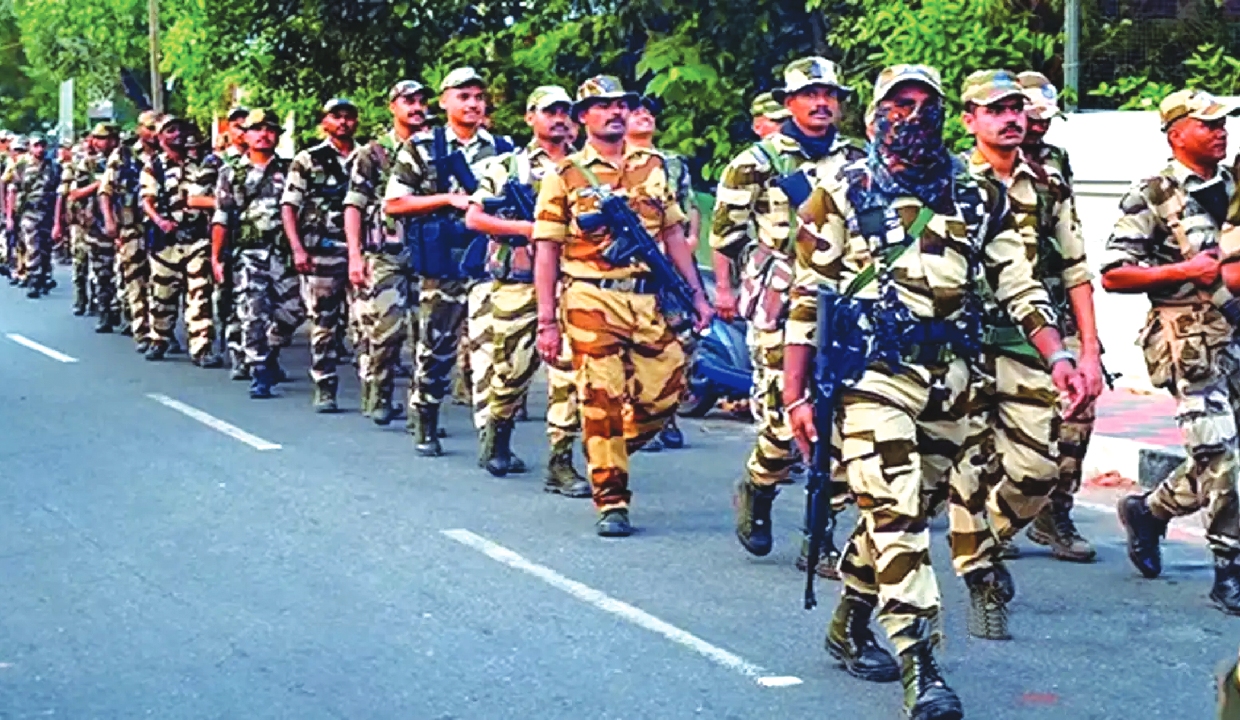
The Central Armed Police Forces (General Administration) Bill 2026 stands as a historic achievement that strengthens both pillars simultaneously. For the very first time since Independence, this single, comprehensive legislation codifies and unifies the administrative framework governing the five major Central Armed Police Forces—CRPF, BSF, CISF, ITBP and SSB—replacing a patchwork of separate rules, executive instructions and ad-hoc practices with clear, transparent statutory provisions.
This codification is transformative. It brings recruitment, promotions, cadre review, service conditions, disciplinary procedures, welfare measures, postings, transfers and grievance redressal under one legal umbrella. What were once discretionary administrative decisions or subject to frequent changes now become enforceable statutory rights. For the over ten lakh personnel—especially the constabulary who form the true backbone of these forces—this shift delivers greater certainty, predictability, fairness and dignity throughout their careers.
The Bill is particularly landmark for the jawans and lower ranks who endure the harshest conditions: months-long deployments in dense forests, snow-bound Himalayan passes, scorching deserts, or high-risk industrial security duties. By converting welfare provisions, timely promotions, medical facilities, family accommodation norms, leave entitlements and pension-related matters into codified law, it ensures these hard-earned entitlements are no longer dependent on changing administrative whims. This is not merely procedural reform; it is a humane recognition of the extraordinary sacrifices made by constables, head constables and assistant commandants who risk their lives daily for national security.
During my district tenure in Odisha in the 1990s and early 2000s, I saw how prolonged uncertainty over promotions, postings and welfare support affected morale among the ranks who bore the heaviest burden in counter-insurgency operations. Later, while leading ITBP companies and battalions in Ladakh and Arunachal, the same issues surfaced—troops operating in sub-zero temperatures with limited connectivity, yet facing delays in routine service matters. A clear, statutory framework would have provided the psychological and material reassurance that every soldier deserves. As DGP, when coordinating large-scale CAPF deployments during elections, communal situations or Maoist incidents, I observed how predictable service rules directly enhanced motivation, discipline and operational effectiveness among the constabulary.
Importantly, it must be recognized that IPS officers are recruited directly at the level of Superintendents of Police (SP), while Assistant Commandants in the CAPFs enter at a rank equivalent to Deputy Superintendents of Police (DySP) in state police services. Although both recruitments occur through the Union Public Service Commission (UPSC), the IPS is selected via the country’s most rigorous and competitive examination—the Civil Services Examination—where only around 150-200 of the nation’s top talents are chosen from millions of applicants each year. This rigorous selection process equips IPS officers with a broad, strategic perspective, administrative acumen, and the ability to navigate complex federal and inter-agency dynamics—qualities that have proven invaluable in coordinating operations across state and central forces.
Additionally, unlike military services, which often operate in more defined combat environments, CAPF services frequently require interaction with civilians in diverse and sensitive contexts—such as crowd control, election duties, anti-insurgency operations in populated areas, or industrial security. This demands a humane, citizen-centric approach, emphasizing restraint, public trust-building, and adherence to the rule of law even under extreme provocation. The statutory framework in the Bill reinforces this by codifying service conditions that support professional, empathetic policing rather than purely militaristic responses.
At the same time, the Bill creates hundreds of new senior posts for CAPF cadre officers through structured cadre reviews and restructuring, opening genuine, merit-based pathways for advancement. It honours long-standing aspirations while wisely preserving the time-tested practice of All India Service deputation at apex command levels. This balanced approach ensures that senior leadership retains the broad national perspective, cross-institutional networks and federal coordination ability that I relied upon throughout my career—whether liaising between state police and CRPF during joint anti-Naxal drives, or aligning ITBP operations with Army, IB and local administration along sensitive borders.
This integration is the living embodiment of Sardar Vallabhbhai Patel’s visionary All India integrative approach. As the chief architect of modern India’s administrative framework, Sardar Patel insisted that the Indian Police Service must function as a national steel frame officers who move seamlessly across states, central forces and intelligence agencies, carrying with them a unified understanding of India’s security needs. He designed the IPS precisely so that leadership would never be confined to narrow institutional silos but would always remain connected to the larger republican order. The CAPF Bill 2026 upholds this foundational Patel doctrine by maintaining the integrative mechanism at the highest levels while simultaneously empowering CAPF officers with statutory rights and expanded opportunities.
The nation has repeatedly seen the strength of this integrative model through the supreme sacrifices of legendary IPS officers who operated across multiple systems with courage and distinction. Randhir Prasad Verma, IPS, walked alone into a bank seized by armed Khalistani terrorists in Dhanbad in 1991 and laid down his life fighting them with his service pistol, earning the Ashoka Chakra posthumously. Hemant Karkare, IPS, Maharashtra ATS Chief, coordinated the 26/11 Mumbai response under live fire at Cama Hospital before making the ultimate sacrifice. KS Vyas, IPS, architect of the Greyhounds counter-insurgency doctrine in Andhra Pradesh, was assassinated by Naxals for his pioneering work that later shaped the CRPF’s CoBRA units. These officers, and countless others like them, proved in blood that leadership forged through national integration delivers results that no single-force silo can match.
From a national standpoint, this first-ever comprehensive statutory codification ends decades of fragmentation, modernises governance, reinforces institutional integrity and upholds Sardar Patel’s vision of a cohesive, integrative security architecture for a diverse federation.
Reflecting on decades of service—from jungle patrols in Odisha to high-altitude border vigil and statewide command—I am convinced that the CAPF (General Administration) Bill 2026 will significantly enhance national security by combining greater fairness and motivation for the constabulary with the unified command ethos our country requires. It is reform that is fair, humane, forward-looking and firmly in the national interest.
This landmark legislation deserves the wholehearted support of every citizen who values a stronger, more equitable and truly unified security apparatus for our great democracy.
Former Inspector General, Indo-Tibetan Border Police. Ex Director General of Police, Odisha; Views presented are personal.
Leave a Comment
Comments (7)
The CAPF General Administration Bill 2026 is a blatant legislative sabotage of the Supreme Court’s 2025 mandate. While the Court ordered an end to IPS-driven stagnation by recognizing CAPF as an Organized Group ‘A’ Service, this Bill codifies the status quo: it reserves 50% of IG posts and heavy ADG quotas for short-tenure IPS transients. Cadre officers spend decades in the trenches—from sub-zero outposts to Maoist jungles—leading from the front and living in bunkers with their jawans. Yet, this Bill ensures "outsiders" parachute in for brief stints to hijack strategic credit, while actual commanders rot in the same rank for 20 years. The promised "additional posts" are mere political window-dressing to keep apex leadership an elite private club. By nullifying the judiciary's directive, Parliament has institutionalized credit theft. India’s frontline warriors deserve leadership from their own battle-hardened ranks, not a lifetime of playing second fiddle to IPS privilege.
IPS shameless on peak
Again a fantasist pins down his idea he is far detached from. Wonder why these arm chair philosophers do not propogate the opposite, CAPF officers being deputed to their arms to paint a rosy picture they think of.
Amazed how confidently and shamelessly One can lie.
It is like taking biblical version of reference book or code of practices for emoluments and welfare; which is overdue . welcome. Please don't bring a reference to IPS here where there is reservation system called social efficacy which doesn't give efficiency. While military no such thinking. While IPS is on duty for efficiency, militery is both efficiency and efficiency. 2) Dy SP and SP wrong comparison. UPSC don't give direct SP post. 3) the system should focus on efficiently to quell the garbage of emotions from services. The reason is all staff have to obey the Lordship of superior command. Latest example, court ruling that officer disobey superior order by not following rituals in gurudwara. A genuine appeal by officer for undue disciplinary action. 4) there is peace time and action time in forces. But police don't have such distinction; they have to work in fragile society.