Tarique Rahman sworn in as Prime Minister of Bangladesh
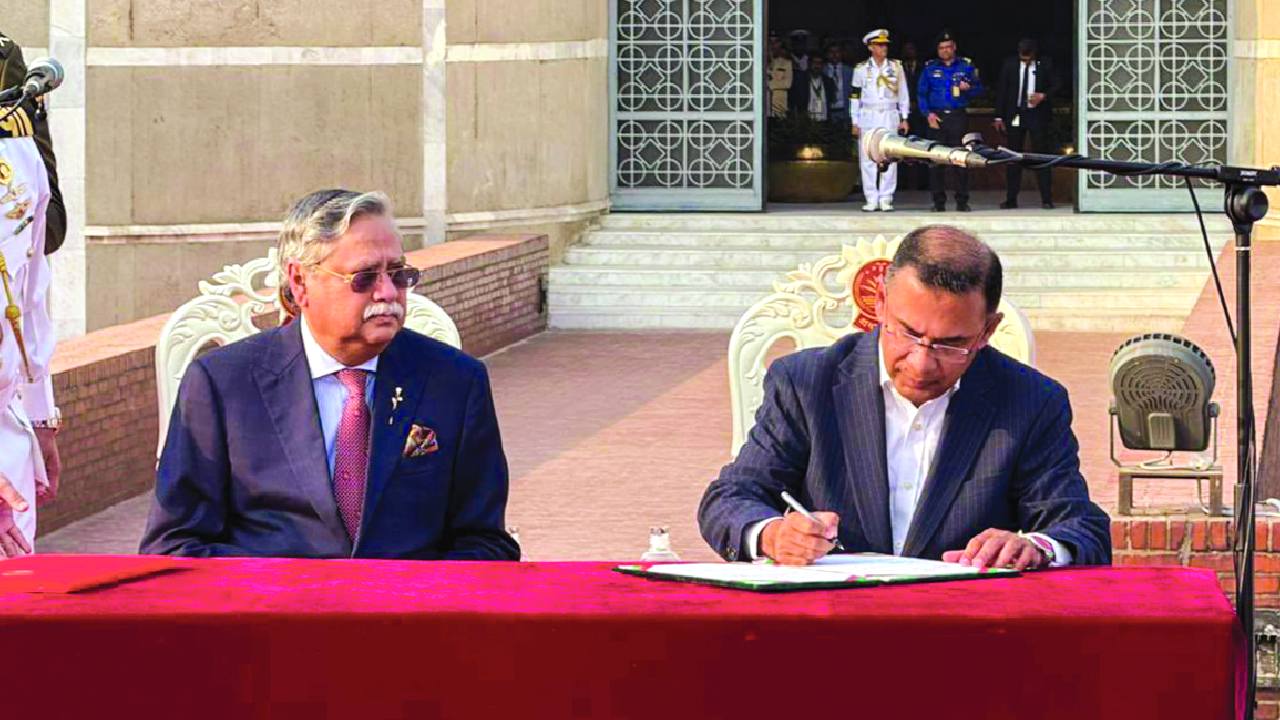
Tarique Rahman was sworn in as the new Prime Minister of Bangladesh on Tuesday evening. Rahman and his council of ministers took the oath of office at a ceremony held at the South Plaza of the National Parliament Building in Dhaka in the presence of around 1,200 dignitaries from home and abroad.
The Bangladesh Nationalist Party (BNP) led by Rahman, secured a decisive mandate, winning 209 of the 297 contested seats. The right-wing Jamaat-e-Islami claimed 68 seats, emerging as the second-largest bloc. The Awami League, led by former PM Sheikh Hasina, was barred from contesting the polls.Earlier in the day, newly elected Members of Parliament were sworn in by Chief Election Commissioner AMM Nasir Uddin, formally paving the way for the formation of the new Government.
In his remarks after taking the oath, Rahman emphasized national unity, democratic governance and economic revitalization as top priorities for his administration.
On the sidelines of the swearing-in ceremony, Om Birla, Speaker of India’s Lok Sabha, called on PM Rahman and conveyed the greetings and best wishes of Indian PM Narendra Modi.
During the meeting, Birla handed over a formal invitation from PM Modi to Rahman, inviting him to undertake an official visit to India at a mutually convenient time. The gesture was seen as a reaffirmation of the longstanding bilateral ties between New Delhi and Dhaka.
Birla, who arrived in Dhaka to attend the ceremony, was received by senior officials of Bangladesh’s Ministry of Foreign Affairs upon his arrival. Diplomatic observers noted that the high-level outreach underscores India’s intent to engage closely with Bangladesh’s newly elected leadership.
Rahman’s assumption of office marks the first time in decades that a male leader has held the premiership in the country of roughly 170 million people.
The BNP has also declined to take an additional oath as members of a proposed Constitution Reform Commission associated with the “July Charter” referendum held alongside the general election. Party leaders have maintained that the council’s provisions have not yet been formally incorporated into the Constitution.
With a strong parliamentary majority and renewed diplomatic engagement from key regional partners, the new Government now faces the task of translating electoral momentum into policy action and stability for Bangladesh.