Table with Moral - Raja Harishchandra and the Ultimate Test of Integrity (Markandeya Purana)
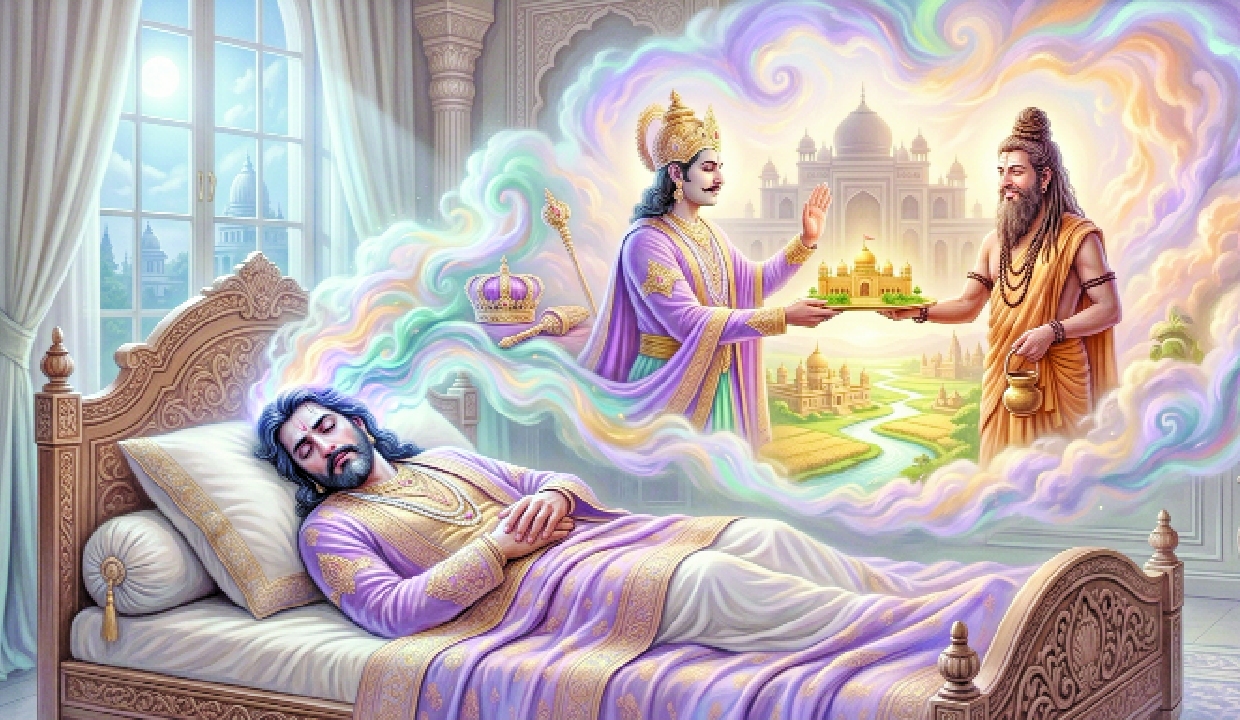
In the Treta Yuga, King Harishchandra of the Ikshvaku line ruled with a reputation that reached the heavens. He was known above all for an unyielding vow: never to utter a falsehood, never to break a promise once given. Prosperity and peace flourished under his just hand. His queen Shaivya and young son Rohitashva shared a life of quiet dignity.
To test the depth of this integrity, sage Vishwamitra employed his divine powers. In a vivid dream, he caused the king to offer him the entire kingdom. When Harishchandra awoke, the memory of the pledge remained clear and binding. Without hesitation or complaint, he honoured the dream-promise, abdicated his throne, and departed with his family, reduced at once to absolute poverty.
Separated from wife and child, the former king accepted the lowest of labours, which was service at a cremation ground under a chandala master. Day after day he collected the mandatory fees for the burning of the dead, performing his duty with the same scrupulous honesty he had once brought to kingship.
Tragedy struck when Rohitashva died of a snakebite. Shaivya, herself reduced to servitude, carried the small body to the cremation ground and begged her husband to perform the last rites. Grief nearly undid him, yet Harishchandra refused. The burial tax must be paid; it was his employer's due, and duty admitted no exception, not even for his own son.
At that moment of supreme trial, the Gods revealed themselves. Dharma himself had assumed the chandala's form. Vishwamitra's test was complete. The boy was restored to life, the kingdom returned, and Harishchandra, with his queen and people, was raised to the celestial realms.
True morality is the steadfast dedication to truth and dharma even when it costs status, comfort, and the deepest of human attachments.
Moral of the fable: Never break your Promise