Table with Moral - Daanveer Karna (Mahabharata)
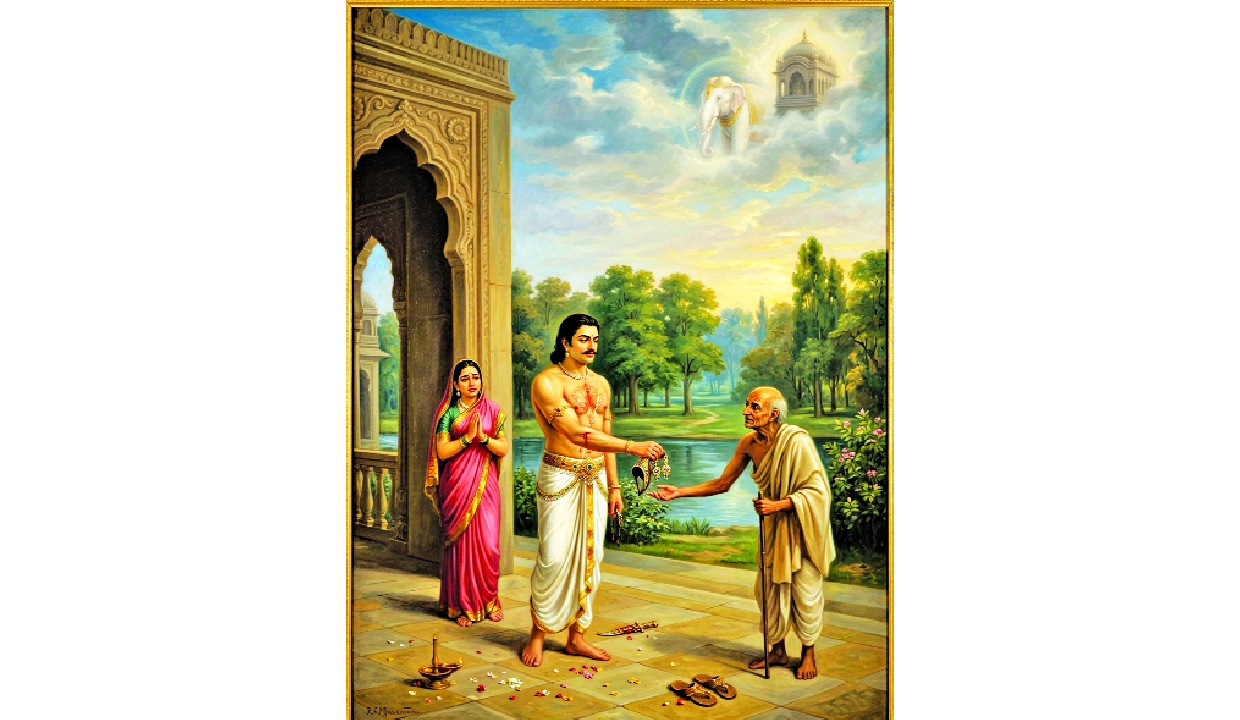
Karna stood in the morning light, his golden Kavach and Kundal gleaming as part of his very flesh. He had sworn a sacred vow never to turn away any seeker empty-handed during his morning worship.
Arjuna and Karna were destined to face each other in a deadly battle during the Kurukshetra War. Because Karna was born with divine armor (Kavach) and earrings (Kundal) that made him completely invincible, Indra knew Arjuna could never defeat him. To tilt the odds in his son's favor, Indra took advantage of Karna's famous reputation for never refusing a beggar, tricking him into giving up his ultimate defense. Disguised as a poor Brahmin, Indra asked Karna for his divine armor and earrings.
Karna's father, Sun God Surya, had already warned Karna in a dream about this divine deception. Karna knew the truth. He understood that parting with his natural protection meant losing his shield against death in the impending war. Yet, his commitment to daan (charity) and his sacred word outweighed his own life. A warrior could lose a battle, but breaking a promise meant loss of honor, which was worse than death.
Without a trace of fear or hesitation, upon the beggar's request, Karna took a sharp blade. He carved the divine armor and earrings straight from his own skin, enduring searing pain with steady hands as his wife looked on. He placed the armor into the trembling hands of the beggar, who was the disguised Indra.
Stunned by this peerless selflessness, Indra revealed his true celestial form. Filled with awe, the king of Gods healed Karna's ravaged body and granted him the infallible Vasavi Shakti weapon in return.
This legendary act cemented Karna's legacy. It proved that true greatness is measured not by the armor one wears to save oneself, but by the sacrifices one makes to honor a vow.
Moral of the fable: Always keep your word, even if it comes at the cost of sacrifice.