T20’s six-hitting era turns cricket bat-making into a science of precision, customisation
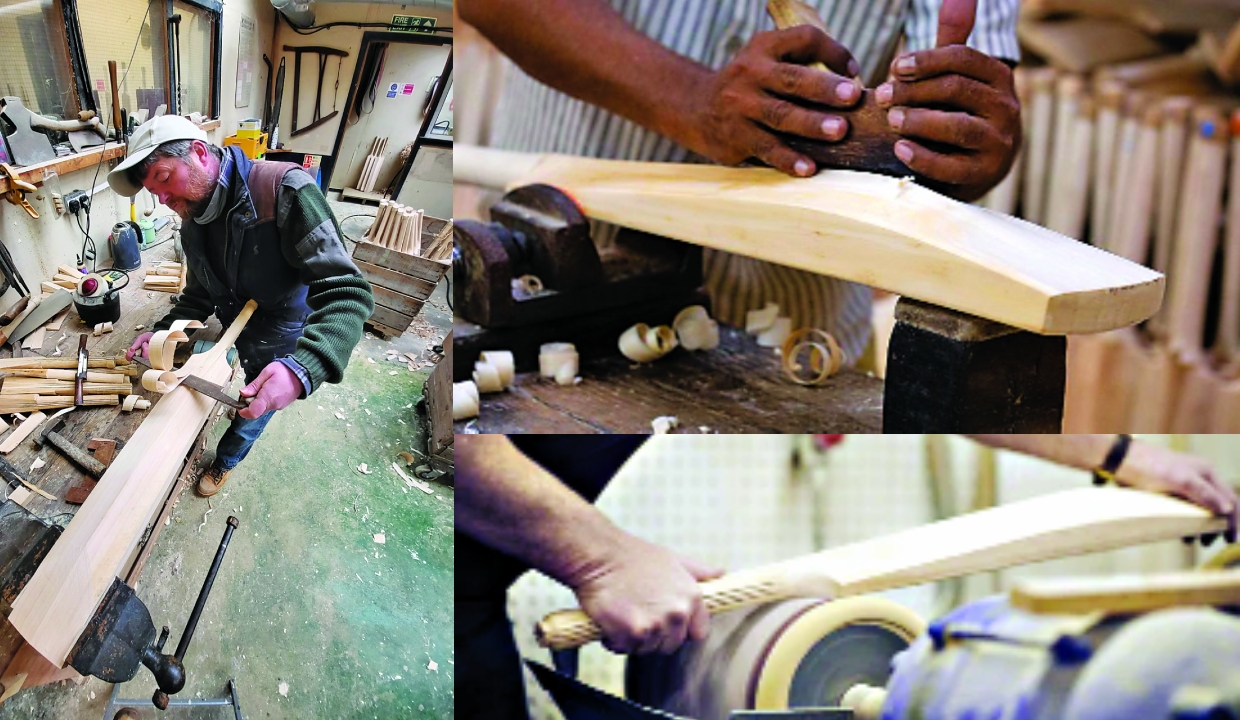
May 18 (PTI) Cricket’s relentless shift towards power-hitting has sparked a quiet revolution far from the spotlight inside bat manufacturing units, where traditional willow craftsmanship is giving way to scientific precision as makers race to meet the demands of modern-day batters.
Driven by the high-stakes world of franchise cricket, where marginal gains can decide fortunes, manufacturers are now fine-tuning bats through moisture control, fibre analysis and personalised design to suit each player’s strength, strokeplay and match situation.
The pressure to perform in an era of franchise valuations running into hundreds of crores of rupees, where every boundary can tilt match outcomes and justify massive team-building investments, has created an unprecedented demand for hyper-customised bats.
For now, manufacturers are already leaning heavily on scientific data, analyst feedback and player-specific profiling to design bats that can maximise performance.
And the day is not far when the inevitable Artificial Intelligence will help engineers make the bats, they say.
From powerplay specialists to death-over finishers, many top batters now travel with eight to 10 bats, each calibrated for a particular purpose.
“Cricketers use different types of bats at different stages of the game, depending on the situation. On an average, they carry eight to 10 bats. They know each of their bats well and number them,” Paras Anand, CEO of Sanspareils Greenlands (SG), one of India’s leading bat manufacturers, said in an interview.
The phenomenon underlines how cricket has evolved from the days when players often nurtured one trusted bat through entire seasons. Today’s generation wants instant performance.
“Earlier batsmen used to prepare the bats by first playing in the nets and knocking them in. But today’s generation wants a ready-to-use bat. Otherwise, they say the bat is not good. Players say, ‘I have a match in the evening, send me the bat before that’,” Anand explained.
That demand has transformed bat manufacturing into an exact science.
At SG’s facilities in Meerut, imported English willow clefts undergo a carefully controlled air-drying process after reaching India.
“When the imported cleft reaches India, we do air drying. If you keep the wood in this hot and dry weather, it loses a little moisture, which helps reduce weight,” Anand said.
The manipulation of moisture content has become central to modern bat-making. The challenge for the bat makers is quite daunting as players want bigger profiles, thicker edges and a larger sweet spot, but without additional weight
“Now we are actively playing around with the moisture content to get the big profile. The batter wants the big mass in the bat, but he still wants the bat to be light,” Anand said.
That marks a sharp departure from earlier eras.
“It is possible that there was more moisture in the bats Sunil Gavaskar used in the 1980s. Those bats were thinner and heavier,” Anand said.
Gavaskar, the batting legend of the ‘70s and ‘80s, himself said that he used bats weighing between 2.4 lb (1.08 kg) and 2.9 lb (1.32 kg).