Supreme Court’s conflicting decisions on bank fraud settlements creates dilemma
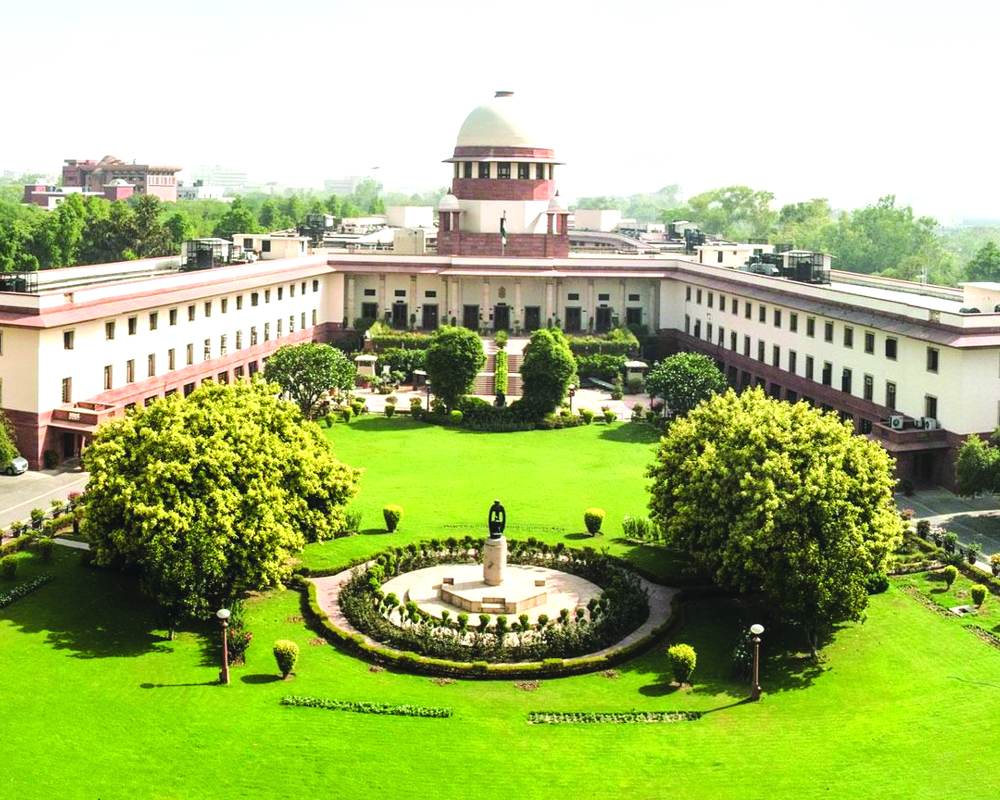
In November 2025, two decisions of the Supreme Court garnered nationwide attention. Both of them were on the issue of quashing criminal proceedings related to bank fraud on the basis of One Time Settlement (OTS).
The first was the Supreme Court judgment in Central Bureau of Investigation versus M/s. Sarvodaya Highways Ltd and Others (Nov 11, 2025), and the second was the order in the Sandesara brothers (Sterling Biotech Ltd) cases (Nov 19, 2025).
The two decisions were contradictory on the application of the principle of OTS. While in the Sandesara case, the Supreme Court proposed to quash all criminal proceedings on the condition of a Rs 5,100 Crore deposit, the Apex Court restored the criminal proceedings in the Sarvodaya Highways Ltd case, explicitly holding that an OTS is not a ground to quash charges of fraud and corruption.
Although the Sarvodaya judgment by a Bench of Justices VikramNath and Sandeep Mehtawas delivered a week before the Sandesara order by a bench of Justices
JKMaheshwari and Vijay Bishnoi, the latter was widely reported as unprecedented. It is only now that the Sarvodaya judgment is gaining attention, as critics question how there can be two standards when the ultimate relief sought was identical.
The reading of the two decisions makes it clear that the Sandesara case reached the Supreme Court through an Article 32 petition, in which, without mentioning, the bench concerned applied the inherent power under Article 142 in the peculiar facts of the cases to do complete justice and made it clear that it cannot be cited as a precedent.
In the Sarvodaya case, the Supreme Court set aside the Punjab and Haryana High Court’s order, which had quashed the criminal proceedings against the company based on OTS with the bank. The Supreme Court essentially held that a one-time settlement does not erase criminal liability for serious economic offences like fraud and corruption under Section 482 of the Criminal Procedure Code (CrPC).
Besides other findings and observations, the bench concerned emphasised that serious economic offences, especially those involving financial fraud against a nationalised/public sector bank, are not merely private disputes between the bank and the customer. They constitute a public wrong because they impact the public exchequer and harm society at large.
Further, the Supreme Court, in its judgment, specifically noted that the settlement amount of Rs 41 crore was significantly lower than the actual outstanding liability of approximately Rs 52.50 crore, resulting in a deficit, a loss to the public exchequer, even after the settlement. This was a key factor in the Supreme Court’s decision to restore the criminal proceedings. A notable feature in which the two decisions have come is that one case involves a smaller company (M/s. Sarvodaya Highways Ltd) and the other involves a large, fugitive-run conglomerate (Sandesara brothers — Nitin and Chetan).
While the Sandesara brothers had fled the country in 2017, reports do not indicate that the accused/offenders in the Sarvodaya case are out of the reach of law enforcement agencies, rather, the judicial process is actively moving forward against the named individuals (Gurinder Kumar Garg, ArunaGarg, AashutoshGarg, AayushGarg, and the then Branch Manager of the Bank, NishanLal).
Also, there is no explicit report linking the accused or the fraud itself in the Sarvodaya case to any specific politician or established political connection. In contrast, the Sandesara case has been connected to several politicians, bureaucrats, and other influential people, leading to a political controversy that ran parallel to the financial fraud investigations. Consequently, if the proceedings are quashed against the Sandesara brothers, this may automatically shield their alleged co-conspirators and facilitators, who were also under investigation, raising further concerns about the full scope of the investigation being curtailed. Comparing the outcome of the two cases at the highest court in no way means siding with any party, but the contradictory nature of the two Supreme Court decisions creates several serious issues within the legal system and public domain.
Do the conflicting judgments from the Benches of the Supreme Court shake the public’s confidence in the stability and uniformity of the law? Does it not create a perception that justice depends on the bench rather than the established law?
Further, critics raise the question of two standards — one for minor offenders or small amounts and another for high-profile, high-value offenders, where cases can be settled for a price, as proposed in Sandesara. Does it not suggest that serious economic offences can be resolved by wealth, not by law?
Another question arises that when two Benches of equal strength pass contradictory rulings on the same principle (OTS vs Criminal Liability), it creates an impossible dilemma for High Courts and Trial Courts. Subordinate courts are left confused about the correct legal position, stalling trials and increasing the burden of litigation as they await clarification.
The contradiction creates a serious challenge to the stability, predictability, and integrity of the judicial system, particularly in the critical area of combating large-scale economic fraud. Irrespective of the public perception of the outcome of two bank fraud cases, Supreme Court advocate Madhumita Bhattacharjee prefers to provide a purely legal perspective.
She stated that in the Sandesara case, it is apparent that since its inception, this Court has been of the view that if the petitioners are willing to deposit the amount as settled in OTS and public money is returned to the lender banks, the continuation of the criminal proceedings would serve no useful purpose.
“The tenor of the proceedings apparently indicates peculiarity, with intent to protect the public money and interest and to get deposited the defalcated amount. In furtherance, the consensus has been arrived at as indicated above. In this view, in the peculiar facts and situation of the present case, discretion as prayed, deserves to be exercised for granting the relief, as prayed and to direct for quashment of all the proceedings,” Bhattacharjee opined.
She said this observation in the judgment would show that there has been no deliberation on the settled position of law and in the peculiar facts and circumstances of the case, which means that it shall not form any precedent, and without going into the merits, the relief has been granted as the case proceeded from the very beginning on this basis.
Whereas the judgment written by Justice Mehta in the Sarvodaya case deals with the legal position of law and is a judgment under Article 141 of the Constitution of India, and hence, both cannot be compared, as the previous one (Sandesara) is only based on the facts and in the peculiar facts and circumstances of the case.
Bhattacharjee, who is Advocate-on-Record in the Supreme Court, said she had gone through both the judgments in extensive detail. She said in her view, the judgment in the Sarvodaya case also lays down the correct position of law, as upholding the sanctity of law is the primary duty of the constitutional court. Section 482 is an inherent power which was designed to ensure that there is no abuse of the process of law. Therefore, before invoking this provision, a glaring abuse of the process of law is mandatory.
On the contrary, she accepted that in the Sandesara case, a huge financial fraud committed with an intention was being settled on the basis of the power of money, which, if permitted, would send a very wrong message to society at large. “Therefore, in my view, this (Sarvodaya) judgment lays down the correct position of law. However, with two divergent views of concurrent benches, the final settled position can be enunciated by a larger bench only,” Bhattacharjee said.