Iran apologises to Gulf countries
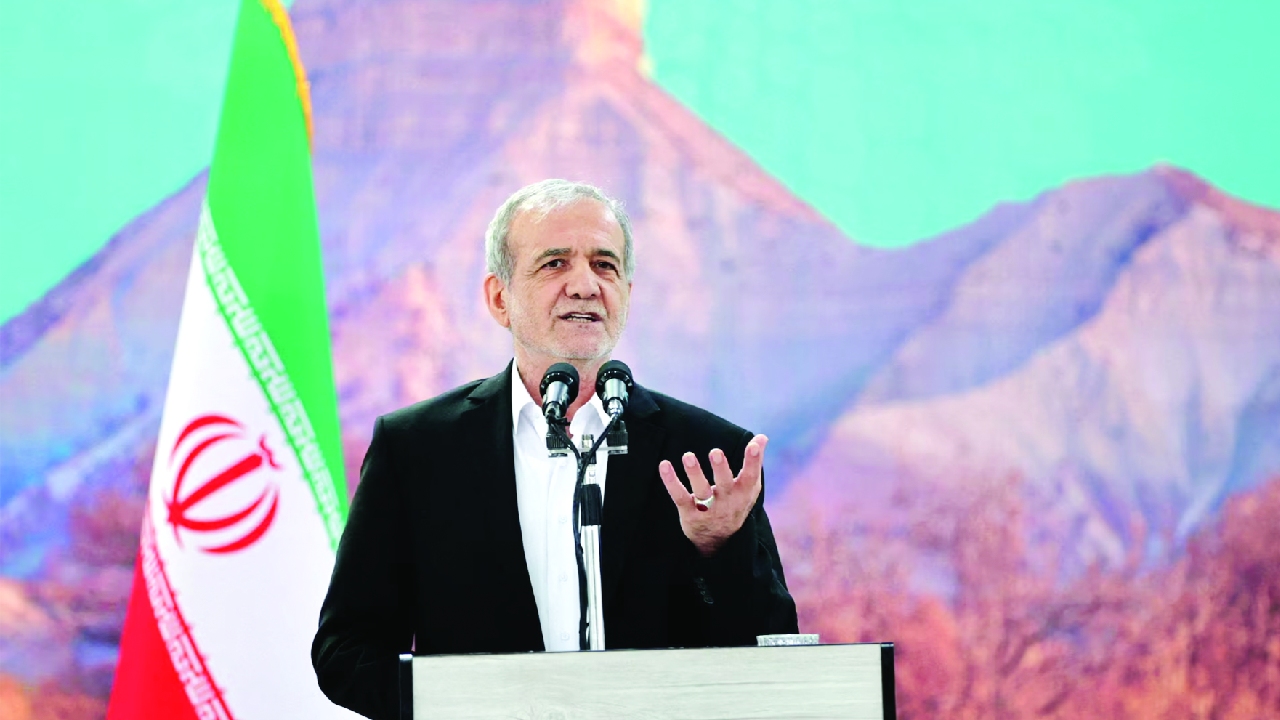
Iran’s President Masoud Pezeshkian apologised on Saturday to neighbouring countries affected by Tehran’s recent attacks, even as Iranian missiles and drones reportedly continued flying toward Gulf Arab States — a development that has raised concerns about the extent of civilian leadership’s control over the country’s armed forces.
In his statement, Pezeshkian expressed regret over the strikes on regional countries and attempted to reassure neighbouring nations that Iran did not intend to destabilise the wider region. The apology appeared aimed at calming tensions with Gulf Arab States that fear being drawn deeper into the conflict.
However, the continuation of military operations despite the apology suggested that Iran’s political leadership might not have full command over the actions of its armed forces during the crisis.
Analysts say this disconnect could reflect internal divisions within Iran’s power structure, where military institutions such as the Revolutionary Guard often operate with significant autonomy.
Pezeshkian also rejected repeated demands from US President Donald Trump that Iran surrender, signalling that Tehran would not yield to external pressure despite rising military and diplomatic tensions.
Meanwhile, Trump warned that more Iranian officials could become targets as the confrontation escalates. Writing on his Truth Social platform, the US president said: “Today Iran will be hit very hard!” Trump’s message came shortly after he referenced Pezeshkian’s apology to neighbouring nations, but his remarks indicated that Washington was preparing to intensify its response.
“Under serious consideration for complete destruction and certain death, because of Iran’s bad behaviour, are areas and groups of people that were not considered for targeting up until this moment in time,” Trump wrote, without elaborating.
Why this matters for the region: The developments underline the growing risk of a wider regional conflict. Gulf Arab States — including Saudi Arabia, the United Arab Emirates and others — host key global energy infrastructure and shipping routes. Any escalation could disrupt oil supplies and international trade through critical waterways such as the Strait of Hormuz.
For regional Governments, Iran’s apology may signal an attempt to prevent the conflict from spreading beyond its immediate adversaries. At the same time, the continuation of missile and drone activity suggests that military dynamics on the ground may be moving faster than diplomatic efforts.
Diplomatic channels are expected to remain active in the coming days as regional and global actors attempt to prevent the crisis from spiralling into a broader conflict.