Still crude shocks on crude oil
Although crude oil imports from Russia dipped by a third in December 2025, Washington remains angry with New Delhi. As earlier, the former trained its ammunition on the European Union (EU) for feeding the fuel to energise the Russia-Ukraine war on its territory, with help from India. According to the US Treasury Secretary, Scott Bessent, “the Russian oil goes to India, the refined products come out, and the Europeans buy the refined products. They (Europeans) are financing the (Russia-Ukraine) war against themselves.” In the same breath, he added optimistically, and possibly hopefully, that whatever happens, under Donald Trump’s leadership, “we will eventually end the Russia-Ukraine war.”
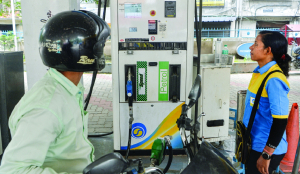
If we look at the overall picture, there are three problems despite India’s reduced dependence on Russian crude oil. The first issue is that Russian imports, despite being lower, are still high. In November 2025, India imported 1.84 million barrels per day (bpd), which came down to 1.2 million in December 2025, but possibly inched up the next month as they touched 1.1 million in the first three weeks of January 2026. If the trend continues in the last week, the monthly imports may be higher than the previous one.
More importantly from Washington's perspective, the leading Indian private refiner, Reliance Industries, claims to have stopped the Russian shipments in January. However, the large state-owned Indian refiners continue to depend on Russia for their supplies. According to media reports, while Indian Oil purchased 4,70,000 bpd in the first three weeks of January 2026, or more than 40,000 bpd higher than the entire December 2025, Bharat Petroleum hiked the shipments from 1,43,000 bpd to 1,64,000 in the same period. Nyara Energy, which has ownership links with the Russian producers, purchased 4,70,000 in the first three weeks of January.
Washington is angry that the imports continue despite an additional 25 per cent tariff, over and above the initial 25 per cent, on Indian imports due to the Russia connection. Nyara Energy, “which was cut off" from other European countries after the EU slapped specific sanctions on it, continues to thrive on supplies from the Russian parent. It is only Reliance Industries, which imported 6,00,000 bpd in 2025, which seems to have fallen in line, possibly because of imminent impact on other Indian and global businesses. Remember, Reliance Jio, which has sizable investments from the US tech firms, will launch its much-awaited IPO (Initial Public Offering) in the first half of 2026.
Issue No. 2 is that the EU still buys petroproducts from India. If this was not enough, even as the US and India struggled to ink the bilateral trade deal for almost seven months, India and EU announced that they had finalised one. As if to taunt Trump, and his loyalists, including Bessent, the EU president, Ursula von der Leyen, grandly announced that the India-EU deal would be the “mother of all trade deals.” This had the desired effect, and Bessent said that while the US imposed a 25 per cent extra tariff on India for buying Russian oil, the “Europeans signed a trade deal with India.” It is another matter that when he commented, the deal was not finalised. Only yesterday was it finalised, and maybe signed later.
Of course, the Americans want to be one up on both India and the EU. The former wish to sign the bilateral deal with India fast so that the tariffs can come down, trade can be normal, and American firms can sell more goods in the Indian markets. For the EU, which was repeatedly criticised by Trump, including in his Davos speech, to steal the thunder, so to say, is unacceptable. In addition, the India-EU deal may become the benchmark that the US may have to follow. In the process, it may need to dilute some of its existing demands that are related to agriculture, farm sector, and dairy.
For months, experts and the media speculated about the “shadow” global trade in crude oil, with the Russians having purchased tankers and vessels with secret national identities to transport its oil to major purchasers such as India and China. In the past, sanctioned nations like Iran did the same to essentially smuggle oil. India’s role was a matter of speculation, but there were reports of an entity, Gatik Ship Management, with Indian links. Media reported on the firm’s “sudden appearance on the scene, (and) its big role in lifting Russian oil.” Gatik shared its India address with Buena Vista Shipping, one of whose founders is Venugopal Sharma, a former sailor listed by the Indian shipping ministry as a “full-time permanent faculty at the International Maritime Academy. Since 2015, when it was formed, Buena Vista had several partners with Indian-sounding names, including Venugopal’s wife, Pramoda, who became a partner in 2019.
But now, in the recent past, direct links between Indian shippers and captains, and global crude oil smuggling has emerged. In December 2025, Iran seized an oil tanker in the international waters, and accused the seafarers of smuggling huge quantities of oil. Reports indicate that 16 crew members are Indians, including the third engineer, which gave rise to diplomatic exchanges between New Delhi and Teheran, as the Indian consulate in Bandar Abbas tried to access the Indians, and allow the crew members to talk to their families. The ship owner’s name, as per global lists, is unknown.
A few days ago, the French officials arrested the Indian captain of a “suspected Russian shadow fleet tanker,” which is possibly a part of the fleet that Russia uses to hide the port of origin for a part of its imports. According to the officials, apart from the captain, the entire crew is Indian. While the captain was in custody, the rest were “kept on board” the tanker. For the Americans, such incidents indicate that the Indians are not just buyers of the Russian crude oil, but active participants in the global “shadow” trade that helps to finance Russia, and helps it to continue the Ukraine war.
There is no evidence, hard facts or circumstantial evidence to prove it, but there is a section among the American policy-makers, which makes the logical, though unproven connection. If apart from Reliance Industries and Nyara Energy, the state-owned Indian refiners are among the largest importers of Russian crude, and if Indian captains, seafarers, and tanker crew are involved in the “shadow” trade, there are chances of semi-official, informal, even official links between the various players and participants. At some point of convergence, the official may have met the illegal to push through the trade.