State chief in name only: Jitu Patwari marginalised in MP Congress
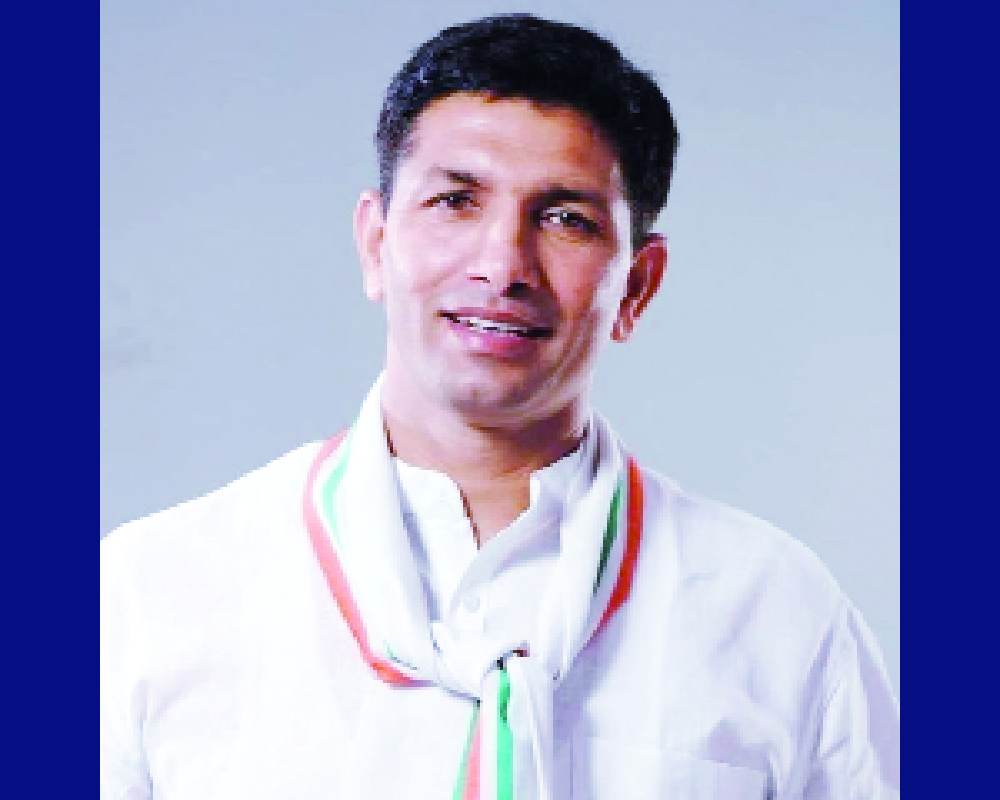
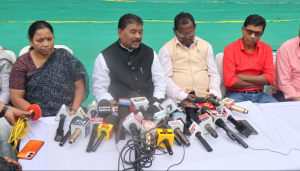
Nearly two years after assuming office, Madhya Pradesh Congress president Jitu Patwari appears increasingly isolated inside his own party, with a series of recent organisational decisions once again underscoring how little authority he wields.
Despite being the State Congress chief, Patwari continues to watch major appointments and political actions unfold around him—without his approval, influence or imprint.
Patwari’s tenure has been marked by limited control from the outset. Apart from securing the appointment of Reena Bourasi Setia as Mahila Congress president, very few organisational posts carry his stamp. The most striking example came recently when Rahul Gandhi intervened directly to finalise the list of district Congress presidents across all 71 districts—leaving Patwari with no decisive role in the process.
The sidelining deepened last month when Patwari appointed several leaders—mostly spokespersons—as district in-charges. Only three days ago, AICC State in-charge Harish Chaudhary cancelled the entire list and replaced it with his own set of appointees for eight divisions. The swift reversal was viewed within party circles as a public demonstration of Patwari’s shrinking authority.
His recommendations were again disregarded in the Youth Congress. In the selection of the Madhya Pradesh Youth Congress president, Patwari’s preferred candidate was rejected. Instead, Yash Ghanghoria, backed jointly by former chief minister Kamal Nath and Leader of the Opposition Umang Singhar, was appointed.
Only three days ago, Ghanghoria—after formally taking charge—demonstrated the growing clout of the Kamal Nath–Singhar camp when he led a massive Youth Congress agitation in Bhopal against alleged irregularities in the ongoing Special Intensive Revision (SIR) of voter lists. The high-visibility protest, which resulted in dramatic clashes and detentions, symbolised how key political actions in the State Congress are now being driven by leaders outside Patwari’s sphere of influence.
Adding to this, on Sunday, the AICC appointed MLA Sohanlal Valmiki—widely seen as a close confidant of Kamal Nath—as the chief whip of the Congress Legislature Party. This decision, too, bypassed Patwari, reinforcing the perception that major organisational and legislative appointments are being shaped by entrenched factions, not by the State president.
These developments revive long-standing concerns about factional dominance within the MP Congress. The powerful camps of Kamal Nath and Digvijaya Singh continue to exercise decisive control over key decisions, leaving Patwari a symbolic head with limited operational command.
As the Congress attempts to reorganise itself and prepare for political battles ahead, Patwari’s marginalisation raises a critical question:
Can a party move forward effectively when its state president struggles to influence even routine organisational decisions?
For now, despite occupying the top post, Jitu Patwari stands increasingly alone—visible at the helm, but largely without the steering wheel.