Smog smokes out firms’ earnings
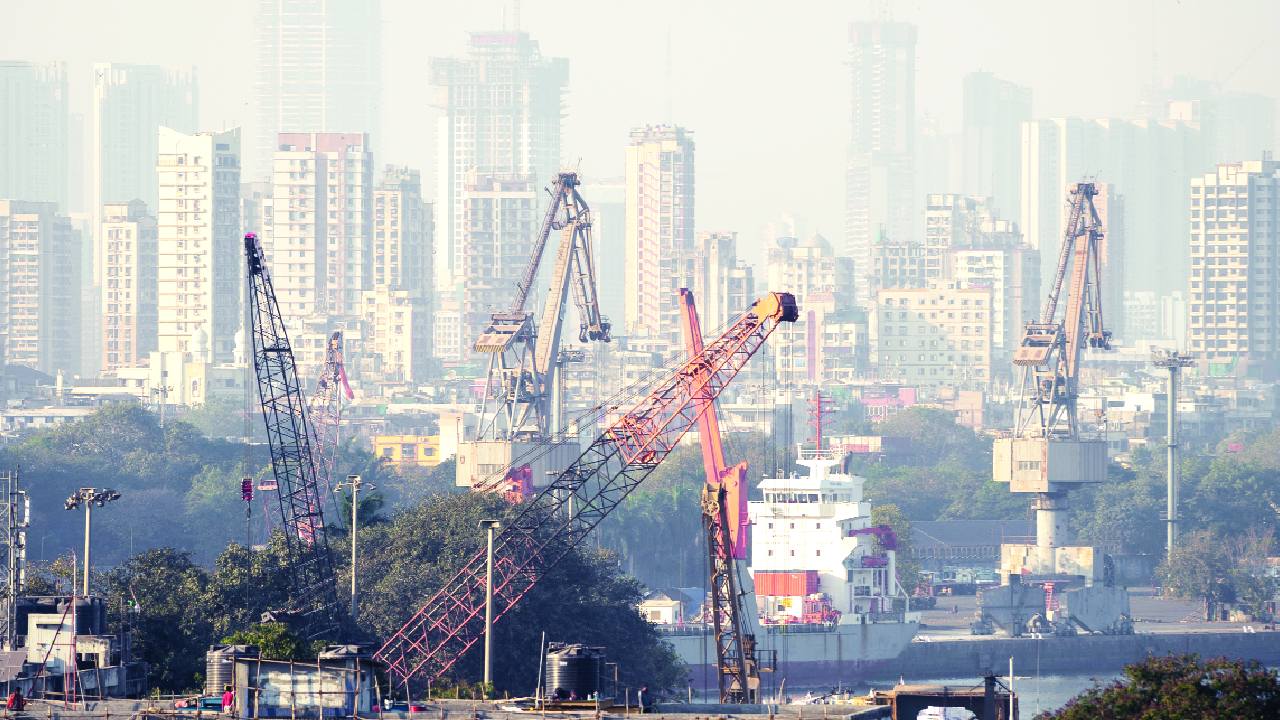
We know about the economic consequences of pollution. We realise that businesses across several sectors suffer because of air pollution. In India, air pollution slashes nearly $100 billion in corporate revenues. The economic costs may be several times higher, or more than $250 billion in 2024, according to an estimate. However, now Indian firms increasingly mention the implications in their quarterly and annual figures that are discussed with analysts and investors. According to a recent Bloomberg analysis, there were nearly 1,000 references to it in analysts' calls and financial presentations in 2025.
“It is not unreasonable to think of it (air pollution) being a meaningful drag on the economy,” says an analyst quoted in a media report. He adds that this is a result of “lost production days for real estate and manufacturing, lost retail demand, sick days, and broader cost of healthcare.” Experts point to reasons such as absenteeism (lower productivity), lower retail footfalls, and delays in logistics and transport. A note by analysts in ICICI Securities stated that investors now need to factor in the impacts of the “smog season from October to January” in North India, and other parts of the country.
Several sectors specifically bear the burden of pollution. In cognition-sensitive ones like IT and software, “polluted cities like Gurgaon (Gurugram; Delhi’s satellite) are up to six per cent less productive than peers elsewhere.” Global tourists shun India during specific months, which drags down arrivals by more than seven per cent annually. Regulatory, judicial, and policy restrictions impact business activity in construction, transport (vehicle movement), and logistics. In essence, the manufacturing sector too faces the brunt, apart from services. Talent attraction and retention become a challenge in vastly-polluted cities such as Delhi-NCR, and even in Bengaluru (due to construction).
The impact on individual firms can be drastic. Department store chain, Shoppers Stop, stated that air pollution led to nearly 70 per cent decline in net profit in the December-ending quarter. A quick-commerce firm stated that extended pollution-related restrictions slowed store construction, new rollouts, expansion, and growth. Omaxe, a property developer, warns that the Capital’s air pollution will soon affect real estate, and “can be one of the major risks of investing” in the city. DLF, another realtor, admitted that the December-ending quarter faced spending issues over the past four years due to building bans.
Although 2021 was a year when Indian firms did talk about the impact of pollution in their quarterly and annual reports, apart from other messaging modes, the mentions and warnings peaked in the past two years. In both 2024, and 2025, the references in financial calls and documents were nearly 1,000, or around the 2021 numbers. There may be several reasons for the sudden and sustained increases. The first is that until a few years ago, the air pollution excesses were limited to a few weeks, or a month around Diwali. Crackers, and stubble fires were counted among the main reasons for sudden peaks in winters.
However, the trends changed for the worse in the past two years, and especially in 2025. The Diwali-related pollution carried on in November and December, and extended up to January 2026. Thus, it extended beyond the festival and crackers, as well as stubble fires. In late December and January, the smog combined with pollution, and made the situation worse. Construction bans were imposed as late as in January 2026. According to some experts, air pollution in Delhi, and hundreds of cities in North India were due to new ‘chemical’ factors, where the air chemicals combined to create immense problems.
A recent blog on the LSE website highlights some of the challenges. Productivity issues in manufacturing beset labour-intensive ones that “cannot easily shield workers or automate tasks.” Such losses occur outside the workplaces too. People spend more time inside their homes, do less shopping, and change their travel and entertainment modes. Focus and decision-making abilities are reduced, which affect the services sector that contributes the bulk to the annual GDP. This impacts growth across the three sectors, including manufacturing and agriculture, and brings down the overall economic growth. There are little chances for growth in one or two to make up for losses in others.
Of course, the workers in the informal sector suffer more, which impacts the growth in the unorganised segments. This is crucial in a country like India, where its contribution to the GDP is quite high. Despite the recent measures to nudge firms to join the mainstream economy, large segments of manufacturing, services, and farming remain outside the ambit. In sectors like construction, which is among the highest generator of jobs, the number of informal workers remains the largest. In addition, as the LSE blog states, while large firms can temporarily relocate production, small firms cannot due to the relatively high costs, and less flexibility to do so. The latter suffer the most.
Most crucially, the effect on the younger generation is enormous. According to a media report, which conducted a small survey among 100 college students in Delhi, two-thirds admitted that air pollution makes them work less hours, and leads to lower productivity. More than a quarter agreed that their performances suffered. There are impacts on mental wellbeing, which includes stress, mood, irritation, and motivation. Nearly 60 per cent of the respondents agreed that air pollution leaves them more stressed, demotivated, and low feeling. Almost a third complained of both stress and lower performances. Such insights may spell doom for the next generation of employees.
“If they (college students) enter the workforce with these productivity setbacks, India’s future talent pool weakens. Fewer high-skilled graduates mean slower innovation, reduced research output, and a hit to global competitiveness. An unhealthy youth cohort ultimately drives up healthcare costs, and drags down productivity the moment they step into the labour market,” says a professor quoted in the survey. Apart from skill, experience, and education, younger workers need to enjoy good health. This is not just for productivity but more efficient and smooth supply of requisite employees, along with their skills. According to the same professor, “Air pollution threatens this.”
Hence, the stakeholders, not just the Government, firms, and employees, need to take corrective measures in their own limited manner. As citizens, we can reduce the carbon footprint through lower energy use. As firms, we can use technology like electric vehicles to reduce air pollution. As policy-makers, instead of just bans and restrictions, the governments need to come out with a blueprint, and practical vision. If China can reduce air pollution to manageable levels within a few years, so can India with its vast knowledge pool.