Smart water management: How AI and IoT can solve India’s urban water crisis
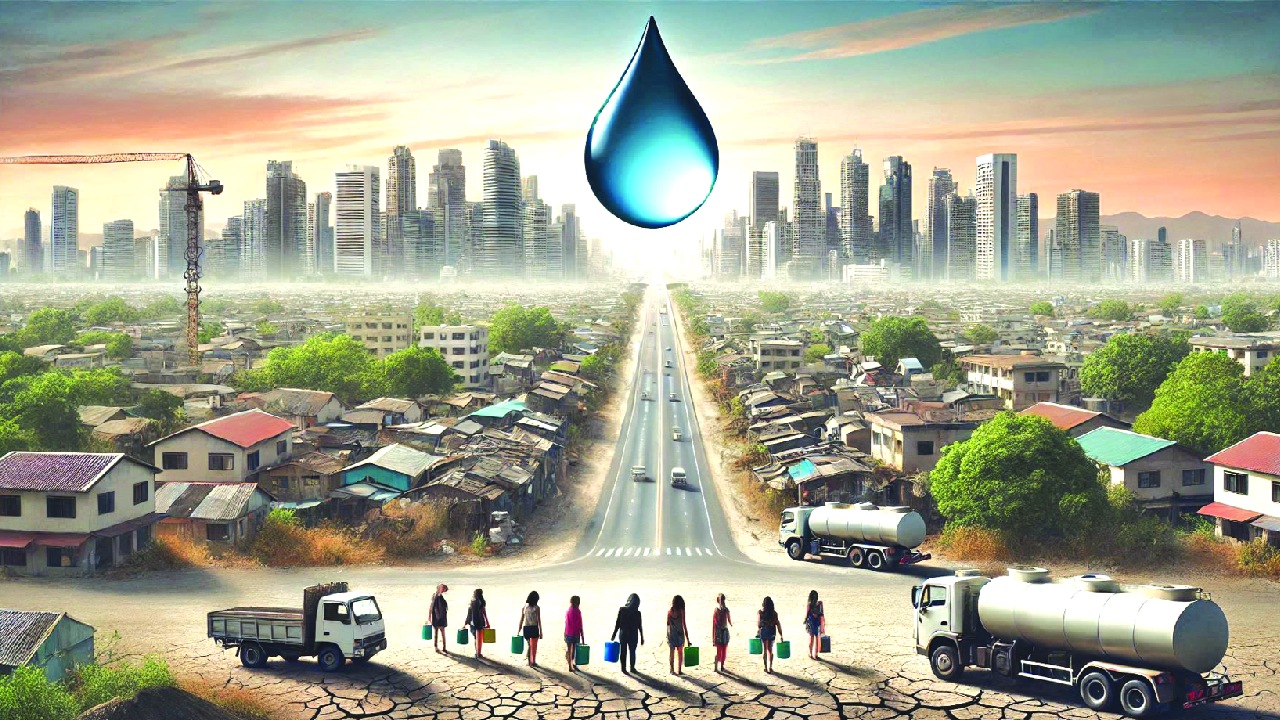
Do you know that nearly 600 million Indians endure high to extreme water scarcity, and over 21 cities such as Delhi, Bengaluru, and Chennai could run out of groundwater by 2030? These sobering numbers from NITI Aayog’s 2019 “Composite Water Management Index report long cautioned that India’s per capita water availability is currently around 1,100 cubic meters which is significantly below the water stress threshold of 1,700 cubic meters. In fact, this is close to the water scarcity threshold of 1,000 cubic meters per person. By 2030, India’s water demand is estimated to twice the available supply implying severe scarcity and stress.
This stark disparity makes India one of the most water-stressed countries. Moreover, with climate change intensifying droughts and floods, the imperative to rethink water management has never been clearer. Key challenges for urban water management in India include (i) aging infrastructure with most of municipalities grappling with problems of severe leakages and consequent water losses due to decade-old water pipelines and distribution networks and illegal connections with cities ending up losing up to 40 per cent of their water before it reaches consumers, (ii) Non-revenue water (NRW) which is causing significant financial and resource drain, (iii) groundwater depletion due to over-extraction, particularly in water-stressed cities like Delhi and Bengaluru, threatens long-term water security, (iv) water contamination due to unregulated discharge of untreated sewage and industrial waste creating health risks and increasing treatment costs and (v) traditional water management practices lacking the data to match water supply with real-time demand, leading to wastage or intermittent supply.
United Nations World Water Development (2019) reported that global water demand is estimated to increase by 20-30 per cent by 2050. Given that climate change is anticipated to intensify the strain on water resources, minimising Non-Revenue Water (NRW) serves as an effective tool for urban local authorities to alleviate pressure on existing resources (NIUA, 2021). While we have made significant strides in emerging technologies and innovation, decisive pivot to Smart Water Management (SWM) can make a transformational difference. Leveraging IoT technologies to plan, develop, distribute, and manage water resources, SWM is an innovative approach to use a precious resource more wisely and save it for the generations to come.
And the crucial issue that needs immediate confrontation is Non-Revenue Water (NRW) which is undetected leaks, faulty meters, and theft draining billions of litres daily impacting water security and financial sustainability. Data indicates that Indian urban water utilities lose nearly 40 per cent of supplied water to NRW, a figure significantly higher than the global average of 30 per cent amounting $39 billion per year (NIUA, 2021). World Bank reported that India loses $2.5 billion per annum due to NRW. This silent leakage, combined with the inefficiency of intermittent water supply, forces cities into a costly and unsustainable cycle of water stress and infrastructure fatigue. This is where the use of new-age technologies like AI, IoT and smart systems such as supervisory control and data acquisition (SCADA), geographic information system (GIS) can play a central to enhancing the effectiveness of smart water conservation measures. AI and IoT have already shown their impact globally. As per a report by DataM Intelligence, smart water management powered by IoT and AI is expected to be a $53.85 billion market by 2032. Driven by smart infrastructure, rapid urbanisation, and industrial expansion, is one of the fastest growing markets in the Asia-Pacific region for AI in water management. This momentum is building in India too. Acoustic sensors have proven to be invaluable tools in water leaks.
Real time monitoring via IoT smart sensors can help in rapid detection of leaks, blockages, or contamination, preventing major water loss and allowing for swift repairs. AI powered advanced predictive analytics and AI models can predict future water demand and identify potential equipment failures by analysing data from IoT sensors, weather forecasts, and historical usage patterns thereby optimising water distribution and preventing costly water breakdowns. IoT enabled smart water meters can track water consumption in real time at the household or community level, providing instant usage data to both consumers and utilities. AI-based systems, through IoT and remote sensing, can monitor water sources health to detect pollution and algal blooms thus enabling utilities to identify sources of contamination take measures to resolve it. Robots can inspect pipelines to detect structural faults, obstructions etc.
Haryana’s AI-enabled Water Atlas integrates geospatial, satellite, and IoT data for real-time monitoring of groundwater and surface water systems for optimising conservation, recharge, and allocation. Bhopal’s water utility uses a SCADA-based control system and hundreds of sensors for automated management and emergency response. Nagpur Municipal Corporation reported reduction in NRW from 40 per cent to below 29 per cent by enhancing distribution efficiency and identify issues like leaks promptly through AI, IoT and robotic interventions. Besides, Programs like AMRUT, Jal Jeevan Mission, and Viksit Bharat 2047 are increasingly embedding digital platforms, IoT meters, and predictive analytics into city water supply systems.

So, what, precisely, do AI and IoT change in an Indian water utility? Historically, Indian water utilities relied on manual checks and reactive fixes, making infrastructure vulnerable to crisis. But today, IoT meters and real-time sensors embedded throughout the network in pumps, pipes, valves, and bulk meters continuously track pressure, flow, and acoustic signatures.
Similarly, predictive maintenance via AI helps with a proactive, surgical intervention that can reduce maintenance costs, cut energy consumption from unnecessary pumping, and conserve millions of litres of precious water. Machine Learning (ML) algorithms can predict drainage blockages or toxic pollutants before a crisis hits, ensuring rapid intervention and safer, cleaner cities.
Hence, the call to action is clear. Advanced technologies give India an opportunity to reshape water governance and redefine how water must be managed sustainably as a national resource. The future of water management lies in seamlessly integrating AI and IoT with policy, community participation, and resilient infrastructure. However, successful implementation demands deep sector expertise to translate these technologies into local governance. It means managing data standardisation, integrating legacy systems, training municipal personnel, and ensuring the technology is execution-aware of the unique logistical challenges on the ground.
The Government has already laid the strategic groundwork with schemes like AMRUT 2.0 prioritising the digital overhaul of urban water systems, pushing for a circular water economy. Now, it’s time to reshape mindsets, build capacity, and keep data-driven insights at the centre of urban planning with collaborative innovation and a commitment to securing every drop for every citizen. As India advances towards the vision of Viksit Bharat, blending domain knowledge with digital mastery will ensure that India’s cities are resilient and resourceful for the next generation of urban India.
Writer is a deputy BU head (WUH) - Urban, Water and Hydropower, Rodic Consultants; views are personal