
India’s edible oil mission: Opportunities, challenges and the road ahead
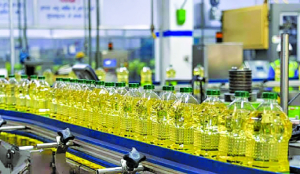
India is one of the largest producers of oilseeds but still imports 55 per cent-60 per cent of its edible oil requirements. Annually, more than $20 billion is spent on the import of palm, soybean and sunflower oil from Indonesia, Malaysia, Argentina, Ukraine and Russia. This was exposed sharply during the post-COVID commodity price surge of 2021-22, which saw the prices of edible oil double overnight. This led to the government introducing a much-needed policy directive, the National Mission on Edible Oils — Oil Palm (NMEO-OP), which is aimed at strengthening the ecosystem of India’s edible oils.
The National Mission on Edible Oils was the need of the hour because the import bill on edible oil was rising and became the third-highest import bill after crude petroleum and gold. This mission is not just ensuring food security for a population exceeding 1.4 billion but economic security for the country as well. We can achieve this in three ways:
The Palm Oil Pivot: India’s edible oil ecosystem is heavily reliant on palm oil. However, things are now changing for good. Almost Rs 11,040 crore over five years was allocated in 2021 for expanding palm oil cultivation to 10 lakh hectares by 2025-26 and 16.7 lakh hectares by 2029-30. This primarily targets the North-East and Andaman & Nicobar Islands. These areas have suitable agro-climatic conditions. Through this mission, farmers have been guaranteed prices through a viability price mechanism, ensured buyback commitments and provided substantial planting subsidies.
Palm oil is a great solution for farmers since it yields far more oil per hectare than any other oilseed crop. In comparative terms, the yield of palm oil is five times the yield of edible oil obtainable from traditional oilseeds. As per estimates, a hectare of palm oil cultivation can produce 3-4 tonnes of crude palm oil annually, compared to 0.3-0.4 tonnes from groundnut or mustard. Even a modest scaling of palm oil cultivation will make a meaningful reduction in our dependence on imports. The Mustard and Soybean Story: The government has also leaned heavily on mustard and soybean as the more immediate levers of domestic production. Mustard’s acreage has been growing on the back of minimum support price (MSP) hikes and improved seed availability. In 2022-23, India’s mustard output reached a record 12.4 million tonnes. This was a massive improvement, and it provided some domestic buffer against import price spikes.
However, the biggest challenge for India is yield stagnation. India’s productivity lags far behind global benchmarks. India’s average mustard yield is 1,200-1,400 kg per hectare vis-à-vis 1,800-2,000 kg in leading producing nations. For soyabean, the gap is even starker. We need to bridge this yield gap. This can be achieved through sustained investment in certified seed distribution, micro-irrigation, soil health and agri-extension services - areas where implementation has historically been uneven. Reducing gaps in processing and value chain: Growing more oilseeds is only half the job done. There is a huge gap when it comes to crushing and refining infrastructure. This gap is substantial and has been characterised by fragmentation, geographic concentration and underutilisation in key production regions. We need a seamless integration of the farm-to-refinery value chain. This must be supported by adequate storage, cold-chain support for perishable produce and quality-testing infrastructure. This is a must if we want to translate higher crop output into lower consumer prices.
The edible oil mission opened up several opportunity windows for the industry. Firstly, it has put the North-East in the focal point as it is an under-explored agricultural frontier with rainfall, humidity and land availability well-suited to oil palm. Integrated development by combining plantation, processing and rural livelihoods will immensely transform the region’s agricultural economy while contributing meaningfully to national supply.
Secondly, nascent segments like rice bran oil, groundnut oil and cold-pressed varieties have emerged as high-value, high-margin opportunities for domestic producers. This has been augmented by rising urban consumer health consciousness. Lastly, the oilseed-to-biofuel roadmap offers a strategic advantage. Demand for biofuel, thanks to the government’s blending policy, has created a secondary demand channel.
There is no doubt that India’s edible oil self-sufficiency is achievable, but it will require patience, policy consistency and coordinated action across agriculture, trade, infrastructure and R&D. The Edible Oil Mission is a long game, and we need to play it well.
The writer is an agro-economy policy analyst and writes on agriculture, economy and rural India; Views presented are personal.