SIA raids 9 locations in 1990 Kashmiri Pandit murder probe
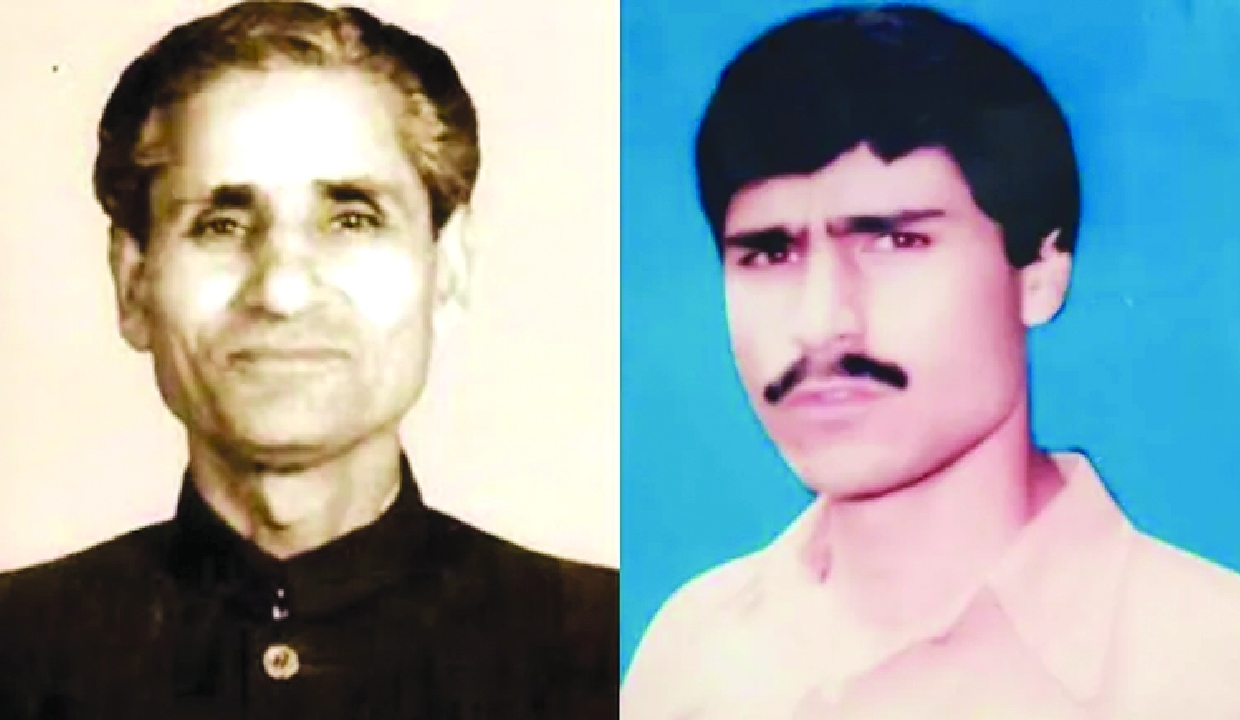
Thirty-six years after the merciless killing of renowned Kashmiri Pandit scholar and poet, Sarwanand Koul ‘Premi’ and his son Virender Koul, the Jammu and Kashmir State Investigation Agency on Wednesday conducted raids across nine locations in Baramulla, Rajouri and Jammu to gather vital evidence against the perpetrators behind the targeted killing at the peak of militancy in April 1990.
The searches were carried out after obtaining search warrants from the competent court in connection with FIR No. 45/1990 registered at Police Station Dooru, relating to the killing of Premi and his 27-year-old son.
According to official sources, searches were conducted across 6 locations in Rajouri, 2 in Jammu and 1 in Baramulla.
After filing a 737-page chargesheet in the abduction, torture and brutal killing of Sarla Bhat, a staff nurse at Sher-i-Kashmir Institute of Medical Sciences (SKIMS), Srinagar, the SIA has launched a fresh probe to identify the killers and key conspirators behind the gruesome murder of Premi and his son.
Sarla Bhat was killed by JKLF terrorists on 18 April 1990. Eleven days later, three terrorists stormed the residence of a social activist and freedom fighter of the Quit India Movement, Sarwanand Koul, in Anantnag and abducted him on the night of April 29-30, 1990. The terrorists allegedly looted valuables and cash and ordered him to accompany them to their commander. His younger son, Virender Koul, insisted on going with his father, reportedly out of concern for his safety.
On May 1, 1990, the family recovered the mutilated dead bodies of their head of the family and a young son. Eyewitness and media reports claimed that part of Premi’s forehead, where he used to apply sandalwood, was cruelly pierced by a sharp weapon and the skin was peeled off. The entire body bore the marks of cigarette burns. The limbs were found broken, and the eyes of both the father and the son were gouged out. They were later hanged and, to be doubly sure, shot dead too.
Sarwanand Koul ‘Premi’ was a respected school headmaster from Soaf Shali in Kokernag. A celebrated literary figure, he authored and translated more than three dozen works. Among his notable literary contributions were translations of Rabindranath Tagore’s Gitanjali into Kashmiri, the Bhagavad Gita into Urdu and the Ramayana into Kashmiri.
At the peak of militancy, when terrorists started targeted killings of members belonging to the minority community, Premi had decided to stay put in the Valley, believing that the goodwill and personal relationships he had built across communities would protect him. His merciless killing became one of the most chilling episodes associated with the targeting of Kashmiri Pandits in the valley and triggered a mass exodus of hapless families.
Official sources told The Pioneer that the SIA team investigating the double murder case of Sarwanand Koul and his son is on the job to collect evidence and identify individuals who may have participated in, facilitated or assisted the perpetrators of the 1990 crime.
Without identifying the dreaded terrorist behind the killing of Sarwanand Koul, a senior officer revealed that the terrorists behind the gruesome murder had been eliminated long ago. The raids were conducted at the residences of close relatives and their associates.
Speaking to The Pioneer over the telephone, Rajinder Koul, the elder son of Sarwanand Premi, said this is the struggle for the last 36 years, which I have been personally pursuing not only with the government of Jammu and Kashmir but also with the Union Government. The promises the government made to us were broken. Not a single promise of assurance given to us at that time was kept. “When we left Kashmir after the killing of my father and brother, we stayed in Jammu for a very brief time period and then went to Delhi after completing the rituals. There was no communication with the government”. He said my struggle dates back to 1991. When we started pursuing our matters with the Jammu and Kashmir government. “Our local temple was demolished by the mob in 1992, our two houses in our native village were burnt down in 1998, and an FIR was also registered.” He said the State Human Rights Commission was approached; they delivered a decision after almost five years. “A comprehensive and considered judgment was given by the two-member bench of the commission. The recommendations were not translated into action by the government. Many meetings were held in the state government. Nothing conclusive happened. Then we moved to the National Human Rights Commission. The NHRC also made certain recommendations. They heard me for four or five long years. They said, ‘Nothing doing’. The NHRC has no business to intervene in our matter. We don’t have the manpower to look into all this. The files have gathered dust, and we cannot dig out the old record. Koul claimed they requested the NHRC to keep this matter in abeyance. I have no hesitation in saying that my family has been a victim of bureaucracy, Koul said. According to him, on 18 April 2024, the NHRC delivered a final judgment in the matter. They said the whole case should be looked into afresh purely on a humanitarian angle, not from any other angle, because they could understand that this was political victimisation.
Koul also welcomed the raids, hoping that all cases would be handled this way.
Rajender further demanded justice for everyone. “I appeal to the State Government that all the cases should be handed over to the SIA for expeditious and effective investigation.