Shanti with US, ashanti in India
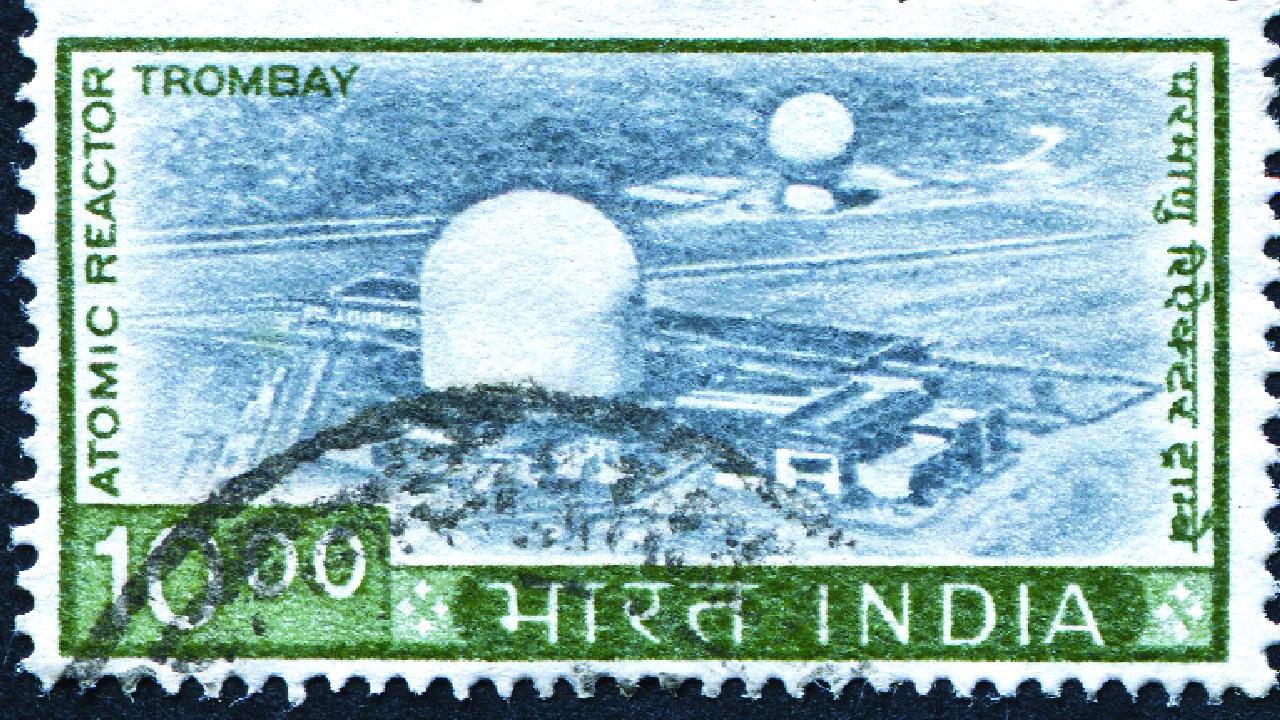
There was both surprise and shock when India pushed through the new, almost unexpected SHANTI law in Parliament. The Opposition cried wolf, and repeatedly urged for the bill to be referred to a parliamentary panel for “greater scrutiny,” and better structure. Two of the most important clauses of the Act were the entry of the private sector in the nuclear sector, and a tiered cap on civil liability on the operators in case of nuclear accidents. The Government justified that private firms were crucial to enhance the generation of safer nuclear power to add to power from other ‘green’ and renewable sources. No private player is likely to enter the sector in an atmosphere of ‘uncapped’ liability. Firms need to have clarity on what is likely to be their maximum exposures in case of nuclear accidents to plan their business models, and assess future revenues, and profits. Thus, the law, and its critical clauses were logical and obvious.
According to the Opposition, there is fresh evidence that the urgency was due to American pressure. Congress’ Rajya Sabha MP, Jairam Ramesh, tweeted on X, “Now we know for sure why the Prime Minister bulldozed the SHANTI Bill through Parliament…. It was to restore SHANTI with his once good friend. The SHANTI Act may well be called the TRUMP Act, (or) The Reactor Use and Management Promise Act.” In essence, what he implied was that the Indian law was dictated by the desires and wishes of the US President Donald Trump. Since the benefits shifted towards the vendors, i.e., private players, especially Americans, it was to please the White House, which wants other nations to open their markets for the easy and cheap entry of American goods, services, and investments. In effect, the SHANTI Act declares civil peace between India and the US, especially in return for lower tariffs on Indian exports under the forthcoming bilateral deal.
Evidence for such logic, coupled with rhetoric, comes in the form of the latest American law, National Defence Authorisation Act (NDAA), which was signed by Trump on December 19, 2025, days after the Indian law. Although the NDAA is signed annually, media reports indicate that this is the first time in nearly a decade that India finds a reference in the context of the India-US nuclear deal (2008), and the civil liability norms. The specific clause states that the US “shall establish and maintain within the US-India Strategic Security Dialogue, a joint consultative mechanism within the Indian Government to assess the implementation of the 2008 Indo-US nuclear deal,” and “align (India’s) domestic nuclear liability norms with international norms.” In terms of both, contend critics, New Delhi has delivered on Washington’s wishes. In fact, the entry of foreign players and liability norms are inextricably linked.
Under India’s 2010 Act, explains a note by PRS India, “the operator of a nuclear installation is liable for any damage by a nuclear incident as per a no-fault principle. This means that the operator is liable to compensate victims regardless of any negligence or wrongdoing…. The 2010 Act specifies a maximum liability of INR1,500 crore…. The (new) Bill specifies a tiered structure, with liability limit ranging from INR100 crore to INR3,000 crore….” Any liability over the upper limit may be borne by the Indian Government. This, states New Delhi, is a win-win for both the people, and private operators. The former benefit from the doubling of the potential compensation. The latter gain from lower graded compensations, which is linked to lower or higher generation capacity of the nuclear power plant. According to a media report, SHANTI “removes the links to ‘supplier liability,’ or the circumstances under which an operator… can statutorily claim recourse from a supplier of components if it resulted in a nuclear accident.” Supplier liability was a contentious clause that paralysed the entry of Americans, and others, who are major suppliers of nuclear technology.
According to an official statement, “At the core of the bill lies a strong emphasis on maintaining India’s strategic control over its nuclear ecosystem. Even as the sector opens to private participation, the Bill ensures that critical functions remain firmly under sovereign oversight. The Government retains exclusive authority over the nuclear fuel cycle, waste management, and all security-related operations. The reforms reinforce safety standards, and enhance India’s nuclear governance framework for future expansion. The nuclear energy sector in the bill is structured in a way that does not compromise national security or India’s independent decision-making. Enhanced safeguards and monitoring systems ensure consistent compliance across all nuclear activities.” It adds, “The… Bill stands as a pivotal step in shaping the next phase of India’s nuclear journey. By modernising the legal framework, and strengthening institutional oversight, it creates the foundation for a more efficient, innovative, and secure nuclear ecosystem. The Bill supports India’s long-term vision of expanding clean, reliable energy while ensuring that strategic interests remain fully protected. As the country moves towards greater energy dependence, and technological advancement, this legislation can play a defining role in driving the growth of India’s nuclear power, and broader energy landscape.”
However, a website claims that there are several challenges. For example, the lower liabilities, a minimum of INR100 crore, goes against the principle of ‘polluter pays.’ Lessons from previous non-nuclear tragedies like Bhopal are undermined as the new law weakens accountability of the private players. The regulatory regime is controlled by the Executive, and the law lacks a “clear funding and regulatory framework for long-term waste management, and decommissioning.” Higher private investments, especially by foreigners, may lead to a system of contractual workforce, which may enhance occupational and safety risks. The indigenous trajectory may be derailed because of higher dependence on foreign technology, even as the country encourages self-reliance. Thus, there is a need to have a comprehensive energy policy, which brings together the various sources such as renewables and nuclear energy. In addition, there is a need for better public consultation and trust through mechanisms to institutionalise community participation, and involve the people in issues like environmental safeguards, and transparency.
As the website concludes, “The SHANTI Bill represents a transformative shift in India’s nuclear energy governance, driven by de-carbonisation and development goals. While it can unlock investment, and accelerate capacity expansion, weakened liability, regulatory risks, and safety concerns remain significant. A balanced approach, (via) combining nuclear growth with strong accountability, public trust, and renewable integration, is essential for sustainable energy security. India has a long way to go to attain Shanti.