Setback for Centre and Delhi Police as AI Summit protesters walk free
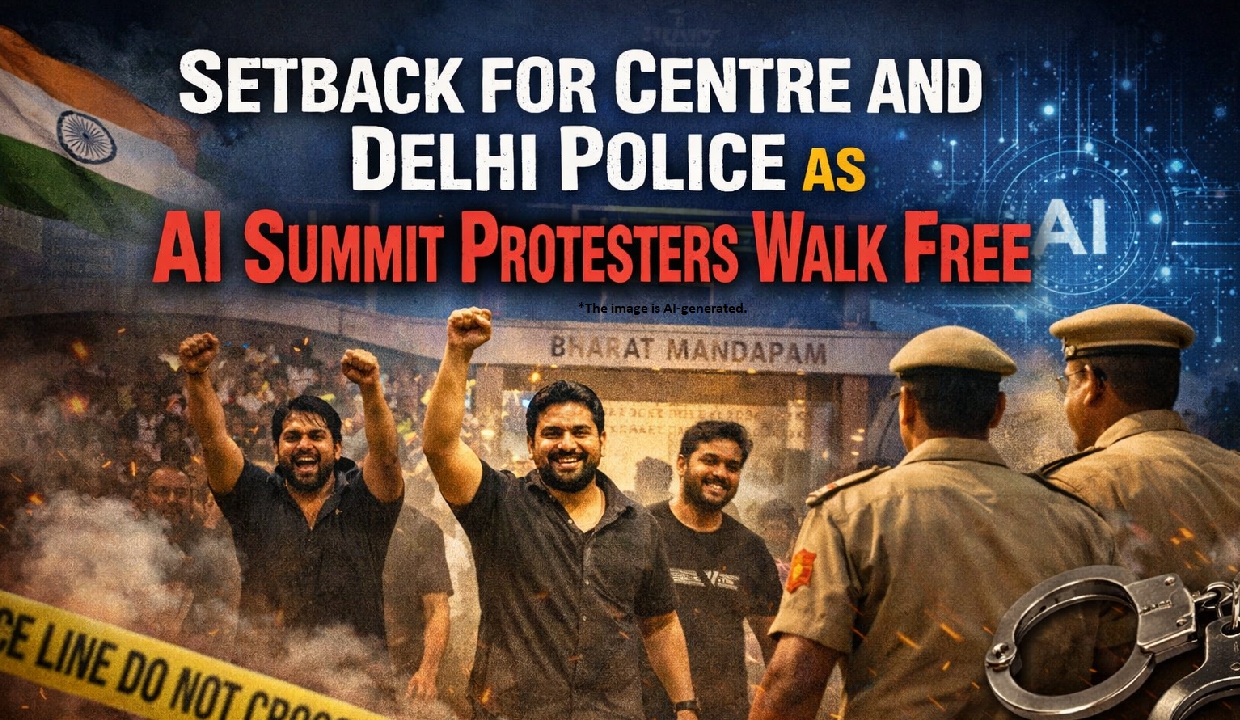
A conspiracy narrative, meticulously constructed by the Union Government and the Delhi Police regarding the “shirtless” protest at the India AI Impact Summit 2026, has suffered a significant blow. The legal developments of the past three days have turned into a setback for the authorities.
The alleged mastermind, Indian Youth Congress National President Uday Bhanu Chib, has walked out of custody following a grant of bail. Several other accused persons have also secured their release.
By losing custody of Chib, the police have effectively lost their best chance to “break” the case. In high-profile conspiracy matters, a failure to secure a full remand is often interpreted as a sign of insufficient evidence.
It has been a bumpy road for the prosecution in the ten days since the incident. The turning point arrived on February 28 when a Duty Magistrate at the Patiala House Court refused to extend police remand, granting Chib bail during a midnight hearing.
Stung by the ruling, the Delhi Police rushed to the Sessions Court and initially succeeded in staying the release. However, Chib’s legal team moved the Delhi High Court, which on March 2 overturned the stay, paving the way for his release. With the trial court also granting bail to nine additional accused, the prosecution has been dealt a double blow. Investigators termed the incident of protest as a “deep-rooted conspiracy” to disrupt the international event. However, the developments since February 28 have shaken the Delhi Police’s confidence, as the court’s skepticism suggests the ‘conspiracy’ narrative may be lacking sufficient evidentiary support.
These developments are particularly significant as they have unfolded before investigators could fully utilise the 14-day window for custodial interrogation.
What was baffling was that the Sessions Court had stayed the bail order-notably doing so in an ex parte hearing without granting the accused an opportunity to respond. The High Court’s decision to overturn that stay was primarily based on a lack of judicial reasoning and the failure to justify an ex parte intervention in a matter involving personal liberty.
This judicial pushback has already compromised the momentum of the ongoing investigation. The grant of bail to the Youth Congress President by the Magistrate, barely a week after the incident, undoubtedly shocked the central Government and shook the confidence of the investigators. The Sessions Court’s favourable order turned out to be short-lived for the prosecution, which now finds itself in a catch-22 position regarding whether to move to a superior court.
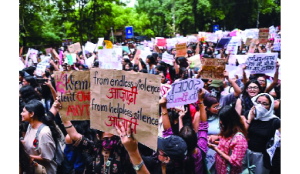
To understand the legal ramifications of the case, it is necessary to capture the sequence of events on which the theory of a deep-rooted conspiracy was placed before the court to take the demonstrators and others into custody. The “shirtless” protest at the India AI Impact Summit 2026 took place on February 20, 2026. The demonstration occurred around noon inside Exhibition Hall No. 5 at Bharat Mandapam in New Delhi. It has since triggered a significant political and legal standoff.
Members of the Indian Youth Congress were later arrested. Protesters entered the high-security venue by registering online for the summit. Once inside, they removed their outer layers (jackets and sweaters) to reveal T-shirts with slogans such as “PM is compromised” and messages regarding the “India-US Trade Deal.” The Youth Congress activists were protesting against the Government’s policies and specific trade agreements with the United States, choosing the international summit as a platform to draw global attention.
Multiple arrests were made by the Delhi Police in the days following the event. The incident led to a dramatic inter-state police standoff on February 26, 2026, when Delhi Police arrested more activists in Himachal Pradesh, leading to a jurisdictional dispute with the Himachal Pradesh Police and a kidnapping case registered against Delhi Police by local authorities.
The arrests in Himachal Pradesh led to a high-profile standoff between the Delhi and Himachal Pradesh police forces over procedural lapses, as the local Shimla police were reportedly not informed of the raid. As of late February 2026, a total of 14 people have been arrested in connection with the protest. The arrests were made in phases from different states as the Delhi Police expanded their investigation into what they termed a “deep-rooted conspiracy” to disrupt the international event.
Chib, the alleged mastermind, was arrested after 20 hours of questioning on February 24. Police allege he orchestrated the logistics and funding for the demonstration. Police allege these individuals were responsible for “direct involvement” and the digital documentation (filming and photography) used to circulate the protest on social media.
The case has been transferred to the Delhi Police Crime Branch. Most of the accused are currently in police custody under charges including: Criminal Conspiracy, Promoting Enmity between groups, Assault or Obstruction of a public servant, and Rioting.
Investigators are not considering the incident as a spontaneous political demonstration. They argue that the protest was a calculated effort to undermine India’s national security and global reputation. By staging the demonstration in front of global tech leaders and foreign dignitaries at Bharat Mandapam, the police claim the intent was to “tarnish the Republic’s diplomatic image” and portray India as unstable to foreign stakeholders.
In court, investigators compared the demonstration to “GenZ-led protests in Nepal” from the previous year. They allege the protesters used a specific “toolkit” or model of agitation designed to create high visual impact for social media while bypassing traditional security measures. Police are investigating the “financial trails” to see who funded the printing of specialised T-shirts and the travel of activists from multiple states (Bihar, UP, Telangana, and MP). Investigators are scanning deleted social media posts and encrypted messages to identify “handlers” who may have directed the arrested individuals.
Despite these claims of a “deep conspiracy,” Chib was granted bail as the Magistrate noted the police had not provided sufficient grounds to extend his custody further, effectively dismantling the narrative of a coordinated, “Nepal-style” sabotage. These findings and observations will have a bearing on the case, primarily because the remarks directly challenged the “conspiracy” narrative investigators had built.
The police had sought a 7-day extension of Chib’s custody, arguing they needed more time to “confront” him with other accused and trace financial trails. The Duty Magistrate dismissed this plea, stating that the Crime Branch had failed to explain the reasons for needing more time. Effectively, there was a signal that the four days of interrogation already completed should have been sufficient to gather primary evidence.
A central part of the police’s argument was that the protest compromised national sovereignty and security. In a notable observation, the Magistrate stated: “Merely saying the sovereignty was compromised does not justify prolonged custody.” This suggests the court found the police’s high-level charges (such as those hinting at sedition or a threat to the Republic) were not backed by enough concrete evidence to deny an individual their liberty.
The police faced criticism for the timing of the hearing. They produced Chib before the magistrate at 1:30 am on a Saturday morning, just as his previous remand was ending. The defence called this a “panic” move, and the decision to grant bail despite the odd hour suggests it saw no emergency or “sensitive” reason to keep him in jail.
Earlier last week, the court had already dealt the police a blow by forcing them to provide a copy of the FIR to Chib. The police had claimed the FIR was “sensitive in nature” and could not be shared; the court called this claim “untenable” and said denying the document violated constitutional safeguards.
The grant of bail to the alleged mastermind of the crime was unexpected. However, the Magistrate’s order and the outcome of bail matter in the High Court have given much-needed ammunition to the Congress Party and its youth wing, which has been justifying the mode of protest.
The order has also served as a lesson to the prosecution to undertake course correction and reconsider the manner in which they sought the extension of the Youth Congress Chief during the midnight hearing. Such a strategy by the investigators does not inspire confidence in the mode of probe. Further, the justification for the stay of the bail order would have been strengthened if the accused had been heard, which is now clear from the High Court decision.
Writer is a senior journalist covering legal affairs; Views presented are personal.