SC rules right to walk precedes right to move on wheels
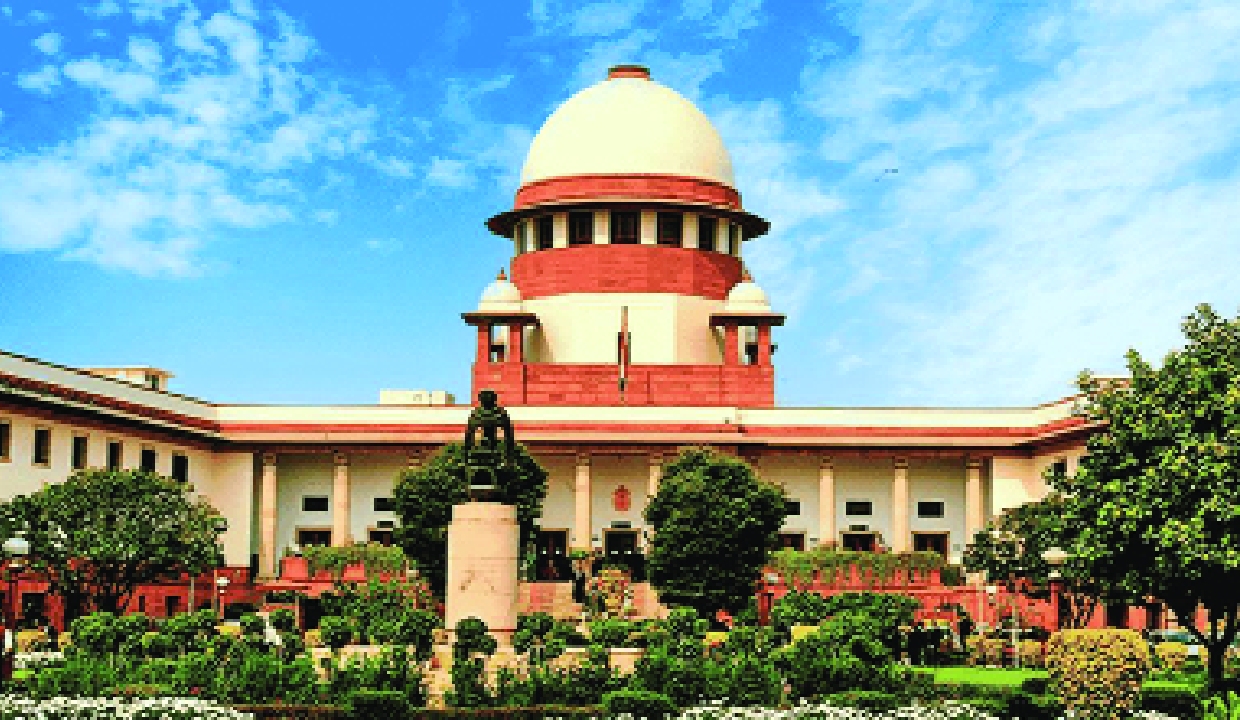
The persistent absence of demarcated and pedestrian-friendly footpaths has long posed serious safety and accessibility challenges for pedestrians in both urban areas and rural areas, forcing them to share road space with vehicular traffic. Recognising the gravity of the issue, the Hon’ble Supreme Court has recently intervened through its latest ruling, underscoring the urgent need to ensure safe and accessible pedestrian infrastructure.
In a recent landmark judgment, Maniyar Iliyaz @ Shaik Riyaz & Anr. v. P. Ayyappan & Ors., (2026 INSC 647), the Hon’ble Supreme Court has declared that the right to walk on a demarcated footpath is a fundamental right under Part III of the Constitution of India.
The ruling came after a tragic accident where a five-year-old boy was hit and killed by a tanker while walking to school with his father. The road they were walking on had no footpath or pedestrian crossing. While the Hon’ble Court made sure the grieving family received proper compensation, it also focused on the “recognition of the simplest of the simple human activity- ' Walking '.”
The Hon’ble Court observed that the Fundamental Right to Walk is the primary right of movement under Article 19(1)(d), and that this right precedes the right to move on wheels. This right must extend to guaranteeing access to a safe and well-demarcated footpath. As the Hon’ble Court further observed — “The citizen’s fundamental right to walk on a demarcated footpath is primary and shall have priority over movement by motorised vehicles.”
Upon further emphasising on the issue, the Hon’ble Court held that it is the duty of urban development authorities, municipal corporations, municipalities and panchayats to demarcate, construct, maintain and safeguard footpaths and other necessary pedestrian infrastructure. The citizens are entitled to invoke constitutional and legal remedies against duty bearers for restitution and compensation in case their right to walk on demarcated footpaths is violated.
Since the Fundamental Right to Walk is not recognised in the Motor Vehicles Act, 1988, the Hon’ble Court took deliberative measures and directed the Registry to send a copy of the said Judgment to the Ministries of Housing and Urban Affairs, Rural Development, Road Transport and Highways in order to contemplate on the necessity to initiate the necessary legal framework.
The present Judgment by the Hon’ble Supreme Court reinforces a practical reality wherein safe roads require attention not only to vehicles and traffic management but also to the everyday needs of those who travel on foot. This is not the first time that the Hon’ble Court has highlighted the importance of public spaces, including footpaths. Earlier, in Olga Tellis v. Bombay Municipal Corporation (1986 AIR 180), the Hon’ble Court recognised right to livelihood as an integral part of the right to life under Article 21 of the Constitution and observed that pavement dwellers cannot be evicted arbitrarily or without following a just, fair, and reasonable procedure.
However, the Hon’ble Court also made it clear that pavement dwellers do not have a fundamental right to occupy pavements or public streets and that public spaces must remain available for their intended public use.
The present Judgment reflects an evolution in the Hon’ble Court’s approach to public spaces, including footpaths, and elevates pedestrians’ rights to access demarcated footpaths to the status of a fundamental right.
Suman Jyoti Khaitan is founder & CEO and Surabhi Chhabra is senior associate in Suman Khaitan & Co. (Khaitan & Partners); Views presented are personal.