AI pressure on school curricula
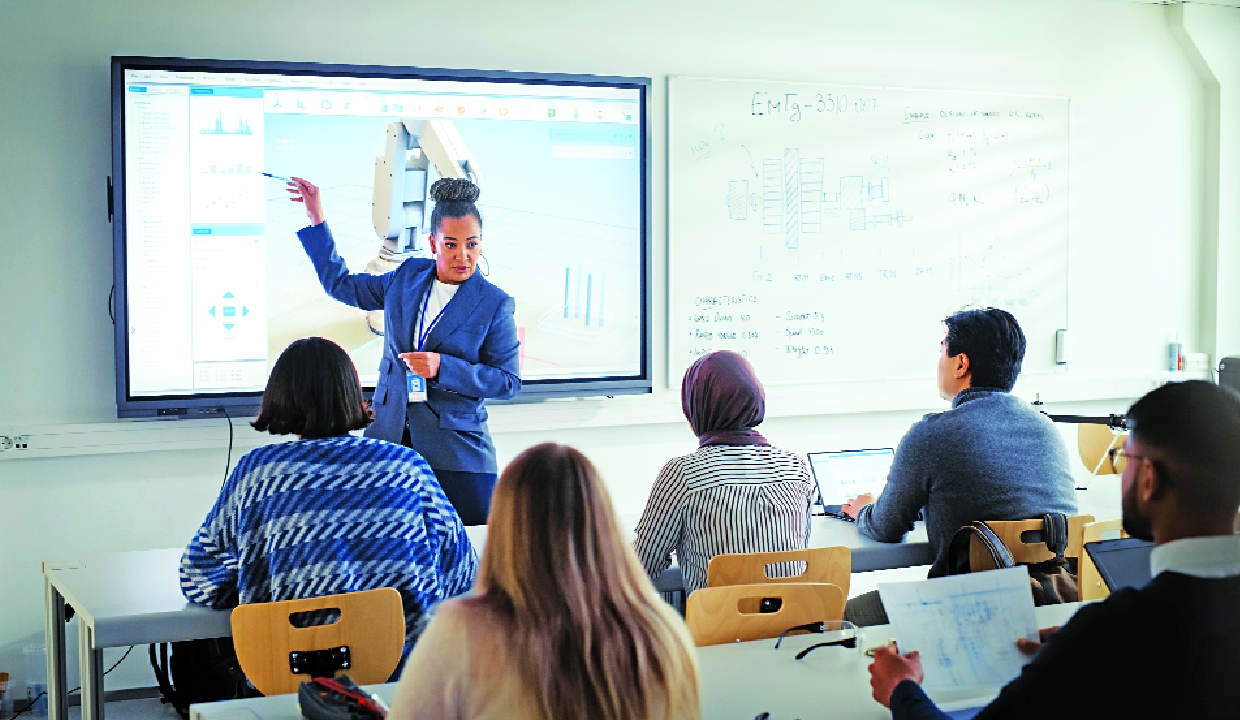
Over the years, the success of educational institutions has been measured by their ability to help children memorise facts and figures, perform calculations and excel in examinations. But today’s reality is evolving faster than at any other period in history. No longer confined to scientific laboratories and technology companies, AI has already found its way into all industries and professions, and is increasingly found in classrooms. This leaves no doubt that the time has come for AI literacy to stop being an optional skill, available only to engineering students and technology enthusiasts.
AI literacy is a concept that is often misunderstood. Learning it does not mean making everyone proficient in programming and machine learning. Rather, it means understanding how the technology works, how it is applied, what its limitations are, and how to harness its power to think smarter, learn faster and solve problems more efficiently.
The upcoming generation will enter professions in which AI will be an integral part of decision-making. Lawyers will need to use AI in their research. Doctors will rely on AI to assist in diagnosing patients. Every professional-including designers, marketers, architects, teachers, and entrepreneurs-will have to interact with intelligent systems. In this context, the future competitive edge does not lie in competing against AI, but in learning to work alongside it.
It is for this very reason that schools cannot afford to view AI merely as a hobbyist subject. AI literacy must be integrated into the curriculum as part of mainstream education, rather than being treated as an additional subject limited to computer science. Learners should understand AI and its impact on history through misinformation, on economics through automation, on science through its assistance in research, and on creativity through literary and artistic works.
Just as essential is the development of human skills that AI cannot replace. Creativity, empathy, ethics, curiosity and critical thinking are all even more important in a world shaped by AI. A student who knows how to ask questions, assess the output produced by an AI tool, identify bias and think independently will fare far better than one who knows how to operate an AI application.
Educators also have an obligation to build digital discernment. With generative AI now capable of creating convincing text, images and videos, students must learn to verify sources of information, distinguish between authentic and synthesised media, respect copyright, and understand the ethical dimensions of AI-generated material. This is not merely a technology lesson, but a lesson in citizenship.
Another significant shift AI brings is personalised learning. Every classroom consists of students who learn differently, progress at varying speeds and possess different strengths. AI-powered learning tools can help teachers identify knowledge gaps, customise instruction and provide timely support. This enables educators to spend more time mentoring and nurturing higher-order thinking rather than on repetitive administrative tasks. AI should not replace teachers; it should empower them to become even more effective educators.
One of the greatest benefits of AI literacy is its ability to prepare students for future jobs that have not yet been invented. Every major technological revolution has created roles that could never have been predicted in advance. Future professions will require adaptability, lifelong learning and readiness to work with new technologies. Students in schools where AI literacy is introduced today are not merely being taught a new subject - they are being prepared for a constantly changing world.
The discussion, therefore, should not be about whether schools should introduce AI literacy. Instead, the more pressing question is whether we can afford not to. In the next ten years, AI literacy will be as essential as digital literacy has been over the past two decades.
Preparing students for an AI-driven future begins not in universities or workplaces, but in classrooms. The schools that embrace AI literacy today will be the ones shaping the thinkers, creators and leaders of tomorrow.
The writer is Co-founder, AI & Beyond; Views presented are personal.