SC refuses ban on pellet guns, seeks preservation of records
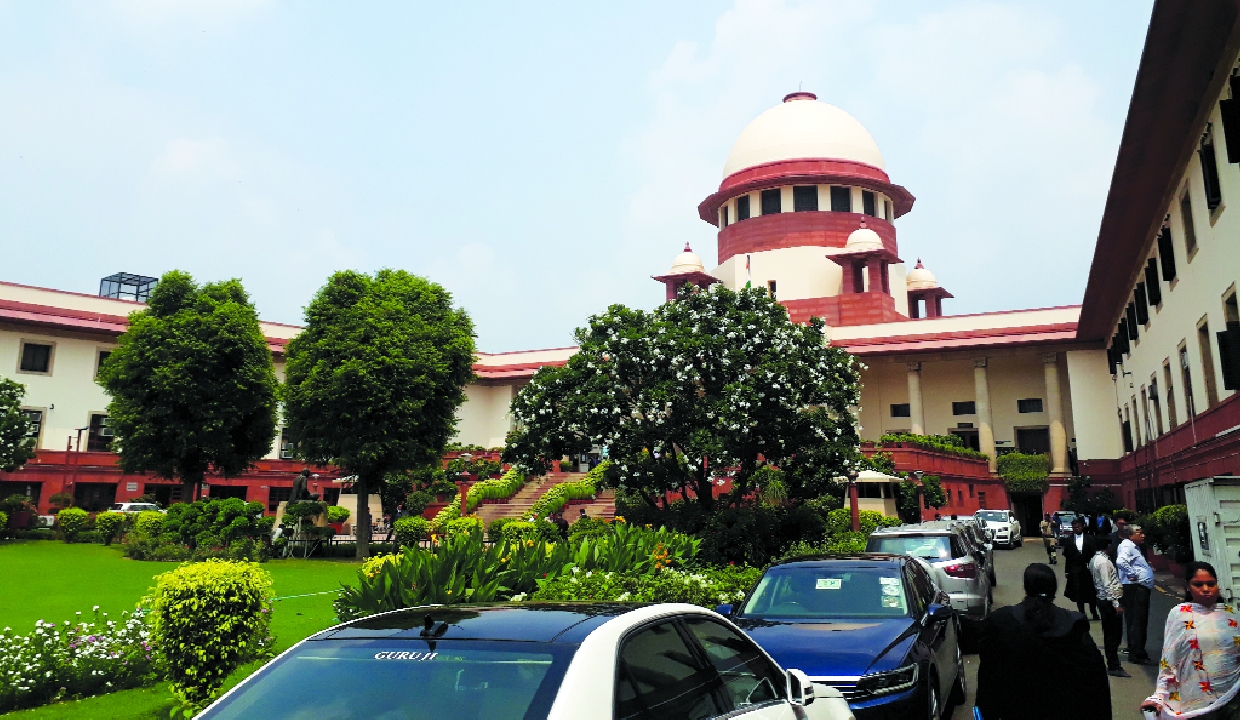
The Supreme Court on Thursday said that pellet guns cannot be banned as long as the existing advisory permits their use in exceptional circumstances for crowd control by security agencies, while making it clear that allegations of specific misuse can be examined on a case-by-case basis.
The SC took note of a plea on the use of metal pellet guns during the recent students’ protests against the NEET paper leak in Delhi and asked the Union Government to preserve the ammunition log of the Rapid Action Force (RAF) deployed at the Jantar Mantar.
Former Central Information Commissioner and retired IPS officer Yashovardhan Azad and the two victims had moved the court seeking a complete ban on the use of metallic pellet guns to deal with law-and-order situations. The bench issued a notice to the Union Government and the Inspector General of Police, RAF, on the plea by Azad and the two victims. Azad approached the SC seeking a nationwide ban on the use of wholly or partly metallic pellet ammunition fired from pump-action or projectile action guns for dispersing civilian assemblies, contending that such weapons are inherently incompatible with constitutional standards governing the use of force. The petition also sought exemplary compensation, comprehensive medical treatment and rehabilitation for all persons allegedly injured in the incident.
Observing that police, as per the Bureau of Police Research and Development (BPRD) advisory, are empowered to use pellet guns in exceptional situations, a bench comprising Chief Justice of India Surya Kant and justices Joymalya Bagchi and V Mohana termed the prayer in the plea seeking a complete ban on such usage as vague.
“Prayers are not to use pellet guns. In exceptional cases, police regulations permit the use of pellet guns. If you are interested in phasing out pellet guns, you will have to challenge that very provision as ultra vires to Article 21 (right to life),” Justice Bagchi said.
The bench took note of the submissions of senior advocate Vrinda Grover, appearing for the petitioners, and asked the Delhi Government to provide the best treatment to Prashant Kumar, Sheikh Irshad Mansoori and others who suffered pellet gun injuries during the July 20 protest here.
“I am not saying pellet guns should not be in the armoury of the RAF or not. Here it is different. They have used metallic pellets,” she said. Grover said metal pellets were recovered from their bodies.
The bench said it was not averse to examining the use of pellets in a particular incident and the petitioners must show if it was permissible under a “graded approach”. The senior lawyer said she was confining her reliefs to metallic pellets.
Solicitor General Tushar Mehta said the Government will do whatever is necessary to assist the bench. Grover said the top court on July 28 directed the preservation of CCTV, drone and body camera footage and wireless logs, and did not specifically refer to the ammunition logs of the RAF. “Whatever is required for investigation will be preserved,” the solicitor general said.
According to the petition, the RAF, deployed to assist the Delhi Police in crowd management during the protests, resorted to tear gas, lathi-charge and subsequently fired pump-action guns loaded with metallic pellets near Connaught Place.
The petitioners alleged that no prior warning or announcement was issued before the escalation in the use of force and that several protesters suffered serious injuries, including eye injuries.