SC questions IPS presence in CAPF leadership
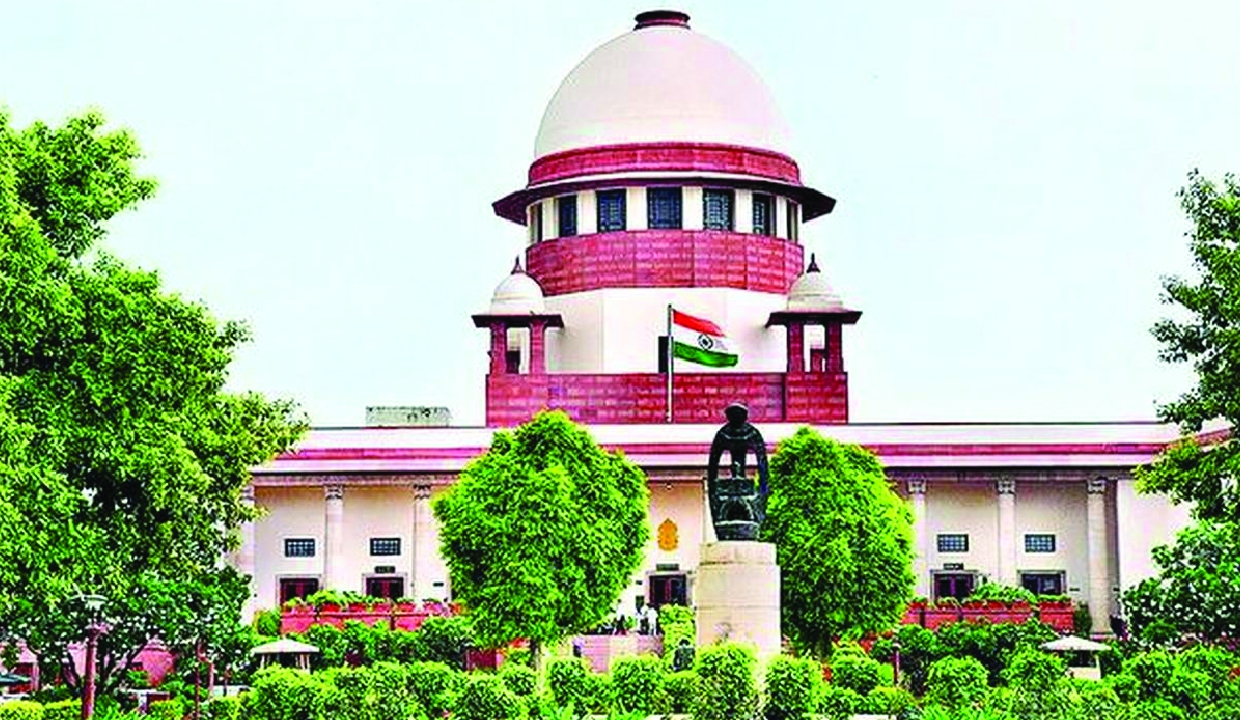
The Supreme Court on Wednesday questioned the Centre over its alleged inability to resolve the tussle between IPS and in-house officers of paramilitary forces over deputation and seniority in service.
Earlier, the top court had issued a notice to the Centre on a plea by the officers of paramilitary forces challenging the constitutional validity of the Central Armed Police Forces (General Administration) Act, 2026, on the ground that it “violates the doctrine of separation of powers”.
On Wednesday, a bench of Justices Ujjal Bhuyan and AS Chandurkar, while questioning the Centre over the deputation of IPS officers in the CAPF, asked Additional Solicitor General Aishwarya Bhati whether there were no competent officers for holding leadership positions in paramilitary forces. “Do you think that there are no competent officers in the Central Armed Police Forces (CAPFs) to hold leadership positions,” Justice Bhuyan asked. Pointing out that it was a wrong step, Justice Bhuyan said, “There are officers who served for 25-30 years in CRPF, ITBP and BSF, and yet they have not been given leadership positions.”
“Why are you treating them like this,” he went on, adding, “They are also defending our borders. They are also fighting for us and making supreme sacrifices…”
The law officer defended the government’s move and said the decision regarding the CAPF was not a “this versus that issue” but a policy decision. On August 4, the bench had tagged the plea of 34 CAPF officers with pending matters. The plea filed by the officers sought a declaration that the law is unconstitutional on the ground that it violates Articles 14, 16 and 21 of the Constitution.
Parliament passed the CAPF (General Administration) Bill on April 2 after the top court dismissed the Centre’s plea in October 2025 for a review of its verdict delivered in May that year directing that IPS officers’ deputation in the CAPFs, up to the level of senior administrative grade (SAG), should be “progressively reduced” and asked for a cadre review to be carried out within six months.
The 34 officers argued in their plea that the new CAPF Act negated the judgements of last year, without removing the legal basis of those decisions.
The plea contended that while the legislature is competent to amend the law retrospectively, it cannot simply nullify judicial pronouncements without curing the defects or altering the underlying legal basis on which the judgement was rendered.
In its order dated May 23, 2025, the top court had directed the Centre to conduct a cadre review, which was due in 2021, in all CAPFs, including the ITBP, BSF, CRPF, CISF and SSB, within six months.
It directed the Department of Personnel and Training to take an appropriate decision within three months of receiving the action taken report from the Ministry of Home Affairs regarding cadre review and review of the existing service and recruitment rules.
The court’s directions came on a batch of pleas seeking non-functional financial upgrade, cadre review and restructuring and amendment of recruitment rules to eliminate Indian Police Service (IPS) officers’ deputation.
“Keeping in mind the twin objectives of service mobility of the cadre officers of CAPFs, removing stagnation on the one hand and the operational/functional requirement of the forces on the other, we are of the view that the number of posts earmarked for deputation in the cadres of the CAPFs up to the level of senior administrative grade should be progressively reduced over a period of time, say within an outer limit of two years,” the top court had said.
It also said that this step would bring in a sense of participation of the cadre officers belonging to the CAPFs in the decision-making process within the administrative framework of the CAPFs, thereby removing the long-standing grievances of the cadre officers.
The apex court had highlighted that the Centre had taken the view that the presence of IPS officers in each of the CAPFs is vital to maintain the character of each of them as a unique central armed force.
“This is a policy decision. Of course, individual officers belonging to the IPS or the association of IPS officers cannot have a say as to how much the deputation quota should be and how long the deputation should continue. They are there on deputation by virtue of the policy decision of the Central government manifested through the service rules/recruitment rules of the CAPFs.
“Having said that, we cannot also be oblivious of the grievances expressed by the officers of the CAPFs as highlighted above. Their dedicated service upholding the security, integrity and sovereignty of the nation while safeguarding our borders and maintaining internal security within the country cannot be ignored or overlooked,” it had said.
Noting that the CAPF officers discharge their duties under very demanding conditions, the court said they have a grievance that because of lateral entry into the higher grades of the respective CAPFs, they are unable to get timely promotion.
“Consequently, there is a great deal of stagnation. Such stagnation can adversely impact the morale of the forces. This also needs to be factored in while considering a review of such policy decisions,” it had said.