SC demands roadmap from Govt on Delhi air
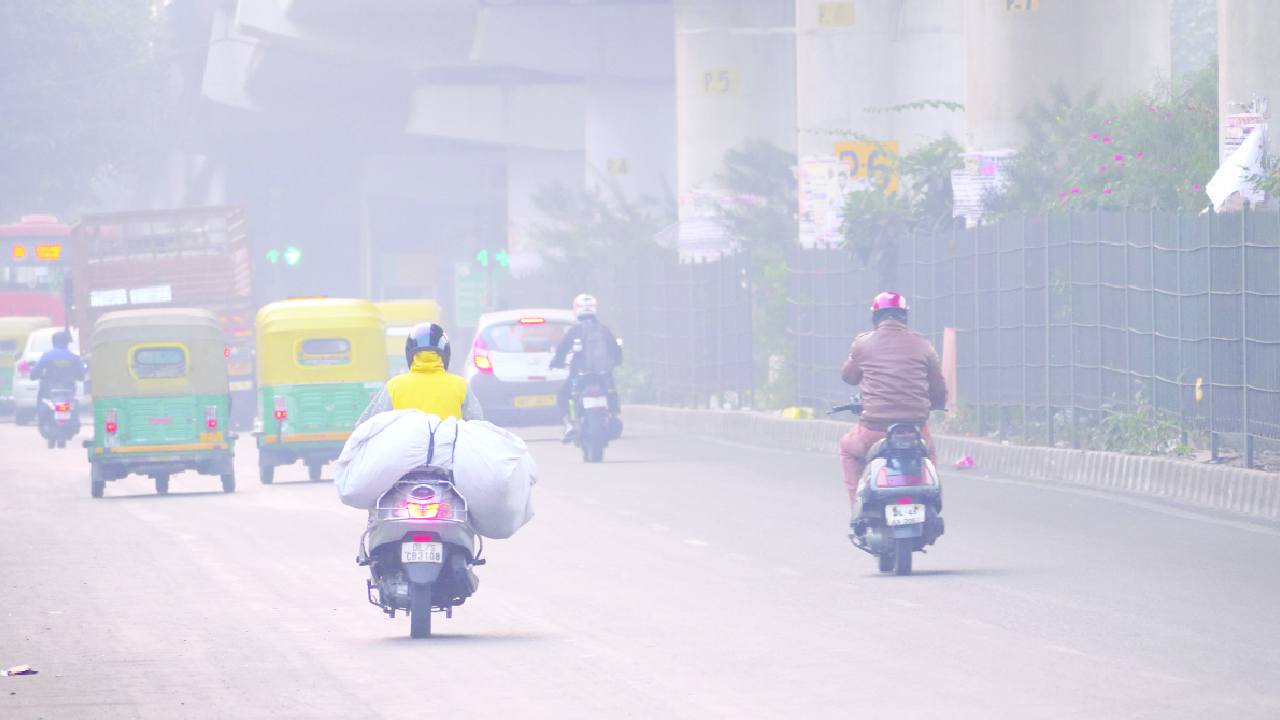
With the Commission for Air Quality Management (CAQM) identifying the transport, industry, dust, biomass as major contributors towards air pollution in Delhi-NCR, the Supreme Court on Wednesday gave State agencies four weeks to submit their respective action-taken plans to give effect to long-term measures recommended by the Commission.
A three-judge bench comprising Chief Justice of India Surya Kant and justices Joymalya Bagchi and Vipul M Pancholi took note of a status report filed by Additional Solicitor General Aishwarya Bhati, appearing for the Commission for Air Quality Management (CAQM). The status report highlighted the city’s main air pollution sources are: transport (23 per cent), secondary particulates (27 per cent), and dust (15 per cent-27 per cent). Winter PM2.5 levels are 35 times the World Health Organisation (WHO) guidelines, despite decade-long efforts. The status report states that based on a meta-analysis of studies from 2015 to 2025, the experts attribute PM2.5 pollution in Delhi to a mix of transport, industry including thermal power plants, road and soil dust, biomass burning, and secondary particulate formation, with varying seasonal contributions.
As the hearing commenced Bhatti told the court that the CAQM’s expert committee has identified the vehicular sector as the primary contributor to air pollution in Delhi-NCR. Bhati apprised the apex court that CAQM has submitted detailed long-term measures, including phasing out polluting vehicles from Delhi-NCR based on emission, strengthening of Pollution Under Control regime, augmentation of rail transport and metro, revised electric vehicle policy among other measures.
The Commission recommended expansion of the public transport network with more buses and metro lines, and strengthening the regional railways. It suggested higher environmental protection charges, currently at 1%, on luxury diesel vehicles and SUVs of 2,000 cc and above, and a plan for the CNG and LNG fuelling network.The Commission suggested that polluting vehicles should be phased out from Delhi-NCR in a time-bound manner based on emission potential, with scrapping or transfer of such vehicles outside the region. The PUC 2.0 network should be strengthened and on-road vehicle emissions should be monitored using remote sensing devices. Regional rail transport, metro rail networks and city public bus services should be expanded, including greater use of electric buses and CNG buses, in line with population-based benchmarks. Multi-modal transport hubs, last-mile connectivity systems and real-time passenger information systems should be developed to encourage public transport use.
Electric vehicle policies should be reviewed and strengthened, EV charging and battery-swapping infrastructure should be expanded, and retro-fitment of vehicles to electric should be permitted through certified agencies. CNG and LNG fuelling networks should be developed in NCR and along highways to shift long-haul commercial vehicles to cleaner fuels. Technology-based enforcement measures such as ANPR, RFID, remote sensing and AI-driven surveillance should be intensified to improve compliance. Imposition of higher Environment Protection Charges (presently only 1%) on vehicles of luxury segment diesel cars/ SUVs of 2000cc capacity and above,
The proposals also covered dust pollution from construction and demolition activities, dust from roads, industrial pollution, thermal power plants, and stubble burning among major sources of air pollution in the national capital.
The Commission notes that congestion at Delhi’s entry points, particularly at toll plazas operated by the MCD, is a contributor to vehicular emissions and localized deterioration of air quality. Despite earlier directives of the Commission, several toll points continue to rely on hand-held RFID devices and mobile-based systems. Such arrangements require vehicles to slow down or stop, leading to traffic congestion. The levy of Environment Compensation Charge should continue uninterrupted at Delhi’s border entry points. The Municipal Corporation of Delhi should install and fully operationalise a barrier-free Multi-Lane Free Flow toll system integrated with RFID and Automatic Number Plate Recognition at all 126 toll collection points by October 2026 to prevent vehicular stoppage and congestion.
The Commission also notes that while substantial amounts have been collected towards ECC over the years, a significant portion of these funds remains unutilized. This under-utilization dilutes the effectiveness of ECC as an environment protection measure, as the intent of the Hon’ble Supreme Court was not merely to levy a compensatory charge, but to ensure that the amounts collected are deployed in a timely and targeted manner for air pollution mitigation interventions.The top court bench, also noted the proposals on the need for advanced technologies like automated RFID at Delhi’s border entry points.
It also sought an explanation from the Municipal Corporation of Delhi (MCD) and other agencies on why the recommendations should not be implemented expeditiously.“We do not need objections. All that the concerned agencies, particularly the MCD and agencies of neighbouring states, are required to do is to submit the action plan and the timeline within which they shall comply,” the bench said.