Satish Gujral: A 100 years of fire

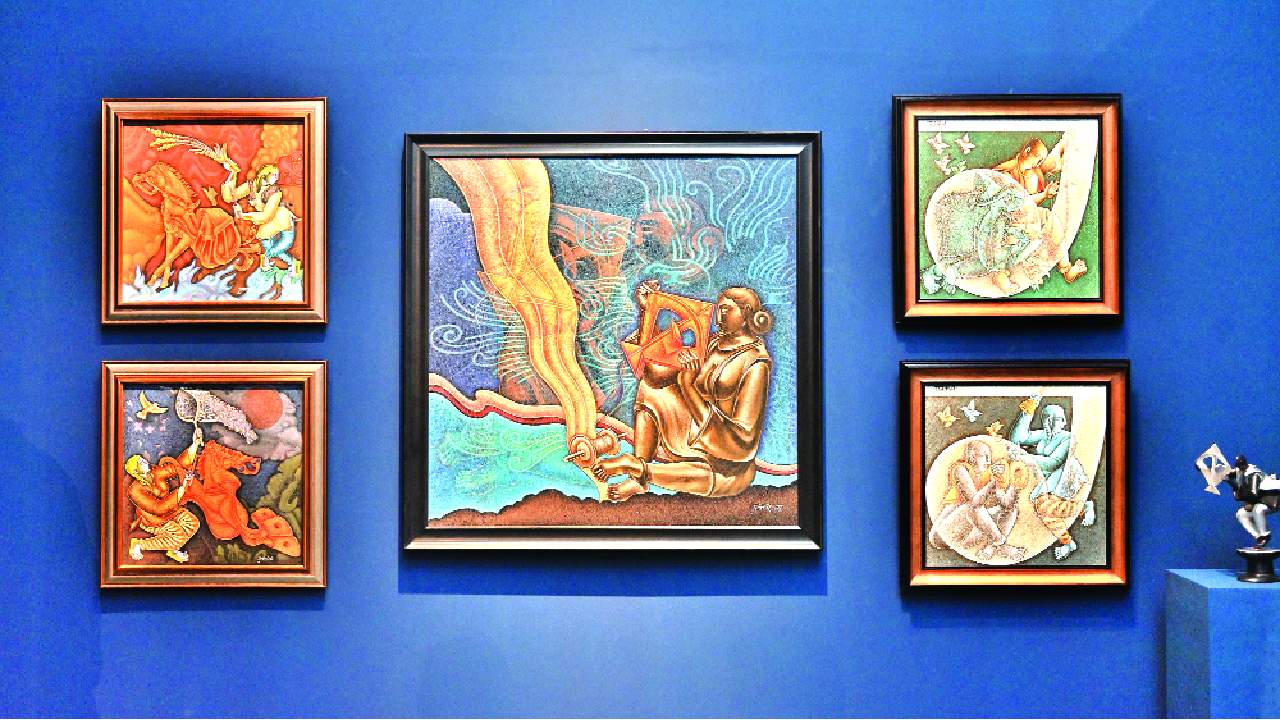
As Satish Gujral once said, “Art is a language I used when words failed me.” Standing inside the National Gallery of Modern Art, Satish Gujral 100: A Centenary Exhibition feels like a homecoming for a man who spent his life translating silence into structure. This landmark retrospective, open until 30 March 2026, is curated by Kishore Singh. It brings together the public reach of the NGMA and the private archives of the Gujral Foundation to honour a century of creative rebellion.
The exhibition charts the grit of 1952, when Gujral travelled alone to Mexico. He navigated the isolation of hearing loss and a world of unfamiliar tongues with almost no money or support. Yet, he emerged as the first Indian artist to master modern muralism. His early paintings are raw; they capture the jagged pain of the Partition through distorted figures and bruising, earthen tones. These canvases carry the physical weight of a survivor.
As his focus shifted, Gujral moved toward a fascination with material. He began working with burnt wood and ceramics, treating the canvas as a site of physical construction. His transition into architecture was an expansion of his soul. The archival sketches for the Belgian Embassy show he viewed a brick wall with the same emotional depth as a human face. This show reveals a multidisciplinary giant who used his hands to build what his ears could not hear, leaving a legacy that remains a cornerstone of Indian heritage until the exhibition concludes on March 30.