Right to breathe: The struggle continues for Delhi’s most basic fundamental right
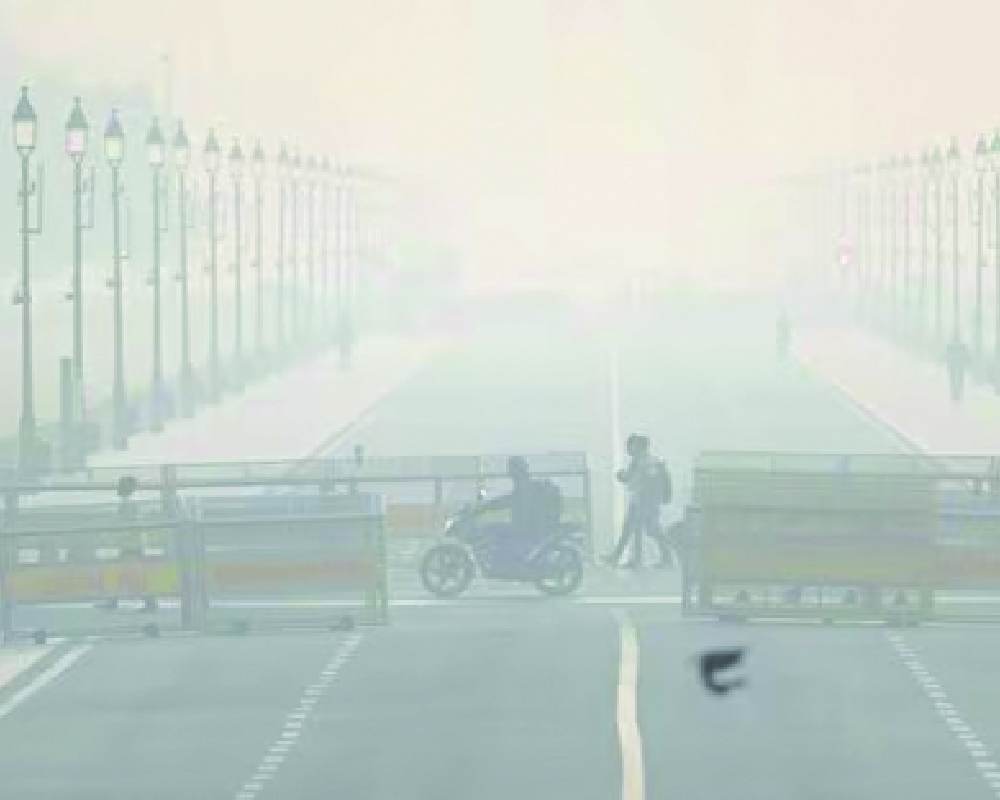
New Delhi is once again at the center of international headlines, though for its toxic air quality rather than its national milestones. This environmental crisis persists despite the city now having a ‘triple-engine’ Government — with the BJP/NDA leading the Union Government, the Government of NCT of Delhi, and the Municipal Corporation.
Furthermore, although the city is the citadel of India’s highest legal authorities, including the National Green Tribunal (NGT), the Delhi High Court, and the Supreme Court, judicial mandates have failed to bring relief. The disconnect between unified political power and the reality of the deadliest smog in history remains a harrowing failure for the National Capital Region (NCR).
The judicial intervention into issues related to air pollution in the NCR dates back to the mid-1980s, when environmentalist and lawyer MC Mehta filed a landmark Public Interest Litigation (PIL) against vehicular and industrial pollution. Since then, in the last 40 years, several aspects of air pollution have been dealt with by the Supreme Court, which in 1986-87 ruled that the Right to Life under Article 21 of the Constitution includes the right to a clean environment (Oleum Gas leak Case), and in 1996 ordered the closure or relocation of nearly all polluting industrial units out of Delhi’s residential areas.
In a historic order in 1998, the Supreme Court directed that Delhi’s entire public transport fleet (buses, autos, taxis) switch to CNG. The year 2015-2017 witnessed the now much-talked-about creation of the Graded Response Action Plan (GRAP) to trigger specific curbs based on Air Quality Index (AQI) levels.
The issue of Air Pollution in the past generally grabbed the headlines during the months from October to the end of winter in February, and the Supreme Court’s involvement in the past was based on periodic monitoring, which has now turned into war-like monitoring by treating the air crisis as a permanent health emergency rather than a passing weather event.
The issue of health concern was manifested in the Arjun Gopal case, when the Supreme Court in 2017 prioritised the health of children over cultural practices, initially banning and then restricting firecrackers to “green” variants.
While the political blame game was witnessed between the then ruling AamAadmi Party (AAP) Government in Delhi and the BJP-led Central Government for the worsening air quality in the NCR from 2014 to 2024, the Supreme Court came out with several other orders including Petcoke and Furnace Oil ban, directives on Stubble Burning, supported the creation of Commission for Air Quality Management (CAQM), the statutory body to take over day-to-day management, hoping to reduce judicial workload.
The Supreme Court also pushed for Smog Towers, which were later found to be largely ineffective, and in April 2024, ruled that Article 21 also includes a right to be free from the adverse effects of climate change (MK Ranjitsinh case).
Besides the Supreme Court, the NGT and the High Court have also been addressing grievances concerning Air Pollution. It was the NGT, not the Supreme Court, that first banned diesel vehicles older than 10 years and petrol vehicles older than 15 years in Delhi-NCR in 2014-15.
Since 2014, the Green Tribunal has focused on the root causes of smog, such as open waste burning and massive landfill fires (Ghazipur in East Delhi and Bhalswa in North Delhi). It has repeatedly fined the Delhi Government hundreds of crores for failing to process “legacy waste,” based on the “Polluter Pays Principle.” The massive fines were imposed on the Delhi Government primarily between 2022 and 2023, with legal ripples continuing into late 2025.
The NGT was the first to mandate “green curtains” and dust-suppression measures at construction sites, often imposing immediate “stop-work” orders on major infrastructure projects if air quality sensors showed local spikes.
The High Court, on the other hand, has focused on the local implementation of policies and the protection of the city’s residents and has often taken SuoMotu (on its own motion) notice of the air quality, acting as a check on the Municipal Corporation of Delhi (MCD) and holding the Delhi Pollution Control Committee (DPCC) accountable.
It is evident that during the AAP’s tenure, the judiciary issued several radical directives. However, their ground-level implementation remained largely absent, leaving Delhi residents to suffer through hazardous air year after year. This period was characterised by a persistent political stalemate.
While the Arvind Kejriwal administration accused the BJP-led Central Government of withholding necessary cooperation, the Union Government countered by charging the AAP dispensation with passing the buck to avoid accountability for the city’s environmental crisis.
Amidst the war of words between the two political outfits, worsening air quality became one of the many issues in the run-up to the Delhi Assembly Elections in February 2025, with the BJP-led NDA taking command over the governance of the Government of NCT of Delhi.
The BJP campaigned on a Triple-Engine promise to launch a “Delhi Clean Air Mission” that would end the decade-long political blame game and use unified governance to halve the city’s pollution levels by 2030.
Chief Minister Rekha Gupta, in the first year, pledged immediate relief through an “Air Pollution Mitigation Plan” launched in June 2025. This plan moved beyond long-term targets to include several “quick-win” interventions for the 2025-26 winter season. One such intervention was the launching of cloud seeding (artificial rain) experiments in collaboration with IIT Kanpur specifically to wash away pollutants during the November — December peak, which failed to deliver the desired results, leading to a fresh round of political sparring between the ruling party and opposition in Delhi.
The dramatic role reversal following the February elections has placed the BJP on the defensive. With the ‘Triple-Engine’ Government now fully accountable, Delhi’s Environment Minister, Manjinder Singh Sirsa, has been forced to navigate the same public frustration his party once channeled as the opposition.
His recent apologies, coupled with the plea that eight or nine months is insufficient to dismantle a decade of ‘legacy problems,’ suggest that while the political leadership has changed, the structural deadlock of Delhi’s air crisis remains stubbornly intact.
While the Union and Delhi Governments appear to have left the battle at the mercy of God, the Supreme Court — which recently remarked that it does not possess a ‘magic wand’ to vanish the toxic air — has, in recent days, passed several radical orders with the hard hitting remarks that there was a total failure on the part of the administration whose response has been purely reactive and “ad-hoc,” relying on interim policy decisions like school closures which merely act as “temporary protection” rather than addressing the root cause.
It modified its earlier August order, allowing authorities to immediately impound diesel vehicles older than 10 years and petrol vehicles older than 15 years if they do not meet at least BS-IV emission standards. Further, the Supreme Court has ordered toll collection to stop until January, noting that idling traffic at border checkpoints significantly increases toxic smog.
The Supreme Court mandates must have reached Lieutenant Governor (LG) VK Saxena. Reports also suggest that in recent weeks, the LG and the Chief Minister have held multiple high-level emergency meetings on air quality. However, despite the record-breaking AQI levels, the LG — who was previously very vocal on social media criticizing the AAP Government’s pollution failures — has largely refrained from writing critical open letters or posting on X (formerly Twitter) against the current BJP-led administration.
The severity of the air pollution served as a wake-up call to the Congress leadership, who pivoted from their usual opposition to every Government policy to raise this health emergency in Parliament. Leader of the Opposition in the Lok Sabha, Rahul Gandhi, described the smog as a ‘blanket of poisonous air’ that is destroying the future of children.
While the Government expressed readiness to discuss this sensitive issue, the Winter Session did not provide the conducive environment needed for such a deliberation. Consequently, Union Environment Minister Bhupender Yadav missed the opportunity to place before the House a definitive roadmap to overcome the crisis, leaving citizens to continue their struggle for the most basic fundamental right: the Right to breathe.