Reviving the India-Arab Partnership
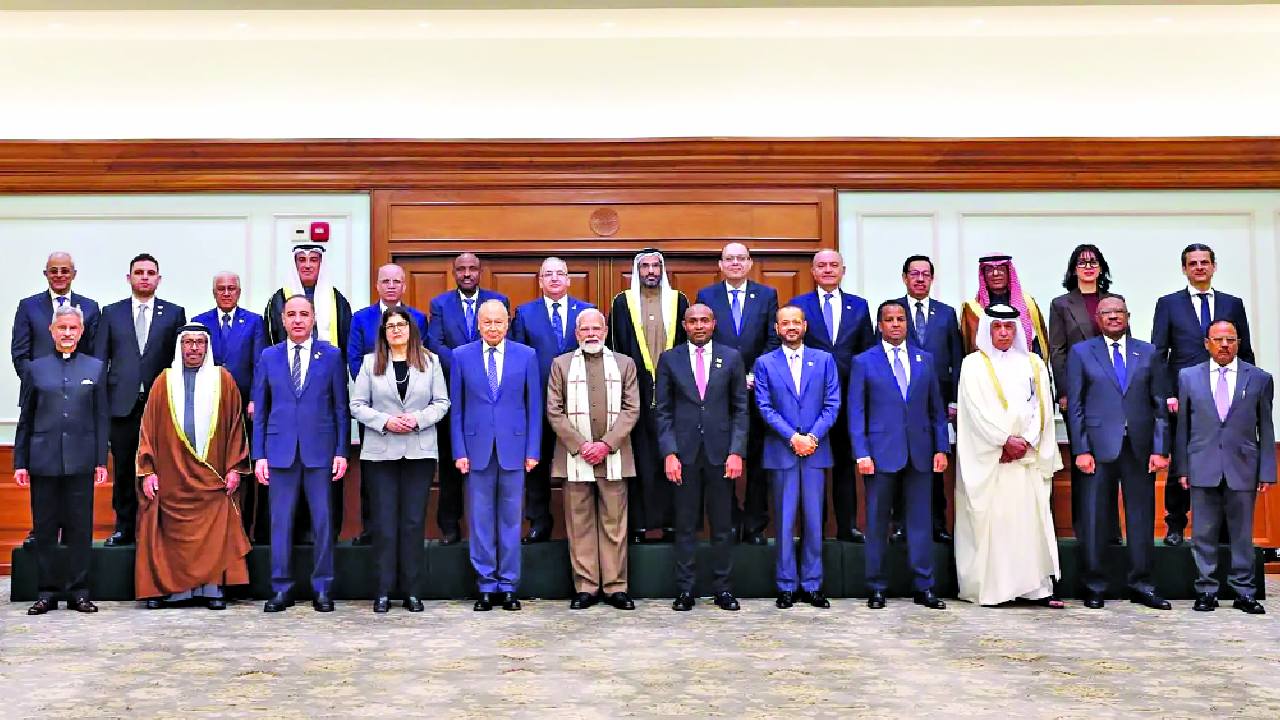
Secretary General of the India and Arab Countries Chamber of Commerce, Industry and Agriculture As global supply chains fragment and geopolitical tensions reshape trade relationships, two ancient civilizations are reconnecting to build one of the 21st century's most consequential economic partnerships. The recent inauguration of the India and Arab Countries Chamber of Commerce, Industry and Agriculture marks not the creation of something new, but the revival of a partnership five millennia in the making — now equipped for contemporary challenges and opportunities.
This is more than diplomatic ceremony or commercial networking. It represents a fundamental realignment in global economic geography, one that could reshape trade flows, investment patterns, and strategic relationships across three continents.
Two Civilizations, One Continuous Story
For over 5,000 years, India and the Arab world have been intertwined through more than commerce. The ancient Silk Road and maritime routes across the Indian Ocean carried not just spices and textiles, but ideas that transformed human civilization itself.
Indian mathematics — including the revolutionary concept of zero—traveled through Arab scholars to reshape global knowledge systems. Arab astronomy and medicine enriched Indian scientific understanding. The great libraries of Baghdad and Cairo preserved Indian texts during Europe's dark ages. The universities of Nalanda and Takshashila welcomed Arab scholars, creating intellectual exchanges that advanced both civilizations.
This wasn't mere trade — it was civilizational dialogue that advanced humanity. The spice merchants and silk traders of antiquity were also carriers of philosophy, science, and culture. Their legacy isn't found only in archaeological sites and historical records, but in the mathematical systems we use today, the medical knowledge we rely upon, and the cultural traditions that continue to connect our peoples.
This heritage provides more than nostalgic foundation for contemporary cooperation. It demonstrates a fundamental truth: India and the Arab world are natural partners whose success has always been mutually reinforcing.
From Caravans to Cargo Jets: Evolution, Not Revolution
Today's partnership must evolve to meet contemporary realities, but its essential character remains unchanged.The camel caravans of the Silk Road have given way to cargo aircraft and container ships. Handwritten manuscripts exchanged between scholars have become fiber-optic cables carrying terabytes of data. The ancient spice trade has evolved into sophisticated exchanges of pharmaceuticals, advanced technology, and precision manufacturing.
Yet the fundamental complementarity that made the ancient partnership prosper remains intact — it has simply taken modern forms.
Consider the opportunity: India's $4.35 trillion economy, projected to become the world's third largest, combines with the Arab world's $4 trillion in sovereign wealth and strategic position connecting Asia, Europe, and Africa. Together, we represent 1.8 billion people and over $6 trillion in combined GDP.
Current bilateral trade exceeds $300 billion annually — impressive in absolute terms, yet representing merely 15-20 per cent of our partnership's true potential. This gap between current reality and possible future is precisely what the new Chamber exists to close.
Strategic Complementarity in Modern Form
Why are India and the Arab world natural partners in the 21st century? India offers technological innovation, pharmaceutical manufacturing excellence, world-leading IT services, agricultural expertise, engineering capabilities, and access to a rapidly growing consumer market of over 1.45 billion people.
The Arab world offers energy resources critical to India's industrial growth, investment capital exceeding $4 trillion in sovereign wealth funds, strategic geographic location, massive infrastructure development opportunities, and direct access to 400 million consumers across one of the world's wealthiest regions.
Where India needs energy security and investment capital, the Arab world needs technology transfer, food security solutions, and manufacturing expertise. Where India seeks expanding export markets, the Arab world provides gateway access to Africa and Europe. Where Arab nations pursue economic diversification beyond hydrocarbons, India offers proven capabilities in services, technology, and industrial development. This is civilizational complementarity adapted for the modern era — the same natural fit that made ancient trade routes prosper, now operating through contemporary mechanisms of trade, investment, and technological collaboration.
The Diaspora Advantage: 10 Million Living Bridges
India and the Arab world possess a unique competitive advantage that no other bilateral partnership can match: nearly 10 million Indians living and working across Arab countries.
This diaspora represents far more than labor migration. It constitutes an unparalleled bridge of trust, cultural understanding, and market knowledge. These 10 million individuals are living proof that Indians and Arabs work together successfully, that our civilizations remain compatible and complementary, that mutual prosperity is not theoretical but demonstrated daily across the Gulf region and beyond.
For businesses seeking market entry, this network provides invaluable intelligence, trusted connections, and cultural fluency that would take decades to develop independently. For governments pursuing economic cooperation, this diaspora offers ready-made channels for people-to-people exchange that facilitate official initiatives.The Chamber mobilizes this unique asset strategically—not as passive observers but as active participants in building contemporary India-Arab economic integration.
Beyond Transactions: Building Institutions for Generational Partnership
The India and Arab Countries Chamber of Commerce, Industry and Agriculture is designed not for transactional convenience but for transformational impact.
Rather than simply connecting individual buyers with sellers, the Chamber provides institutional infrastructure for sustained collaboration: sector-specific councils in pharmaceuticals, agriculture, energy, technology, and infrastructure; real-time market intelligence and regulatory guidance; government-level access and policy advocacy; transaction support from initial feasibility to final deal closure; and dispute resolution mechanisms that reduce risk and build confidence.
This institutional approach addresses a fundamental challenge in bilateral economic relationships: the gap between high-level political agreements and practical business implementation. Government-to-government MOUs are valuable, but they rarely translate automatically into commercial outcomes. The Chamber serves as the mechanism for converting diplomatic vision into measurable economic results.
For members, this translates into concrete value: strategic access to ministers, ambassadors, and policymakers who can open doors that would take years to access independently; market intelligence providing regulatory updates, opportunity assessments, and early access to government tenders worth billions; pre-qualified business matchmaking based on strategic fit rather than random networking; and end-to-end transaction support including due diligence, legal navigation, and trade finance facilitation. This is not membership as expense — it is participation as strategic investment in one of the 21st century's most promising bilateral partnerships.
Three Eras: From Classical Glory Through Colonial Disruption to Contemporary Revival
When future historians chronicle India-Arab cooperation, they will identify three defining eras.
The classical era, stretching across millennia, when our civilizations pioneered global trade networks and demonstrated that partnership across cultures creates prosperity exceeding what any single civilization can achieve alone. This was the age when Indian merchants and Arab traders built the first truly global economy, when knowledge flowed freely across the Indian Ocean, when the concept of win-win cooperation was practiced long before it became fashionable business terminology.
The period of interrupted partnership, when colonial powers deliberately disrupted our natural alliance and sought to redefine our relationships through their own strategic interests rather than our mutual benefit. European colonialism didn't merely conquer territories —it severed economic networks, redirected trade flows, and inserted itself as mandatory intermediary in relationships that had flourished independently for thousands of years.
The contemporary revival, beginning now, when two ancient civilizations reclaim their partnership, modernize their cooperation mechanisms, and demonstrate that heritage combined with innovation creates competitive advantages unavailable to partnerships built on recent convenience or temporary alignment.
This third era is not about returning to the past — it is about learning from history while building for the future. We honor ancient wisdom while deploying contemporary technology. We maintain cultural respect while pursuing cutting-edge innovation. We acknowledge civilizational continuity while adapting to 21st-century realities.
The Geopolitical Context: Partnership in a Fragmenting World
This revival comes at a moment when global economic architecture is being fundamentally restructured. Trade wars and tariff barriers are replacing the relatively open system that characterized recent decades. Supply chains are being "friend shored" and "nearshored" based on political alignment rather than pure economic efficiency. Technology transfer is increasingly restricted by national security concerns. Investment flows are being filtered through geopolitical lenses.
In this environment, the India-Arab partnership offers advantages that purely transactional relationships cannot match:
Historical trust built over millennia rather than recent diplomatic convenience. Cultural compatibility demonstrated through the 10-million-strong diaspora rather than assumed based on surface similarities. Complementary development stages that create natural opportunities for mutually beneficial exchange rather than zero-sum competition. Geographic proximity that reduces supply chain vulnerability while maintaining strategic independence from single-power domination.
Both India and Arab nations seek to avoid excessive dependence on any single power or bloc. Both value strategic autonomy while pursuing beneficial partnerships. Both are rising powers seeking to shape rather than simply react to global economic restructuring.
The India-Arab partnership allows both regions to achieve these objectives simultaneously — building resilience through diversification while deepening cooperation based on genuine complementarity.
The Path Forward: From Potential to Performance
Grand visions matter, but they must translate into measurable outcomes. The Chamber launches with concrete commitments: facilitating $500 billion in bilateral trade by 2030, catalyzing $100 billion in cross-border investments, creating 50+ strategic joint ventures across key sectors, and establishing physical operations in Delhi, Dubai, and Riyadh within six months. These targets are ambitious but achievable. They are grounded in realistic assessment of current trade flows, documented evidence of untapped opportunities, and institutional capabilities being built to facilitate transactions that might not occur through purely market mechanisms.
Success requires active engagement from all stakeholders. Governments must provide supportive policy frameworks and remove unnecessary barriers. Businesses must move beyond traditional comfort zones to explore new partnerships. Investors must think strategically about long-term positioning rather than focusing exclusively on quarterly returns. And all participants must recognise that building enduring partnerships requires patience, cultural sensitivity, and commitment to mutual benefit rather than zero-sum advantage-seeking.
A Partnership Whose Time Has Come — Again
The India-Arab partnership is not new — it is ancient. But it is being renewed at precisely the moment when global conditions make such renewal most valuable and most necessary.
In a fragmenting world, established relationships matter more than ever. In an era of geopolitical uncertainty, partnerships based on civilizational trust provide stability that recent alignments cannot match. In economies seeking resilience, diversification through complementary partnerships reduces vulnerability more effectively than self-sufficiency or single-partner dependence.
The inauguration of the India and Arab Countries Chamber of Commerce, Industry and Agriculture represents more than institutional creation. It symbolises recognition by both regions that our futures are more secure when built together than when pursued separately. It demonstrates that heritage can inform innovation rather than constraining it. And it proves that two ancient civilizations can lead in contemporary global economics while honoring the values and relationships that have connected them for five millennia.
From ancient trade routes to modern economic corridors. From historical wisdom to contemporary innovation. From civilizational partnership to measurable business outcomes. The partnership continues. The story evolves. And the next chapter — one of shared prosperity built on mutual respect and strategic collaboration — is being written today.
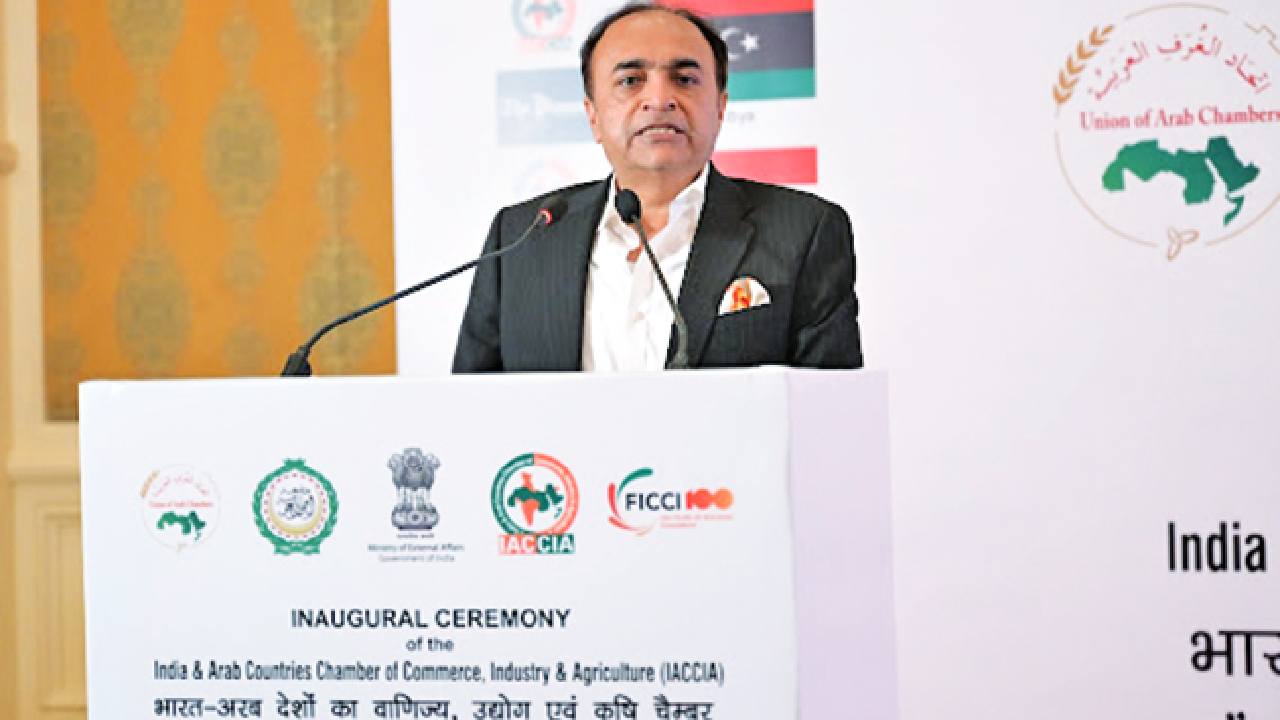
Prashant Tewari addressing the guests on the role of The Pioneer in setting up bilateral relations between the two regions: P2P & G2G
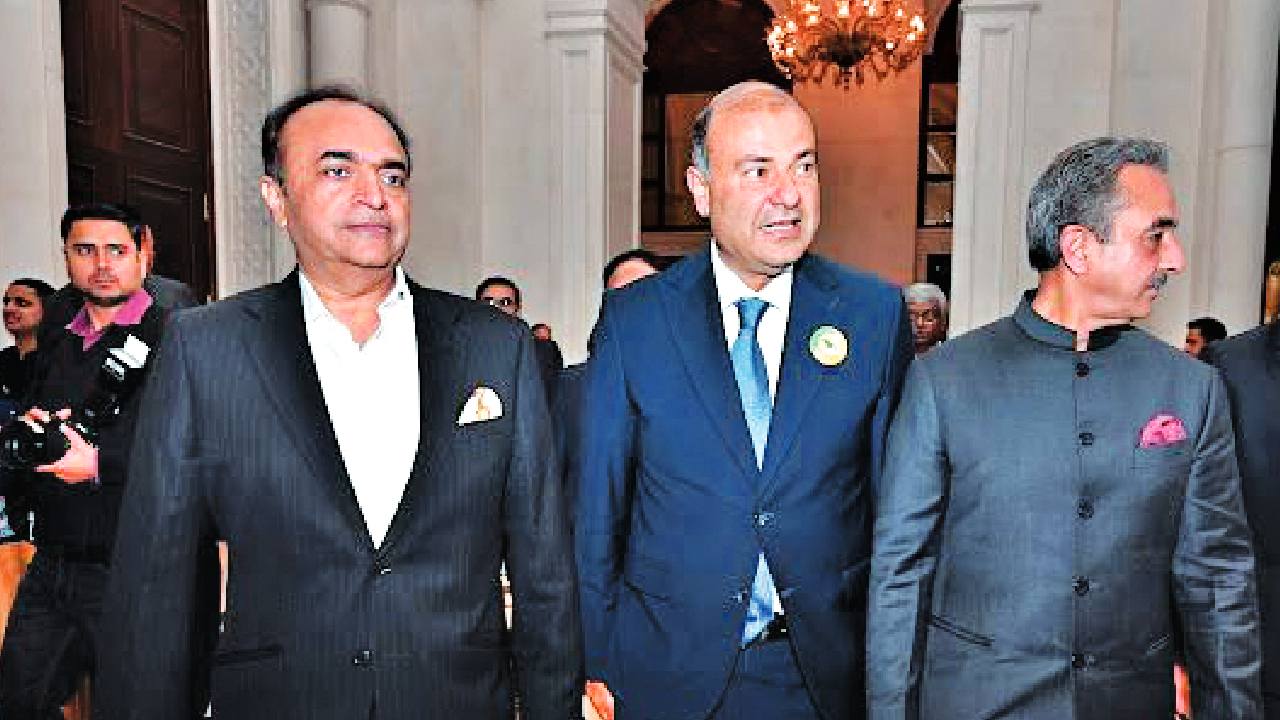
L-R: Prashant Tewari from The Pioneer; Dr Khaled Hanafi, Secretary General, Union of Arab Chambers; Minister of External Affairs Kirti Vardhan Singh at The Pioneer India & Arab Countries Chamber of Commerce, Industry & Agriculture (IACCIA) event, recently
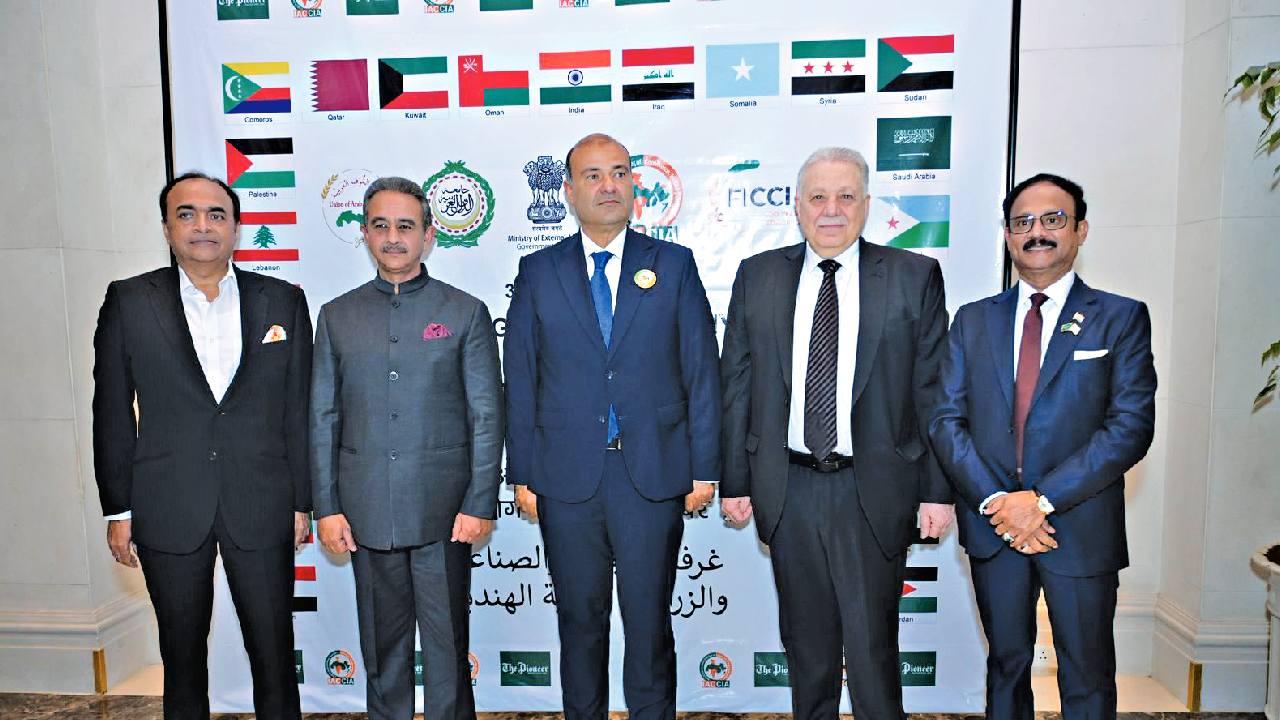
L–R: Prashant Tewari from The Pioneer, with Minister Kirti Vardhan Singh, Secretary-General Arab Chamber of Commerce Dr Khaled Hanafi, Dr Waiel Awwad, Secretary-General IACCIA & FICCI Arab Head, at the event, recently.
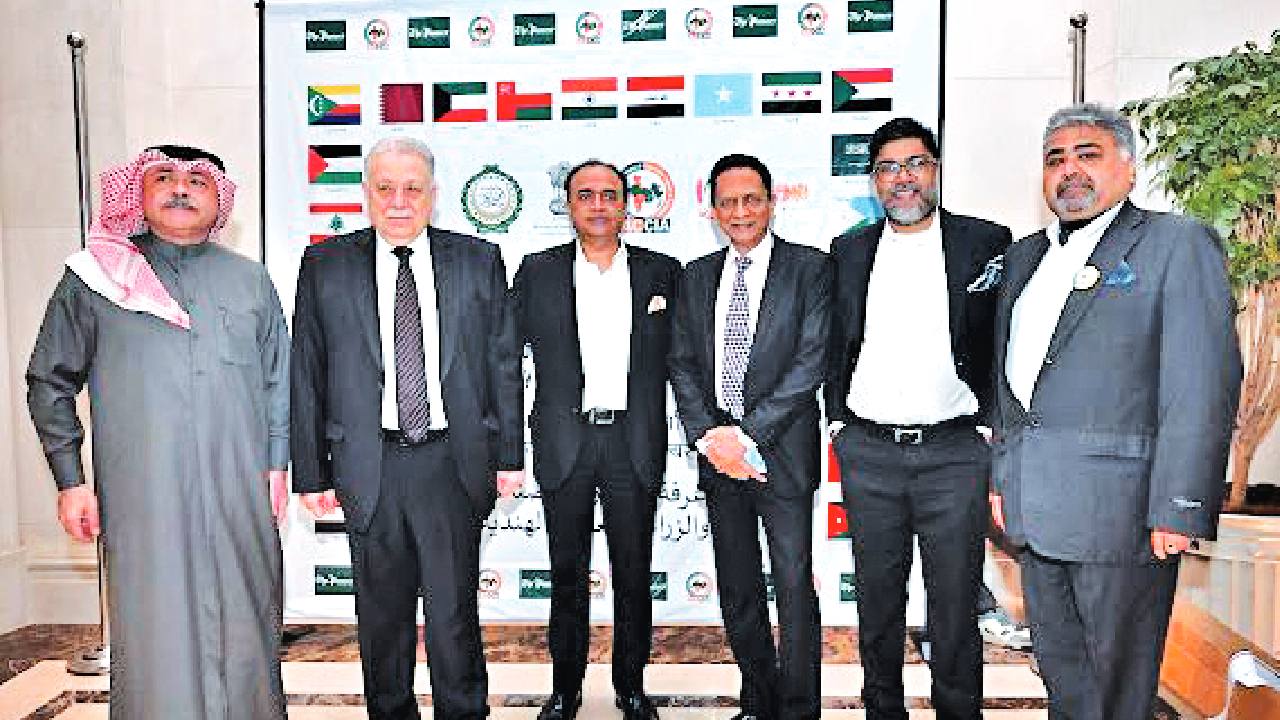
L-R: Kuwait Ambassador, Dr Waiel Awwad, Prashant Tewari, Shishir Priyadarshi, Kushan Mitra at the IACCIA event.