Resource boon drives nations
Everyone talks about the resource curse. Nations that sit on a mountain of natural resources grapple with corruption, exploitation, and the inability to climb up the global value chain. Hence, their incomes are limited, and they remain poor, even as their leaders and elite classes become richer. In recent times, however, as is exemplified by China and India in some sectors, a stranglehold over resources and inputs can become a major driver for growth, and derail rival and competing economies. China has done this to an extent with America, as also with India in some sectors. India has achieved this, either consciously or by default, against Bangladesh. In both the cases, the supply of inputs for industries that were crucial for the importing nations proved to be their bane. The resource curse became a resource boon for the exporters. They became the true exploiters whether they did it on purpose or not.
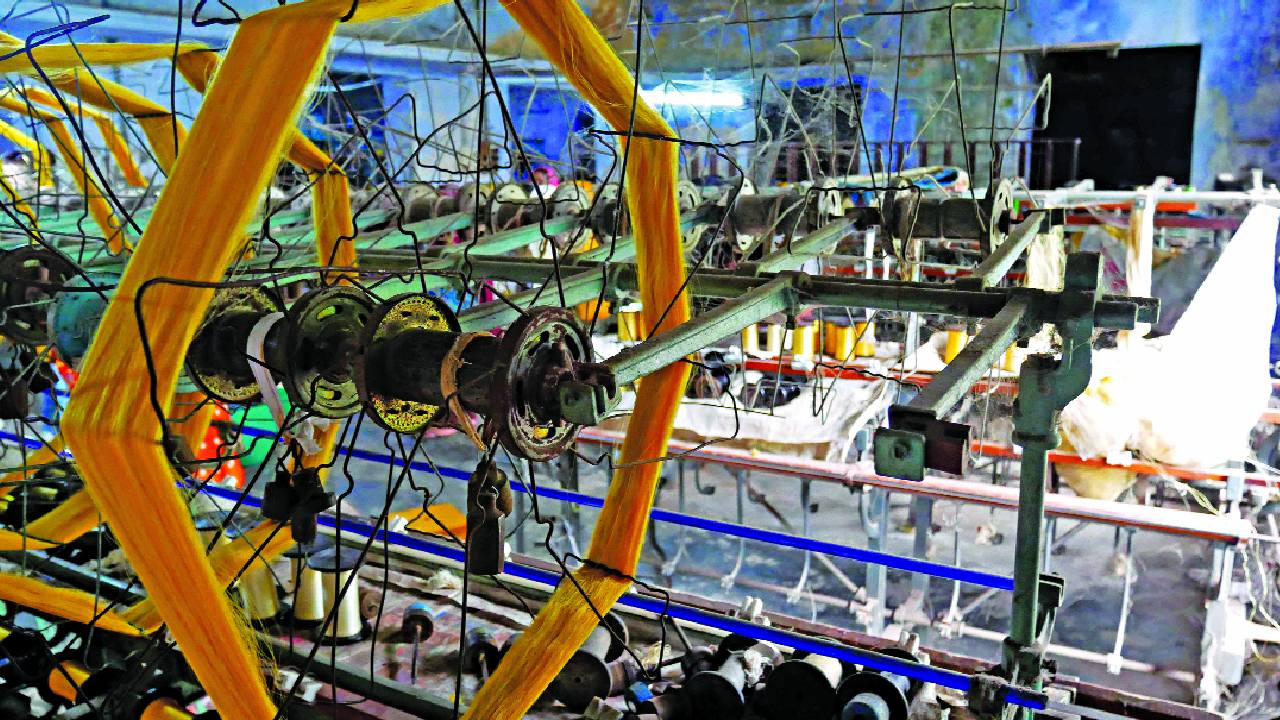
According to media reports, the spinning mills in Bangladesh have issued a “stark warning” to their government that they would go on a strike unless the duty-free facilities for Indian imported yarn are not withdrawn. The mills contend that they are already saddled with “prolonged losses,” energy shortages, and growing inventories, apart from the imports of cheap yarns from across the border. Millions of smaller mills have closed, and thousands of jobs were lost in the recent past. “At the centre of the dispute is the bonded warehouse scheme, which allows the garment manufacturers to import yarn without paying duties. Domestic millowners argue that this policy has opened the door for large volumes of inexpensive foreign yarn, primarily from India, to flood the market,” state media reports. In 2025, Bangladesh imported 700 million kg of yarn, which valued at $2 billion, and of which almost 80 per cent came from India.
One needs to put the so-called crisis in a context. For years, the Bangladesh garment segment gave a thrashing to the Indians in the export market. The cost and quality benefits boosted Bangladesh exports and standing in the global market. The situation reached a stage when Indians shut shops in India, and moved investments to Bangladesh. This was especially so after the US imposed a 50 per cent tariff on Indian goods, and much lower one on the neighbours, including Bangladesh. The cost dynamics shifted visibly in the favour of Bangladesh. Through cheaper yarn exports, India seems to have wrested back some of the advantages. It now indirectly controls the textile sector in Bangladesh, apart from having boosted its exports of the inputs, if not the final product. If the yarn makers in Bangladesh are forced to close, Indian exports will boom. If yarn exports are stopped, the Bangladesh garment exporters will buy expensive products locally, and lose some of the cost advantages, which will directly benefit the Indian garment exporters.
This explains why the garment exporters in Bangladesh oppose the millowners moves. The exporters explain that local yarn, at least in some of the counts, is more expensive than the duty-free Indian yarn, and “often fails to meet the quality expectations of the global apparel brands.” Indeed, foreign buyers specify the yarn that needs to be used. Thus, there are dual local dynamics between the input providers, and the makers of finished products. The former wants to sell more to the exporters, and the latter seeks cheaper and quality inputs, whatever may be the source. When the India-Bangladesh diplomatic ties were good, there was little problem politically, as regimes tried to balance the two issues. But with the ties in trouble, due to the political situation in Bangladesh, and growth in anti-India sentiments, the dynamics have changed. The yarn millowners have a better voice today compared to the past. They wish to use it.
Something similar, although not the same, happened in the pharma sector between India and China. There was a time when the two nations were fierce competitors to sell generic drugs in the global market, especially in the developed economies in Europe and the US. Both India and China had the cost benefits, and labour arbitrage. China seemed ahead because of energy and other subsidies that helped the exporters of generics. However, over time, cost and quality combined to favour India, as they did with Bangladesh in textiles. Latest figures indicate that the sale of Indian generics in the US far exceeds those by the Chinese. In Europe too, Indian drugs captured a sizable market share. India clearly won the generics war between the two nations over the past two decades. Today, some of the Indian drug makers sell 50 per cent of the annual production to the US.
However, the story has a bitter twist. China won the war for the inputs. India is among the major importers of active pharma ingredients (APIs), which are the key ingredients for generics. A bulk of them are imported from China. Hence, the Indian exporters solely depend on China for their revenues and profits. At any stage, China can shut the spigot, and create mayhem in the pharma market. There are instances, when China hiked the prices of APIs by 20-50 per cent, especially at times when India tried to fan the anti-China sentiments, and urged the local consumers to ban Chinese goods. China used the tactic when India tried to stall Chinese investments. Hence, inputs, and not the finished products, became the real battlefield in the business of generics. Like India twisted Bangladesh arms in textile through cheap yarn exports, China did the same in the pharma sector by setting the prices for APIs.
Indeed, India, which now imports 70 per cent of its APIs requirements from China, and 100 per cent in the case of 45-60 critical APIs, was once a major producer of the inputs in the 1980s. Over the next 2-3 decades, the local dependence shifted to import dependence due to costs, environment, and other reasons. Indian drug makers felt that there was more revenue- and profit-earning potential in generics, and APIs could be outsourced, even if it was to a rival nation like China. The situation has reversed, as India strives to make APIs locally. One of the aims of the ‘Make-in-India’ strategy is to produce the 45-60 critical APIs in the country. The Chinese possibly realised that they may not be able to compete with India on generics due to quality and other issues, but can control the global APIs market due to cost advantages, and subsidies.