RERA rears its ugly hydra-head

A few days ago, the Supreme Court made a damning observation against the Real Estate Regulatory Authorities (RERAs), which are set up at the state-level due to the so-called “landmark Indian law” to regulate the sector. The apex court stated that the state-level RERAs, which need to register commercial and residential projects over 500 sq m, and eight apartments or more, respectively, and monitor the plans and progress of the projects, were failures. Instead of helping the homebuyers to get their homes in time, as per plan, and within the original prices, the RERAs benefited the powerful builders.
Now, a homebuyers’ body alleges that RERA authorities act against the interests of the innocent, and often powerless buyers. Over three-fourths of the state agencies do not publish annual reports, or do not keep the information updated, which leads to a huge data gap on how the sector is performing, whether builders are delivering on quality, prices, and schedules. Finally, thanks to the lack of data, experts, homebuyers, and policy-makers are unable to gauge whether the new law has improved the sector, or whether it continues to be plagued by the same problems. It may be “seminal” or “landmark” only on paper.
“Unless we have credible data proving that after RERA the sector has improved in terms of delivery, fairness, and keeping its promises, we are merely firing in the air. Innocent homebuyers will continue to be taken for a ride, this time aided by RERA, which has become a mere badge of honour for builders to sell projects without any consequent responsibility to honour the provisions of the Act,” says Abhay Upadhyay, the president of the homebuyers’ body that made the charges. “If we… monitor… projects… under RERA without tracking actual completion, we are setting ourselves up for the same disaster.”
Reports from some of the states indicate that the builder lobbies have gained because of RERA law, or possibly despite it. It implies that either the Act is not delivering what it promises, or it is irrelevant when it comes to ground-level and foundational realities. In Uttarakhand, for example, experts and observers say that there is rampant
construction of new resorts, expansion of existing ones, and new apartment blocks. Most of this is either illegal or semi-legal, and the state-level RERA seems to be on the side of the builders, and against buyers, who may be saddled with non-registered or fraudulent homes.
Like in the past, before RERA law came into being after a dismal state of real estate, a new Government committee may be set up 5-10 years from now to gauge what is wrong with the policies, and implementation. It may conclude that there is a “fresh set of stalled projects, while homebuyers continue to suffer. What matters is not how many projects are registered, but how many are… completed on time with promised facilities and amenities.” It is not important how life appears to be good on paper. What is crucial is the ground reality for the buyers.
As the bankruptcy cases under the insolvency law proves, builders, including the reputed ones, rampantly act against the interests of the buyers. Delays, low quality, and consistent and random hikes in prices impact the customers. Only some changes in the insolvency laws now empower the homebuyers to mediate and participate in the resolution plans to kick start the stalled projects. Yet, despite the new plans submitted by new owners, there is no guarantee of timely deliveries as per the new reworked construction schedules. Buyers are constantly on the back foot, seem to be in a comatose, and unable to act.
Recent figures hint at another looming failure in the sector. The Amitabh Kant Committee Report documented a “staggering backlog of legacy stalled projects: Approximately 4.12 lakh stressed dwelling units nationwide, with 2.4 lakh units concentrated in (Delhi) NCR alone, and an overall project value of Rs 4.08 lakh crore.” Thus, things seem to be sliding to the bad old days, when massive failures erupted despite a booming sector in the pre-RERA period. If the state real estate regulators do monitor completion, and ensure it, “we are setting up for the same (past) disaster,” states the homebuyers’ body.
As a beginner, it points to the RERAs’ annual reports, which are vital to “assess system credibility, but are equally necessary for both the state and central Governments to frame policies, design incentive schemes, and develop tax policy frameworks.” The law mandates that the official annual reports need to be published by each state authority, which provides a “comprehensive overview of the authority’s functioning.” The reports are expected to reveal data about registrations, progress, and completion of the registered projects, apart from complaints and actions against defaulting builders. The idea is to enhance transparency and accountability in the more-opaque and semi-informal sector.
Yet, seven large states such as Karnataka, Tamil Nadu, Himachal Pradesh, and West Bengal never published a single annual report. Nine other states such as Maharashtra, Uttar Pradesh, and Telangana discontinued the publications. States need to use specific clauses of the RERA law to take actions against the regulators. In fact, the homebuyers body urges the introduction of a new section in the Act to empower the central Government to “remove any authority or its members if… directions are not obeyed.” This is urgent because, as mentioned earlier, three-fourths of the authorities do not have proper data.
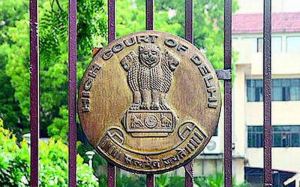
However, these seem puny or small in comparison with the charges hurled by the Supreme Court. Recently, according to a media report, Chief Justice Surya Kant said that “RERA has accomplished nothing concrete beyond providing benefits to defaulting builders.” He added that the “time has come to shut down RERA.” Other reports indicate that the chief justice was categorical that it would not mind if this was done, as the law has failed to deliver the goods. This is not the first time that real estate law has come under the radar of the court.
In September 2024, a two-judge bench that included Justice Surya Kant said that RERA was a ‘haven’ for retired civil servants. @We do not want to talk about RERA. It has become a rehabilitation centre for former bureaucrats who have sabotaged the entire scheme of law.” A year later, another two-judge bench expressed concerns over RERAs, and asked the states to ensure infrastructure, resources, and expertise. It wanted a legal expert or consumer advocate to be included in each RERA. It wanted the regulator to do project-related due diligence.