RBI holds interest rates, awaits inflation outlook
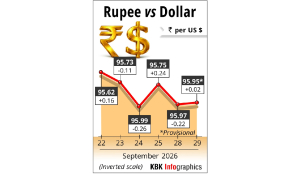
For the fourth consecutive time, the Reserve Bank of India (RBI) on Wednesday kept the repo rate unchanged at 5.25 per cent and also raised its FY27 GDP growth forecast to 6.7 percent from 6.6 percent and lowered its CPI inflation projection to 5 percent from 5.1 percent. These decisions came amid build up in inflationary pressures and possibility of growth moderating due to ripple effects of the West Asia war, rising crude oil prices, a depreciating Rupee and the El Nino effect casting a shadow on the South-West monsoon. As far as inflation is concerned, it is expected to rise in the near term and peak in the third quarter of 2026-27, largely due to food and fuel prices.
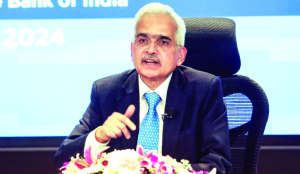
Announcing the third bi-monthly monetary policy for the current fiscal, RBI Governor Sanjay Malhotra said the Monetary Policy Committee (MPC) has unanimously decided to retain short-term lending rate or repo rate at 5.25 per cent with a neutral stance. However, it has also left millions of fixed deposit (FD) investors wondering whether banks could now raise deposit rates. Consequently, the standing deposit facility (SDF) rate remains at 5.00 per cent and the marginal standing facility (MSF) rate and the Bank Rate remain at 5.50 per cent.
Explaining the decision to leave the repo rate unchanged, Malhotra said the growth outlook remains hazy due to uncertainties related to the Southwest monsoon, El Niño, geopolitics and global trade policy. The prime focus of the central bank is to align the headline inflation with its target of 4 per cent over the medium term, Malhotra said at the post-policy press conference.
The interest rate pause comes even as the Consumer Price Index (CPI) based headline retail inflation has crossed the RBI's medium-term target of 4 per cent at 4.38 per cent in June. However, RBI marginally raised the growth forecast to 6.7 per cent while lowering inflation projection to 5 per cent for the current fiscal.
Malhotra noted that headline inflation is expected to rise further and peak in the third quarter, primarily due to food and fuel and then moderate. While CPI inflation increased to 4.4 per cent in June 2026 after remaining below the target for 16 consecutive months, it turned out to be lower by 30 basis points (bps) than what was earlier projected for Q1:2026-27. The increase in June was primarily due to higher food and fuel inflation.
The increase in food inflation was broad-based with most constituents witnessing price pressures during May-June. Fuel inflation also rose, driven by revision in retail prices, following the sharp spike in international energy prices. It also led to higher inflation in select categories such as restaurant charges. Despite the pressure from higher input costs, core (CPI excluding food and fuel) inflation remained unchanged at 3.9 per cent during May-June. Excluding precious metals, core inflation remained even lower at 2.3-2.5 per cent during this period.
Speaking to reporters at the customary briefing after the monetary policy review, Malhotra said the polymer currency notes have lasted for over 30 years in some jurisdictions and will come in handy, especially for the lower denomination notes which have high velocity. "We are targeting that they are in circulation, if everything goes as per plan, in the beginning of the next financial year," Malhotra said.
Malhotra said the next move of the Reserve Bank of India (RBI) on the crucial aspect of interest rates and also the stance of the policy will be data-dependent, and underlined that the prime focus of the central bank is to align the headline inflation with its target of 4 per cent over the medium term.
Commenting on the Foreign Currency Non-Resident (Bank) scheme, Malhotra said the flows have been "robust", and the RBI expects healthy movement of funds going forward till the closure of the limited-period scheme.
When asked if the central bank is looking to close the scheme prematurely, given that there is a cost which the RBI is committed to bear for the fund inflows, Malhotra said there is no such proposal at this point of time. After being pointed out that the rupee has not appreciated as intended despite the high flows from foreign shores, Malhotra said a further strengthening in the rupee is possible if geopolitical tensions de-escalate. It will be the RBI's endeavour that the trajectory for the rupee remains orderly, he added.