Rare two-sex carp discovered in Tehri Dam
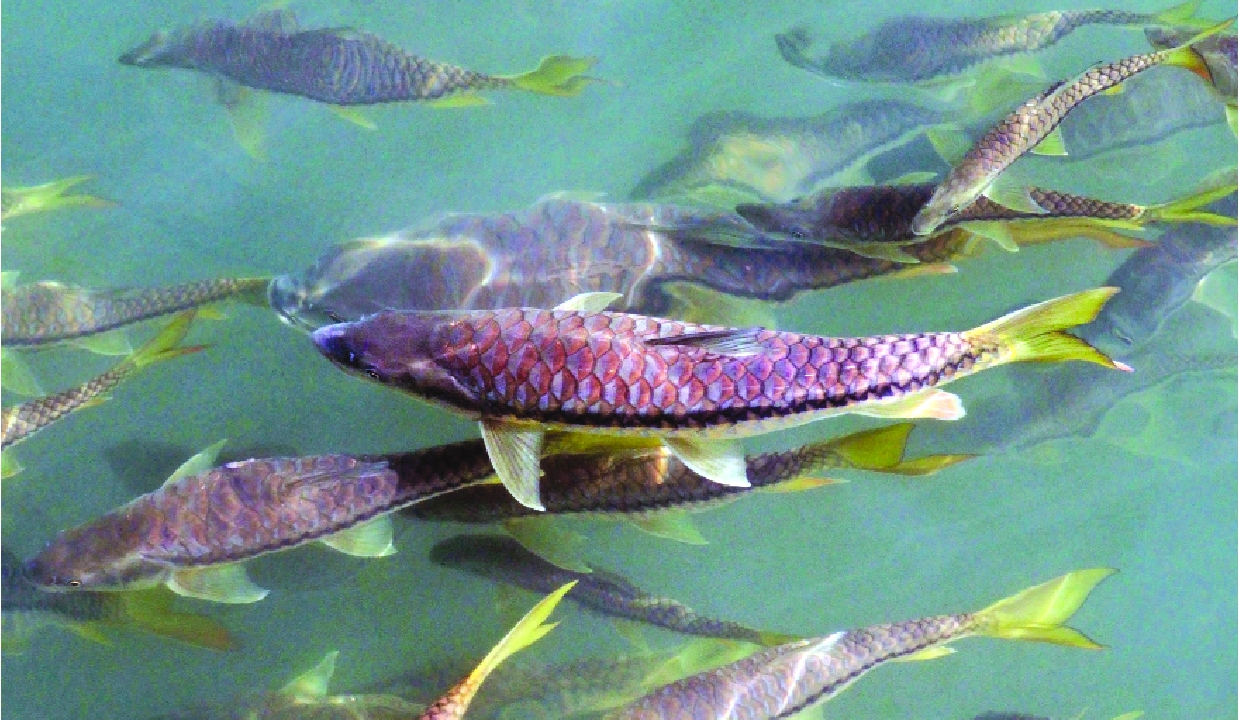
Scientists in Uttarakhand have documented hermaphroditism in the common carp found in the Tehri Dam reservoir. Identifying specimens with both male and female reproductive organs, researchers at the Fish Reproduction and Conservation Biology Research Lab of the Hemvati Nandan Bahuguna Garhwal Central University (HNBGU) claimed such instances were found abroad in the past but this is the first instance in India.
The finding could add a new dimension to the study of fish reproduction and environmental influences in Himalayan freshwater ecosystems. The observation was made during an annual population assessment and reproductive biology study of common carp by head of the NK Agarwal and research scholar Jyoti Bisht.
Agarwal said that the finding goes beyond simply recording an unusual reproductive condition and provides a foundation for further investigation into the reproductive biology of fish. The influence of environmental factors such as thermal stratification or altered hydrological regimes in large Himalayan dam reservoirs may influence phenotypic plasticity in fishes, potentially affecting the genetic and physiological mechanisms underlying reproductive differentiation under environmental stress or atypical ecological conditions.
Researchers said that while common carp typically exhibit distinct male or female sexes, the identified fishes exhibited clear, co-existing male and female reproductive structures, prompting scientific documentation of the strange reproductive condition. The finding assumes significance as common carp fish is an economically and ecologically important freshwater fish species, and changes in its reproductive characteristics can offer valuable clues about new reproductive stage, population dynamics and environmental adaptation.
The discovery has also opened a broader research window. Scientists can now investigate whether environmental conditions, genetic plasticity, evolutionary mechanisms or other biological factors may be associated with the occurrence of hermaphroditism in freshwater fishes. In an era of increasing human pressure on freshwater ecosystems, such observations could help researchers examine how fish reproductive strategies respond to changing ecological conditions.
The study also underscores the scientific importance of the Tehri Dam reservoir as a site for studying Himalayan aquatic biodiversity. Researchers believe that systematic monitoring of fish populations could help establish links between new reproductive strategies in fish populations, environmental changes and long-term population stability.