Skills and mindsets of management students

Gen-Z knows a thing or two about plot twists. The workplace they are entering is likely to offer plenty of them - artificial intelligence reshaping the workplace, business models transforming, career trajectories becoming non-linear, and skills becoming obsolete in no time. For a student pursuing management education, the only certainty is perhaps that uncertainty is the new normal.
A degree in management can prepare a student for the day-to-day realities of managerial work. But organisations today are looking for recruits with more than conceptual understanding and the ability to practically apply their classroom learning in the industry. They need individuals who have the resilience to withstand change, the skills to work with change, and the judgement to shape change responsibly.
Careers today seldom unfold along clearly defined paths. Young managers, therefore, need to take greater ownership of their career trajectories from the outset. They must be agile enough to learn, unlearn and relearn repeatedly as technologies, industries and roles evolve.
Equally important is resilience. Setbacks, difficult assignments, rejection and failure are inevitable parts of professional life. What matters is the ability to recover from them without allowing a single episode to define one’s career or confidence. Young professionals must be able to handle disagreement, accept criticism, and remain emotionally robust in workplaces that may not always be psychologically comforting or reassuring.
This does not mean becoming insensitive. It means developing the confidence and conviction to hold one’s ground when necessary, while retaining the maturity of mind to change one’s position when the evidence changes. The objective is not to become resistant to change, but to remain responsive to it without being easily destabilised by it.
The contemporary workplace also demands a wider set of capabilities. Technological acumen, including data literacy, AI fluency and digital know-how, will increasingly be fundamental. Yet, as technology becomes better at producing answers, the distinctive managerial ability to ask the right questions and frame the right problems becomes even more valuable.
Communication, collaboration and influence matter just as much. Managers increasingly work across functions, organisations and geographies, often needing to achieve outcomes without formal authority. The ability to communicate persuasively, work with diverse stakeholders, and build alignment will remain critical. Perhaps the most enduring capability, however, will be learning agility, that is, the ability to know what to learn, when to learn it and how to keep oneself relevant.
Finally, management students must develop a professional compass, that is, a sense of the kind of manager they want to become. Ethical judgement and responsibility assume even greater importance at a time when managers have access to powerful technologies and businesses operate across geographical and cultural boundaries.
Managerial decisions increasingly have consequences that extend beyond profits and performance to employees, customers, communities and the environment. Future managers must, therefore, learn to recognise context, appreciate diverse perspectives, and balance commercial objectives with human, social and environmental considerations.
A management degree may open the door to a career. What sustains that career, however, will be the ability to remain resilient, keep learning, exercise judgement and use managerial power responsibly.
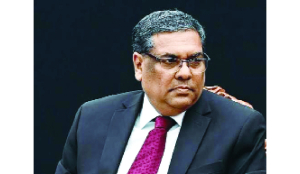
The writer is an Assistant Professor (Information Management), MDI Gurgaon; Views presented are personal.