
- HOME
- INDIA
- WORLD
- BUSINESS
- STATES
- LAW & JUSTICE
- ENTERTAINMENT
- SPORTS
- VIEWPOINT
- LIFESTYLE
- TECH
A few days ago, India signed a Free Trade Agreement (FTA) with New Zealand. Prior to this, India has already signed FTAs with Australia, the United Kingdom (UK), the UAE, the European Free Trade Association, Oman, and others. In international circles, this development is being viewed with some surprise: while India withdrew from the Regional Comprehensive Economic Partnership (RCEP) in November 2019 — an agreement that included both Australia and New Zealand — how has India now gone on to sign separate FTAs with these two countries?
The RCEP was a proposed comprehensive agreement, among 16 countries: the 10 ASEAN nations, Australia, New Zealand, Japan, South Korea, China, and India. Negotiations on this agreement continued for nearly eight years. It is widely believed that India decided to exit RCEP because the final draft of the agreement did not align with India’s expectations. While attending the RCEP summit on 4 November 2019, the Prime Minister made it clear that his conscience did not permit him to sign the agreement. He also stated that Mahatma Gandhi’s teachings inspired him to step away from the pact.
The question, therefore, is: what compelled the Prime Minister to withdraw from the agreement at the very last moment? Perhaps for the first time in the world, a head of government, after years of negotiations and even after the final draft had been prepared, announced before all other leaders at the summit that his country would not join the agreement. This sparked global discussions about the issues on which India kept itself away from RCEP.
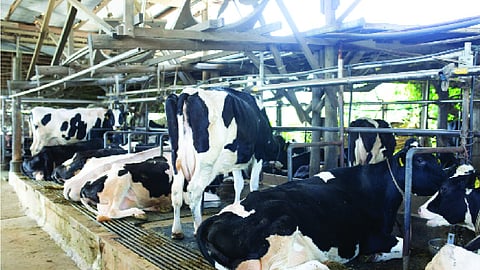
In reality, dairy and agriculture were the two critical sectors on which India adopted a firm stance. New Zealand and Australia demanded that RCEP member countries open their dairy and agricultural markets to other nations. It is important to note that nearly half of India’s population depends on agriculture, and more than 80 million households depend on dairy. While farmers are directly engaged in the dairy sector, a large number of landless people also depend on it for their livelihoods.
To resolve the apparent contradiction of why India exited RCEP earlier but has now signed FTAs with both Australia and New Zealand, one must understand the structure of the proposed RCEP. Of the 16 countries involved, India already had FTAs with the 10 ASEAN nations, as well as with Japan and South Korea. Negotiations for FTAs with New Zealand and Australia were also underway separately. In this context, there was only one country left, and that was China — with which entering into a free trade agreement was considered a serious risk. Therefore, India acted prudently by withdrawing from the RCEP agreement, and instead chose to ink agreements with Australia and New Zealand.
When India inked FTA with Australia in April 2022, many eyebrows were raised, that how an agreement was signed, keeping agriculture and dairy away. It was widely appreciated as well. Now when free trade agreement has been signed with New Zealand also, again keeping agriculture and diary out of the same, this view is cemented, that while negotiating free trade agreements, India has been very keen and was also successful in keeping out the sensitive sectors like agriculture and dairy. The question is why protection of dairy and agriculture has been considered important for a country like India. Critics generally argue that bringing in Dairy and agriculture into free trade agreements would improve competitiveness of Indian agriculture and dairy at the same time. They also argue that India is the largest producer of Milk in the world, then why it should be afraid of the competition coming from overseas.
Livelihood and Food Security
According to Food and Agriculture Organisation data, around 70 percent of India’s milk production comes from small and marginal farmers and landless labourers who own, on average, just one or two milch animals. For them, milk is not just an additional source of income but the foundation of daily survival. In contrast, in countries such as the US and New Zealand, dairy is a trade-driven business.
No doubt India has the distinction of being the largest producer of Milk in the world. In terms of production of milk in litres, is more than any agricultural crop in kilograms. The incentive to produce more milk comes from the remunerative prices for dairy products in the country, especially milk. We understand that there is a huge price difference between the milk products, especially milk powder between India and New Zealand; and therefore, if New Zealand milk powder lands into India without tariffs, reduction in prices will force many of our small Milk producers to shut down. In this case, India will cease to be the largest producer of Milk in the world, and we should understand that no country in the world, whichsoever can feed India, whether it is agricultural produce or Milk?
Agriculture Major Sore Point with US
Post-Trump tariffs, efforts are on from both India and the US to arrive at a Trade agreement, but the major hurdle is coming due to agriculture. It’s notable that US is the second largest producer of Soya, after Brazil. After the Trump tariffs, China, which was the largest buyer of US Soya, has significantly scaled down its import from US. Similarly, US is producing many agricultural produce in surplus for which it is in search of foreign markets. US is therefore desperate for market access in India for its agricultural produce, whereas, India is totally opposed to the same. India’s opposition to giving access to US agricultural produce comes from two reasons.
One, if India allows market access to US agriculture produce, which are heavily subsidised by US government, Indian farmers would not be able to withstand the competition and will be forced to shut production, which may cause loss of livelihood and unemployment; and at the same time loss of production due to unequal competition, may even push India to food insecurity. Unplanned opening up of agriculture will expose farmers to subsidy-supported US products. This could worsen the rural distress, create political instability and weaken the food security and MSP system.
Second, opening the Indian market to US agricultural products could adversely impact India's biosafety and seed sovereignty, as most US agricultural products are genetically modified (GM), and subject to patents. India has long maintained a cautious approach to GM foods. Without strong domestic controls, adopting GM crops could increase farmers’ input costs, increase seed dependence, and create ecological risks that cannot be remedied later. It is essential for India to prioritise scientific prudence and indigenous research rather than the haste arising from any US trade deal.
We see that in the recent time, government has been able to easily sail through the negotiation in different FTAs; and was able to protect the interest of our agriculture and Dairy, and at the same time could negotiate aggressively on other issues. But in case of FTA with USA, despite best efforts and sincere attempts of India, the agreement with US is in trouble. The reason, is that the government cannot give up on agriculture and Dairy, while US administration is adamant of including the same in the FTA. If US takes cue from India’s FTA with Australia and New Zealand; and scale down its demand, we can easily find solutions to the problems coming In the Trade between US and India.