POWERGRID unveils blueprint for future-ready HR at inaugural HR Tech Conference 2025
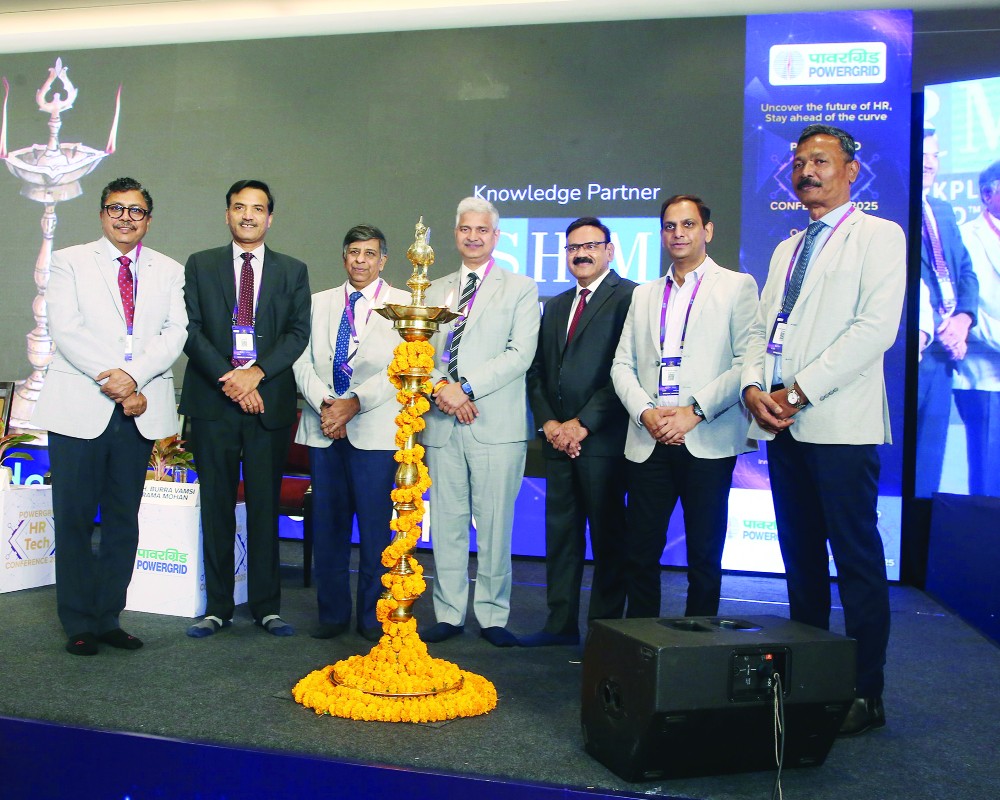
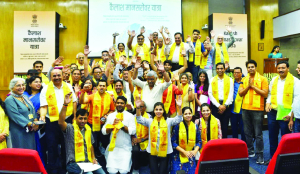
POWERGRID successfully concluded its inaugural HR Tech Conference 2025 at Gurugram, bringing together over 450 HR leaders, policymakers and industry experts. The day-long event showcased future-ready HR innovations, discussions on AI-led transformation and meaningful insights on building agile, inclusive and human-centric workplaces.
Setting the tone for the day, Dr Ravindra Kumar Tyagi, Chairman & Managing Director, POWERGRID, delivered the inaugural address, underscoring the growing strategic interface between people, technology and national progress. “The power sector is the backbone of national development and when combined with the nation’s strong human resource base, it becomes a formidable growth force,” he observed, while calling for an employee experience that is inclusive, gender-agnostic and attuned to the realities of modern work. His message framed the deliberations that followed: that organisational advancement is inseparable from the quality of its people systems and its commitment to fairness, equity and opportunity.
The theme was taken forward by Dr Yatindra Dwivedi, Director (Personnel), POWERGRID urging the audience to “Innovate HR; Include and Inspire People.” He talked about the rapid AI-led change, decisions backed by data-driven insights, and human-centricity redefined by GenAI.
While talking about the emerging standards, he asked whether it was MCP compatible and highlighted real shifts like employees using Copilots, AI-generated meetings, and platforms that personalise learning. Celebrating POWERGRID’s progress, he recalled the ‘HR Excellence Award’ conferred by the Hon’ble President and hoped attendees would leave with new insight, collaborations, and renewed energy to build future-ready, humane HR systems for organisations worldwide.
At the POWERGRID HR Tech Conference 2025, Manoj Kohli, Former Country Head, SoftBank India, and Ex-CEO & MD, Bharti Airtel, delivered compelling leadership insights for the decade ahead. He emphasised that “the time of nomination has gone and the time of competition has come,” urging senior professionals to embrace a sharper, outcome-driven culture in a rapidly evolving energy landscape. As India’s power demand accelerates, he highlighted the need for “deeper planning and six-sigma execution” to deliver on rising national and industrial expectations. Kohli underscored the urgency of building “resilient and modernised grids” fortified with advanced technology, cybersecurity and global best practices. Pointing to the future of renewable energy, he noted that leaders must strengthen capabilities in “HVDC, battery systems and tech-driven grid management,” adding that domain expertise will be central to powering India’s next phase of growth.During the panel discussion one message echoed consistently that even in an AI-driven world, emotional connection remains central.
The session “Emotional Resilience in the Digital Age – HR Tech Innovations in Corporates and PSUs” brought together a diverse panel of leaders: Ayush Gupta, Director HRD, GAIL; A.K. Jadli, Director HR, NTPC; Saba Karim, India Head – Public Sector, LinkedIn; and Pavitra Singh, CHRO, PepsiCo. Moderated by Divyesh Sindhwaad, Country Head India at Skillsoft as an exploration into how organisations can strengthen emotional resilience amid rapid digital disruption, the conversation blended PSU perspectives, corporate experiences and insights from leading HR solution providers.
The discussion opened by defining what is emotional resilience in an ‘always-on’ digital world. Panellists associated it with ideas such as constant skilling, maintaining human connection despite digital distractions, embracing change, and developing emotional strength as a ‘superpower’. As the conversation deepened, the speakers reflected on the skills individuals will need as AI reshapes work. They stressed that while AI can offer data and insights, it cannot replace judgment, intuition or decision-making. Critical thinking, problem-solving, creativity, communication and collaboration stood out as essential future capabilities. Above all, the panel emphasised the importance of a learning mindset as the true foundation of emotional resilience in the evolving world of work. The conversation touched upon essential themes such as resilience through change, curiosity, critical thinking, learnability, personalised learning ecosystems, meaningful HR tech adoption rather than mere deployment, and culture as “the thread that holds the organisation like a pearl necklace,” as Ayush Gupta aptly put it.
Another session that took place in the conference was ‘AI and Generative AI in HR: Will Technology Replace Human Judgment in the Workplace?’ It brought together Dr. Yatindra Dwivedi (Director, Personnel, POWERGRID), Caroline Rouse (Director, AI Workforce Solutions, Microsoft Asia), Manish Patil (Director HR, ONGC), Mussarat Hussain (Head, ISHRAE R&D Centre India Pvt. Ltd.), Sushil Baveja (CHRO, Jindal Stainless) and Dr. Rajeshwari Narendran (Director, NSB) — to decode how AI is reshaping HR and whether human judgment can ever be replaced. The discussion opened with how generative AI is moving into the ‘flow of work’, simplifying routine HR tasks and enabling professionals to focus on deeper organisational value. Examples from Microsoft highlighted how countries like Japan are already ahead in adopting AI agents at scale. Yet, the question of judgment remained central. Panellists emphasised that AI lacks context, empathy, ethics and emotional depth. These were the qualities that sit at the heart of human decision-making. Whether it is understanding performance issues, interpreting behaviour, or responding with compassion, technology can inform but cannot replace a human. The panel also raised the urgent need for prompt engineering skills and context-driven AI use. While AI offers algorithmic efficiency, HR continues to be an art that demands sensitivity. The consensus was clear: AI may transform HR, but human intuition will remain its anchor.
The conference also featured engaging fireside chat with leaders across industry and academia. Experts discussed the evolving role of HR in a GenAI-driven world, the balance between algorithmic efficiency and human judgment, and the capabilities required for HR 5.0. Building an Inclusive Workplace with Rashmi Govil and Humans + Algorithms Working in Harmony with Surani Wetthasingha were conversational sessions that offered practical insights on true inclusion, how women should be recognised as leaders without gender qualifiers and how AI enables bias-free hiring and real-time insights, how human-centric interventions reduce absenteeism and build belonging respectively.
The session ‘Succession or Stagnation? Secrets to Building a Future-Ready Leadership Pipeline’ brought together a seasoned panel of leaders—Varun Kejriwal (Managing Director & Partner, BCG), Uttam Lal (Director HR, NPCIL), K. K. Singh (Director HR, SAIL) and V. K. Singh (CEO, PSSC)—to explore how organisations can nurture leadership pipelines that remain resilient amid cultural shifts, generational changes and evolving aspirations at the workplace. The conversation opened with the realities of retaining younger talent, especially in challenging geographies and demanding roles. Speakers emphasised that motivation today requires far more than job stability; employees seek purpose, adventure, continuous development and professional growth opportunities. The session concluded with
reflections on practical succession models already implemented in the power sector, reinforcing that leadership readiness must be built systematically— through talent attraction, capability development, and cultivating a culture that encourages people to evolve into future leaders.
‘CEO Perspective: Aligning Tech with Business Vision’ had Hitesh Oberoi, CEO & MD, Info Edge, setting out practical lessons on marrying technology to business outcomes and nation-building. Drawing on a mix of anecdote and strategy, he stressed the need for an open mind, empowered leaders and small, demonstrable pilots as the quickest route to broader organisational buy-in.
Hitesh Oberoi recounted hiring breakthroughs—how one talented hire doubled CV throughout within weeks—to illustrate that finding the right people and giving them resources accelerates impact. He argued that large organisations must create senior champions who can sell the tech story internally and attract talent, while simultaneously upskilling and reskilling existing teams. On a national level, he urged public sector enterprises to deploy CSR and balance-sheet strength to fund AI education, university research and school-level exposure to emerging tech. PSUs can also incubate startups by providing data, problems and customers.
He reminded the audience that successful AI rests on three pillars—compute, data and people—and that India has an advantage in data and government intent. He closed with a pragmatic message: start small, prove value, then scale—and build ecosystems (universities, startups, PSUs) that convert tech potential into sustainable workforce capability.
Ajinkya Rahane, former captain of the Indian Cricket Team, graced the stage with his signature calm presence, sharing grounded lessons from his cricketing journey. He emphasised how staying composed under pressure fuels clarity, how every setback can be reframed as a learning opportunity, and how respect, flexibility and clear communication ultimately build trust and strengthen team alignment.
There were various brands present at the exhibition, namely: Anyo for Wellness, powered by Rescript Welltech Private Limited, Benepik, Cedro, Dale Carnegie India, Ernst & Young Associates LLP, In2IT Enterprise Business Services Pvt Ltd, Medhaam Preschool & Daycare, NamanHR, POWERGRID, Siemens, Tech Connect, The Leadership Project, Thomas Assessments Pvt. Ltd., Vinsys, WE-Matter and Zoho.
The POWERGRID HR Tech Conference 2025 concluded with a renewed commitment across sectors to shape a digitally empowered yet deeply humane workforce of the future. The day cemented POWERGRID’s position as a catalyst for change—bringing together visionaries and practitioners to build HR ecosystems that are capable, resilient, innovative, and prepared for the next decade of transformation.
As conversations around AI, emotional resilience, leadership, skilling, and culture converged, the conference became more than an event—it became a blueprint for the future.
Delegates departed with actionable insights, meaningful collaborations, and a shared resolve to champion HR that is data-driven yet compassionate, technologically advanced yet profoundly people-centric.