Big, loud, searching for a point
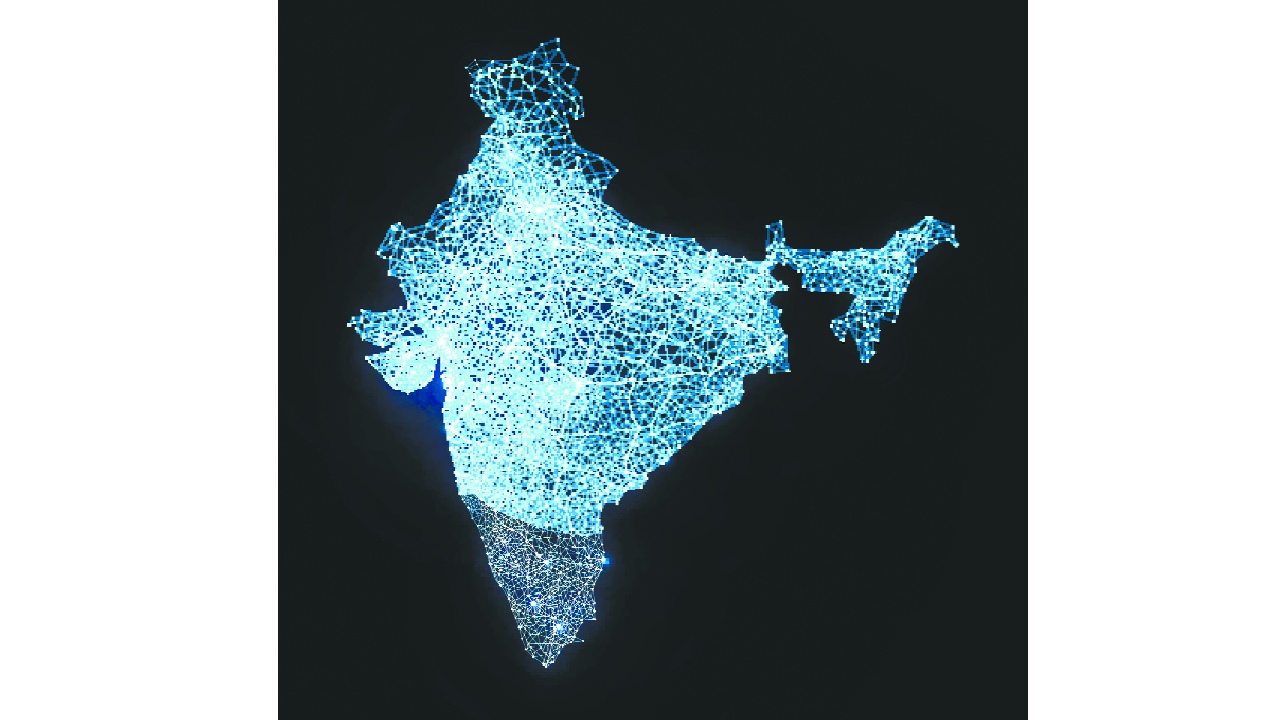
India’s First AI summit in the Capital opened to a packed audience, as expected, where walking was an obstacle course, as usual, and “where is the right gate?” kinds of questions were as common as “Which AI model are you building?” ones. The chaos, queues, confusion, and overcrowding are, in an ironic manner, a part of the overall AI story in the country, which spills onto social media, and draws criticism. The atmosphere matters because the summit mirrors India’s broader AI conversation. There is genuine energy, especially among the youngsters. Yet, there is a widening gap between the phrase, AI, and everyday uses in a sector that can work, scale up quickly, and pay for itself.
The official numbers underline why the event felt like a magnet. There were 2,50,000 registrations, over 600 startups, 70,000 sq m expo spread across 10 arenas, 13 country pavilions, and more than 500 sessions featuring over 3,250 people over a week. It is not a niche tech summit, but a mass gathering around a single magical phrase. A key detail was the simplest: Entry is free. This changed the tenor in the area, as if there were two parallel summits. One is for the techies, policy-makers, start-ups, and sector-specific ecosystem. The other is for the masses.
Of course, there is the ‘Summit’ that uses words such as responsible, and intelligence, and phrases like “People, Planet, Progress.” It is the place where India is positioned as a voice for the Global South, and pushes for democratising datasets, compute, models, and non-binding rules. The other one happens in the hallways, open spaces, in restaurants and meeting places, where the chatter is blunt. “Everyone is here because they can be, and need to be,” says one of the hundreds of founders, and gestures at a row of booths with the familiar “AI-powered” labels. “But no one is explaining.”
AI is everywhere, but mostly the messages, slogans, and phrases sound like a concept pitch rather than a business strategy. A large part of the crowd had no clue about AI, and what it does or solves. Luckily, the social media influencers were not here for the hype; they were mostly middle-aged, and curious to know more, and see fantastical things that look as if they jumped out of Sci-Fi movies. The policy-makers seem to say anything that is politically positive, with a plethora of large figures like “investments worth $200 billion in two years.”
If India’s AI story is moving from vision to execution, it is doing so under constraints. Compute is an issue. The IT minister, Ashwini Vaishnaw, said that India plans to deploy over 50,000 GPUs in the next six months, and that the installed base could cross 1,00,000 by the end of the year. He put a number to the current baseline, 38,000 GPUs under the official IndiaAI Mission. The numbers explain the urgency. For startups, “AI” is not a product problem. It is a compute access one. If the numbers do not turn right, we drown deep in the AI sea.
Capital is another problem. The story here is nuanced rather than what the hype suggests. GenAI startup count has expanded rapidly, but the funding depth has not kept pace. According to the latest Economic Survey, they grew from 66 in the first half of 2023, to over 890 in 2025. But cumulative funding rose from $606 million to $990 million. In other words, the ecosystem is broadening faster than it is consolidating. That is why so many demos look polished but a bit early in the day, as if they need to go a long way before hitting the markets.
Even the Government acknowledges the stakes. An official explainer late last year stated that the IndiaAI Mission has an outlay of over INR 10,300 crore over five years, and repeated a widely-cited estimate that AI could add $1.7 trillion to the economy by 2035. The promise is huge. But the path is still being constructed. An interesting pattern is how quickly the conversation sharpens when healthcare, industrial systems, and enterprise workflows come up. In sessions and conversations, healthcare seems prominent, as it is one of the few domains where the returns logic is easy to articulate, and understand.
Faster triage, decision support, operational efficiency, documentation, and imaging workflows highlight the sector. The same is true for logistics and retail operations, where the winners will be the companies that squeeze time and waste out of supply chains. This is where some names fit naturally, even if the crowd came searching for something more glamorous. In quick commerce, “AI” is not a keynote word. The sector is beset with demand-prediction, routing, shrink control, and inventory decisions that can be made faster than competitors. Hence, the AI layer spreads thin and thick, based on sectors.
For some, like Reliance Jio, relevance is about infrastructure, not demos. In the AI story, platforms that can offer compute, cloud, connectivity, and distribution will shape outcomes as much as the model builders can. The practical line that keeps repeating is a version of: “If it cannot cut cost or time in a quarter, it is not getting a budget.” This is not cynicism. It is how enterprises buy software. This is how they adopted tech, and this is how they will decide whether to spend mega bucks on tech-related infrastructure in the future.
“AI” is a universal label that covers everything, from automation to analytics to full-blown generative models. When this happens, there is a risk that it may mean nothing, especially for the first-time attendees who expect to see a clear “before and after” story. The younger crowd brings energy and curiosity, but highlights a talent mismatch that companies talk about quietly. Many can prompt AI, but far fewer can deploy it responsibly at a scale with data pipelines, security, monitoring, and measurable outcomes. The fact remains that AI is an infrastructure race, and not just a software one.
The next phase of India’s AI will be built in data centres, power plans, and supply chains. This explains why the summit feels huge and incomplete. India wants to host global conversations on AI, but the domestic one is still on the path from curiosity to clarity, prototypes to procurement. While the language of AI is mainstream, the narrative is being written in quieter places such as hospitals, warehouses, call centres, factories, and back offices. In this sense, the chaos at the Summit is poetic. India’s AI is crowded, noisy, and hard to navigate.