A dead man walking—Rise and fall of Keir Starmer
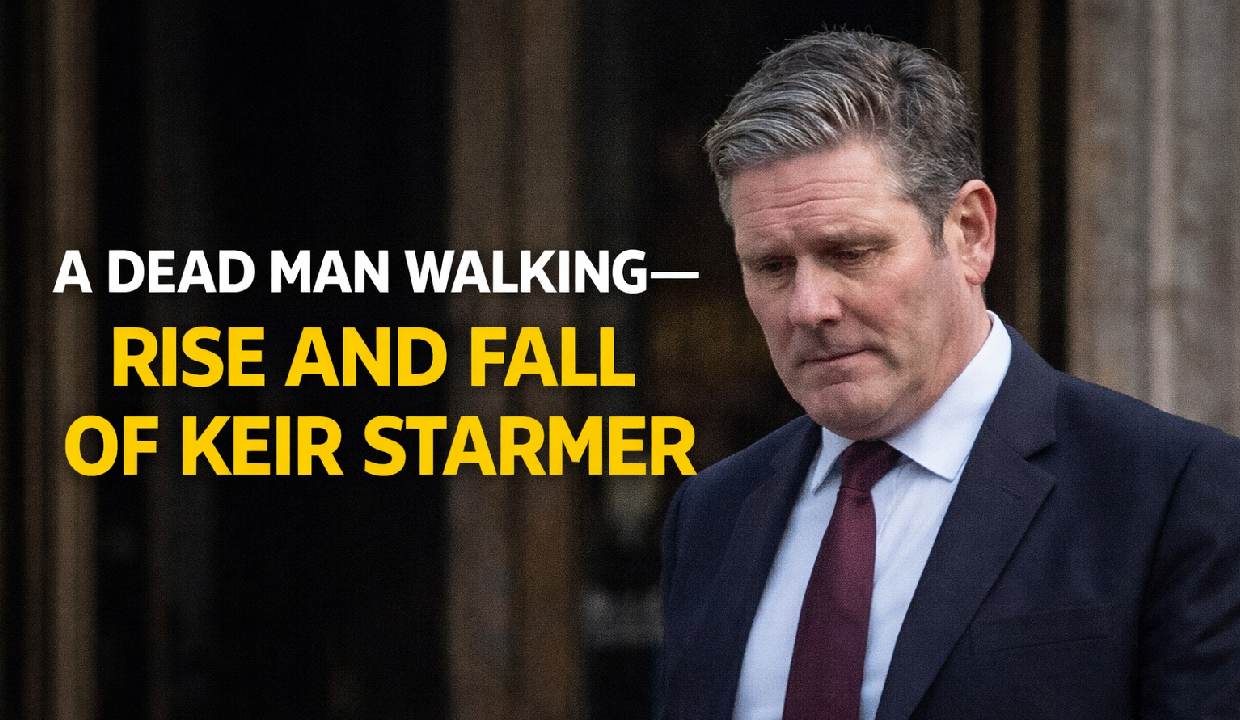
As of mid-February 2026, the phrase “The Rise and Fall of Keir Starmer” captures two stories at once. It points to a growing literary theme, but it also echoes a real political crisis for the British Prime Minister.
Context and Current Crisis
Talk of a possible “fall” has spread because scandals and political setbacks keep piling up. As a result, Keir Starmer’s premiership now looks fragile, and many supporters and critics alike sense the strain.
On July 4, 2024, Keir Starmer walked into Downing Street with a result that looked like a national reset. Labour gained 211 seats compared with the last election, and the early mood was strikingly calm. Many voters didn’t sound thrilled, they sounded relieved, like someone had finally switched off a blaring alarm.
By February 2026, that relief has curdled. Critics now call Starmer a “dead man walking,” and polls put his approval at the lowest recorded for any prime minister since 1977. The story is not only about a sudden change in public feeling. It is also about why the win was weaker than it looked, why the honeymoon ended so fast, and why Labour moved to block a popular internal alternative from returning to Parliament. Not all of that support was real loyalty.
The 2024 result looked huge because the seat count was huge. Yet the support underneath was thinner than the headlines suggested. Labour’s vote share rose only about 1.6 percent, which is a small movement for a party that won such a large majority.
Britain’s voting system can turn small shifts into big seat gains, especially when opponents split and collapse. When one side drops and another side concentrates its vote, the map can flip fast. That does not mean hearts and minds flipped at the same speed.
A big Commons majority can be built on a narrow emotional bargain: “please be different,” not “please lead for a decade.”
Relief, fatigue, and tactical votes did the heavy lifting
Campaigners often describe a familiar doorstep mood after long periods of turmoil. People are tired. They want quieter politics, fewer scandals, and a sense that Government can function again. That is not the same as excitement about a detailed program.
Tactical voting also mattered. In plain terms, many people voted for the candidate most likely to beat the Conservatives in their area, even if that candidate was not their first choice. For example, a voter might prefer the Greens or Liberal Democrats, yet still back Labour to make sure the Conservative MP loses. That kind of vote is practical, not romantic.
Anger and exhaustion can move voters quickly, because they are trying to stop something, not start something. The country had lived through years of pressure on living costs and public services. In that climate, a steady, cautious leader can look safe enough to try.
A big majority can hide a small coalition of support
Seat totals can create an illusion of deep consent. In everyday terms, it is like a restaurant that looks packed because everyone arrived at once during a storm. When the weather clears, the room can empty just as quickly.
For governing, thin support changes the stakes. Mistakes cost more because fewer people feel invested in giving the Government time. Patience also runs out faster when daily life does not improve. Early goodwill becomes a short loan, and the public can call it in without warning.
How the honeymoon ended in weeks, not years
After a dramatic election, many voters expect visible proof. They do not expect miracles, but they do expect signs. A new tone helps at first, yet tone can’t lower a grocery bill or shorten an NHS waiting list.
By early 2026, disappointment has hardened into a broader judgment. The criticism is less about one policy and more about a feeling that the country changed Governments but not conditions. When that happens, a leader’s style becomes part of the problem. Starmer’s caution may be meant to signal steadiness, but it can also sound like delay.
When prices, waits, and wages don’t move, trust drops fast
Voters track Government performance using simple markers. Those markers show up at the kitchen table and on the walk to work. Speeches matter less than the monthly budget because the budget is real.
A perception gap opens fast in modern politics. A leader may think he is being careful. However, the public can hear hesitation, especially when problems feel urgent. As a result, critics reach for brutal labels, and “dead man walking” spreads because it fits a mood.
Modern media accelerates this. A clip or headline can travel faster than a policy paper, so frustration collects speed. That does not mean the public is fickle. It means attention is scarce, and patience is tied to lived results.
Why blocking a popular Labour alternative can backfire?
Internal party pressure rises when public support falls. Parties protect leaders because they fear chaos, and sometimes that instinct is reasonable. The trouble starts when protection looks frightened.
In early 2026, a by-election offered a clear route back to Parliament. Andrew Gwynne stepped down for health reasons after winning 50.8 percent in 2024 with a 13,413 majority. That seat matters because it could give Andy Burnham a Westminster platform again, along with daily visibility and momentum.
At moments like this, the people around a prime minister matter as much as the prime minister. A leadership circle built for message control may struggle when the challenge is trust, not discipline.
Returning to Westminster changes a politician’s power. It brings airtime, regular questions in Parliament, and a stronger claim to speak for the party’s future. That does not require a “plot” or secret meetings.
Tension can rise on its own because incentives shift.
For a leader polling badly, that shift feels personal even when it isn’t. Colleagues start to compare voices. Donors and members start to ask who can win next time. Meanwhile, journalists look for a storyline, and they often pick the simplest one: successor versus incumbent.
Internal rivals don’t always scheme. Still, a weak leader can make every capable colleague look like a threat.
Stopping the comeback can look insecure to members and voters. Trying to block a popular figure’s return carries risks. Members may read it as a lack of confidence, and swing voters may see a party policing choices instead of earning support. At the same time, the Government cannot afford a fresh internal fight when its standing already looks brittle.
That is the double bind. If Labour clamps down, it can spark the drama it fears. If it allows an open contest, it risks headlines about division. A confident party usually chooses a third route: it competes with a clearer offer, stronger delivery, and a willingness to share space.
Conclusion
Starmer’s arc is stark: a huge win, a fragile foundation, and a rapid collapse as daily life stayed hard. The 2024 majority looked like a mandate for change, yet it rested on relief and tactical choices as much as trust. When prices, waits, and services did not shift fast enough, disappointment moved in, and it spread quickly.
Inside Labour, that mood turns routine personnel decisions into tests of confidence, especially with a by-election path that could bring Andy Burnham back to Westminster. All of this adds up to a leadership test that no amount of message discipline can fix on its own.
If Labour wants to stop the slide, it needs visible improvements people can feel and a calmer approach to internal debate. Confidence travels faster than slogans, and voters notice the difference.