BJP releases 1st list of 144 candidates for Bengal polls
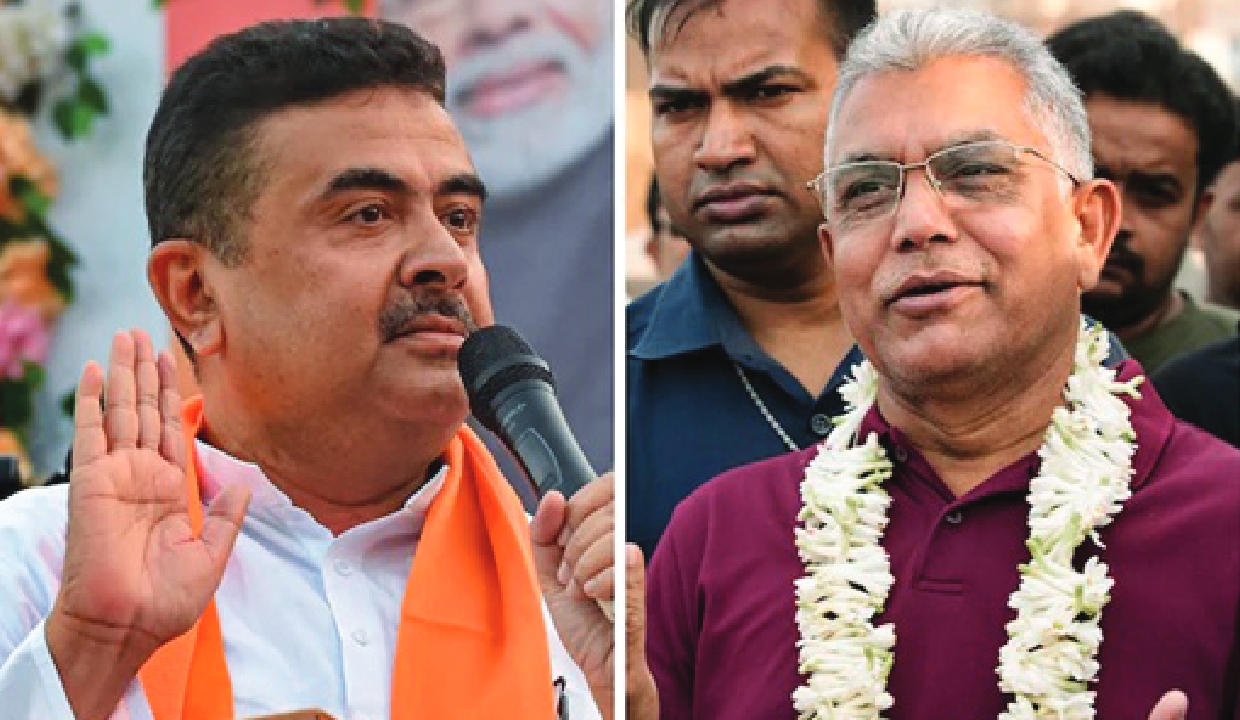
The Bharatiya Janata Party (BJP) on Monday released its first list of candidates for 144 seats in the upcoming Assembly elections in West Bengal, fielding several key leaders, including Suvendu Adhikari, Dilip Ghosh, former Rajya Sabha MP Swapan Dasgupta, former India cricketer Ashok Dinda and actor Rudranil Ghosh. Soumitra Chattopadhyay, from the family of Bankim Chandra Chattopadhyay, has been made the candidate from Naihati.
The party has also announced its list of 41 candidates for Kerala polls, which includes former Union Ministers Rajeev Chandrashekhar, V Murlidharan and K Surendara. Former Kerala Chief Minister K Karunakaran’s daughter Padmaja Venugopal, is also in the list.
While former State BJP president Dilip Ghosh has been fielded from Kharagpur Sadar, Suvendu Adhikari will contest the elections from two seats — Bhabanipur and Nandigram while former Rajya Sabha MP Swapan Dasgupta has been fielded from the Rashbehari assembly seat in south Kolkata. Party leader Sajal Ghosh will contest from Baranagar, and actor-turned-politician Rudranil Ghosh has been nominated from Shibpur.
This sets the stage for a likely face-off between Adhikari and Chief Minister Mamata Banerjee, as Bhabanipur is currently represented by Mamata. Adhikari’s candidature from both Nandigram and Bhabanipur is widely seen as the party’s most high-stakes decision in the first list, underscoring his role as the BJP’s principal field commander in Bengal. While Nandigram carries deep political symbolism as the epicentre of the 2007 anti-land acquisition movement that propelled Banerjee’s rise to power, it also became the stage for one of the most dramatic electoral battles in recent years when Adhikari defeated the chief minister there in 2021 by a slender margin of around 1,900 votes.
Bhabanipur, in contrast, is considered Banerjee’s political stronghold. She returned to the Assembly from the seat in a 2021 bypoll with a margin of more than 58,000 votes.
In Bhabanipur alone, over 47,000 names have been struck off the voters’ list while more than 14,000 remain under adjudication, developments that have already begun shaping the constituency’s political discourse ahead of the polls. In Nandigram, about 11,000 names have been removed from the electoral rolls during the revision process.
In the 2021 Assembly elections, Suvendu contested from Nandigram and defeated Mamata Banerjee. The announcement made in New Delhi signals the BJP’s attempt to sharpen the electoral narrative around Banerjee versus Adhikari while largely retaining its sitting legislators and inducting candidates from diverse professional backgrounds to broaden its social outreach ahead of the two-phase polls on April 23 and 29.
The first list also indicates the BJP’s preference for continuity, with the party renominating 41 of its sitting legislators. Among those repeated are Agnimitra Paul from Asansol South, Chandana Bauri from Saltora and Shikha Chatterjee from Dabgram-Phulbari. Two of the candidates are former MPs, and three are ex-MLAs. Female candidates have been given representation on 11 of the announced seats.
The list reflects a deliberate attempt to project social diversity, with the BJP highlighting candidates drawn from varied professional backgrounds. Of the 144 nominees, 57 come from fields such as teaching, law, medicine, social work and the armed forces.
Teachers account for the largest group with 23 candidates, while the party has also fielded advocates, doctors, retired military personnel, journalists and cultural personalities such as actor Rudranil Ghosh. Former India cricketer Ashok Dinda has been renominated from Moyna.
Among other candidates, former cricketer Ashok Dinda has been fielded from Moyna, while Gauri Shankar Ghosh will contest from a constituency in Murshidabad. The party has nominated Dipak Kumar Haldar from Diamond Harbour, Savitri Barman from Sitalkuchi, and Shankar Ghosh from Siliguri. Additionally, Umesh Rai has been fielded from Howrah Uttar.
The BJP fielded candidates below 40 years of age in 36 seats, “as a symbol of trust in the youth”. Similarly, 72 nominees are in the 41 to 55 age group, while 32 candidates are in the 56 to 70 years age bracket. Four candidates are above the age of 70.
“This list reflects grassroots representation and social diversity. Many candidates have strong public engagement in their respective professions,” a senior BJP leader said. The inclusion of 41 sitting MLAs and three former legislators suggests that the party has opted to bank on existing political networks rather than undertake a large-scale reshuffle.
The BJP’s list comes amid intense political debate over the Special Intensive Revision (SIR) of electoral rolls, which has triggered controversy after large-scale deletions in several constituencies.