Powell shovels as Trump fed up
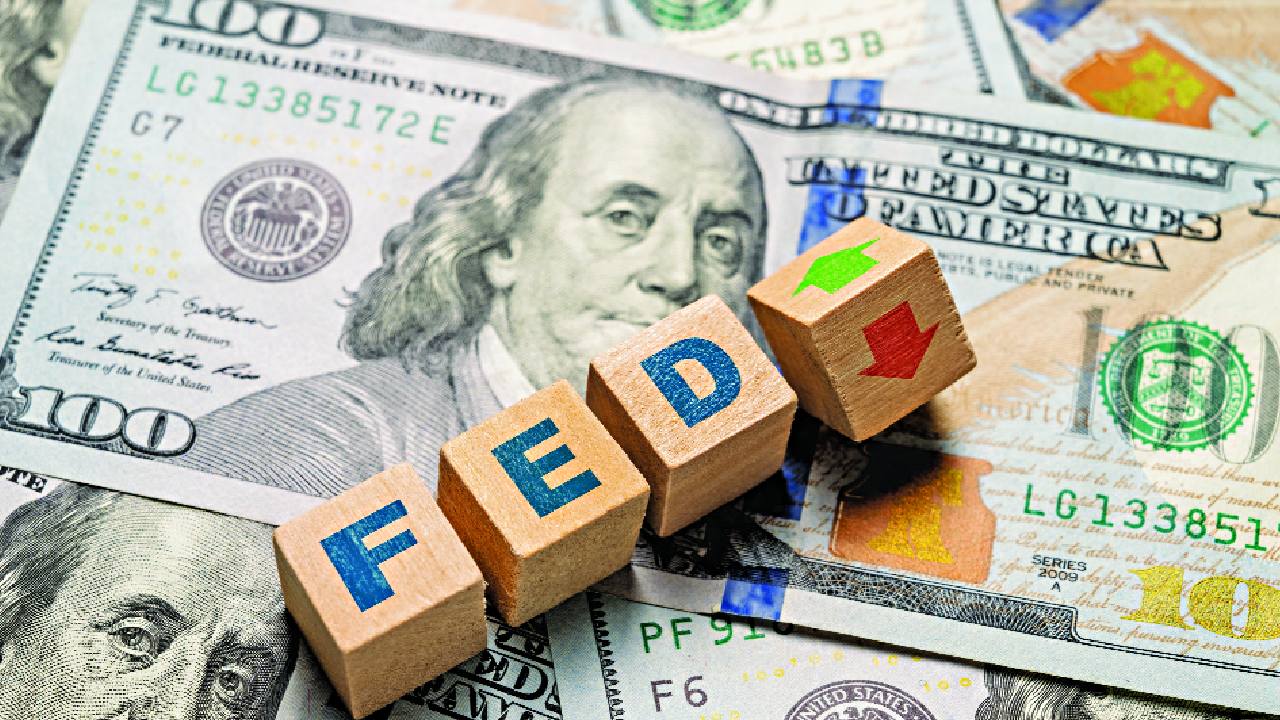
Jerome Powell, chairman, Federal Reserve Board, is expected to leave the interest rate untouched. This is the current consensus among experts, two days before he discloses his interests and cards. For the markets though, what he does will not matter, even if Powell hikes the rates a bit. What will matter is what he says at the post-decision press conference. Analysts feel that if his tone is dovish, the markets will remain calm and sober. But if his speech seems hawkish, there will be a fresh period of turmoil, which is likely to make Donald Trump, the US president and Powell’s bete-noire, angrier. Ever since he came to power for the second time, Trump wanted the Fed to lower interest rates faster to spur growth. He is fed up with Powell’s cautious and slow approach. The Fed chairman, who has a few months left in this job, revealed that the US Department of Justice initiated a criminal case against him.
According to an economist, who works for Nomura, “among the most accurate forecasters for the US economy in Reuters poll last year, “The economic outlook on the surface suggests the Fed should remain on hold, maybe even consider putting hikes on the table sometime later this year, or next year. In reality, though, we think the Fed will remain on hold for the remainder of Powell’s term through May (2026), but we suspect the new leadership will manage to get another 50 basis points of rate cuts later in the year.” Among the 100 economists that Reuters polled, 55 agreed, and expected the rate cuts to “resume as soon as Powell’s tenure… ends.” Recently, Trump said that he has decided the successor, after having rejected the most obvious candidate, whose name was floating around for weeks. According to the Treasury Secretary, the announcement may happen as early as this week. But Powell will continue as a member of the Fed Board, although he will no longer be its chairman.
Even if Trump gets his candidate in, there are two problem areas. The first is that across institutions, including the Fed and judiciary, the president has witnessed that his loyal appointees do not remain so. Some of them change tracks, as the institution becomes more important than the individual who has appointed them. Powell too came in with Trump’s support, but refused to listen to the latter as the head of the Fed Board. The second problem is the criminal investigation against Powell. Some republicans are peeved about the decision. An economist told a news agency, “There is going to be more pushback than ever on the selection of the next chair (Fed Board), all because of the criminal investigation…. I do not expect Trump to be able to really fill the Fed with people who will cut interest rates.” Hence, the conclusion that the interest rates will steeply come down in the second half of 2026 may be wrong.
However, as mentioned earlier, what is crucial is not what Powell does, but what he says. If his post-decision speech is dovish, it will send the signal that the interest rate hold is “temporary,” and rate cuts, albeit smaller than what the president desires, will resume in the future, even before his term ends in May 2026. According to Morgan Stanley, the Fed will send a dovish message “by retaining the policy statement wording ‘considering the range and timing for further adjustments to the target range.’” This will translate as “easing (of interest rates) remains on the table.” Such a statement, if Powell utters it, or includes it, will acknowledge what Trump has said in recent times: The US economy is more robust than before, and options are open to cut interest rates in the future. It will ease the tensions between the Fed and presidency, at least verbally.
Some experts contend that one needs to watch for the dissenters to the Fed’s majority decision. This is because they will “amplify” the dovish tilt. For example, when Trump’s recent appointee to the Fed Board, Stephen Miran, asks for a bolder 50 basis points cut, as he is expected to, and as he did at the last meeting, it will indicate what the Trump supporters feel about the economy. If the number of dissenters, which only included Miran the last time, “grows, it will bolster the case for future easing,” according to an expert. The fact remains that despite criticisms against Trump on how he has handled the economy, and how he has misused, even abused the trade-tariff regime, the US economy seems stronger. The quarterly GDP growth is unprecedented. Inflation is up, but lower than what experts expected it to be despite the high tariffs on imports. The job trends are positive, with low unemployment. Exports are up, and imports down, with the trade deficit much lower.
However, hawkish overtones from Powell may derail the markets, and lead to negative sentiments. For example, the Fed chair may highlight inflation risks, as prices have gone up by 2.7 per cent in the past 12 months. He may possibly pinpoint that while growth was strong in the first two quarters, each time nearing or upping four per cent, it may slow down in the future. In his Davos speech, Trump confidently said that the prediction for the next quarter is 5.4 per cent. But this may be his optimism as most experts feel that the overall annual growth may be two per cent, or a wee bit higher. This implies a possible slowdown over the next two quarters. Powell can argue or hint that Trump’s initiatives to make housing affordable can be inflationary. Recently, the president asked his representatives to buy $200 billion in mortgage bonds, and banned large institutions, and big investors from buying single-family homes.
“The purchase (of) $200 billion… risk pulling forward demand, inflating prices, and skewing benefits towards incumbents. On the other hand, the impact of banning large institutional investors… is likely to be limited, given small institutional ownership relative to the overall stock,” stated Allianz Investment Management in a note. In his Davos speech, Trump said that institutional ownership was 10 per cent of the total. Experts put the figure at two per cent or so. In addition, some economists contend that inflation can have a lag effect, as in the actual impact of the tariffs may surface over the next few months, and fuel prices. This is especially so as the current cold wave has affected fuel prices, which may have a multiplier impact.