Political slogans meet tradition as rakhis take a swadeshi turn
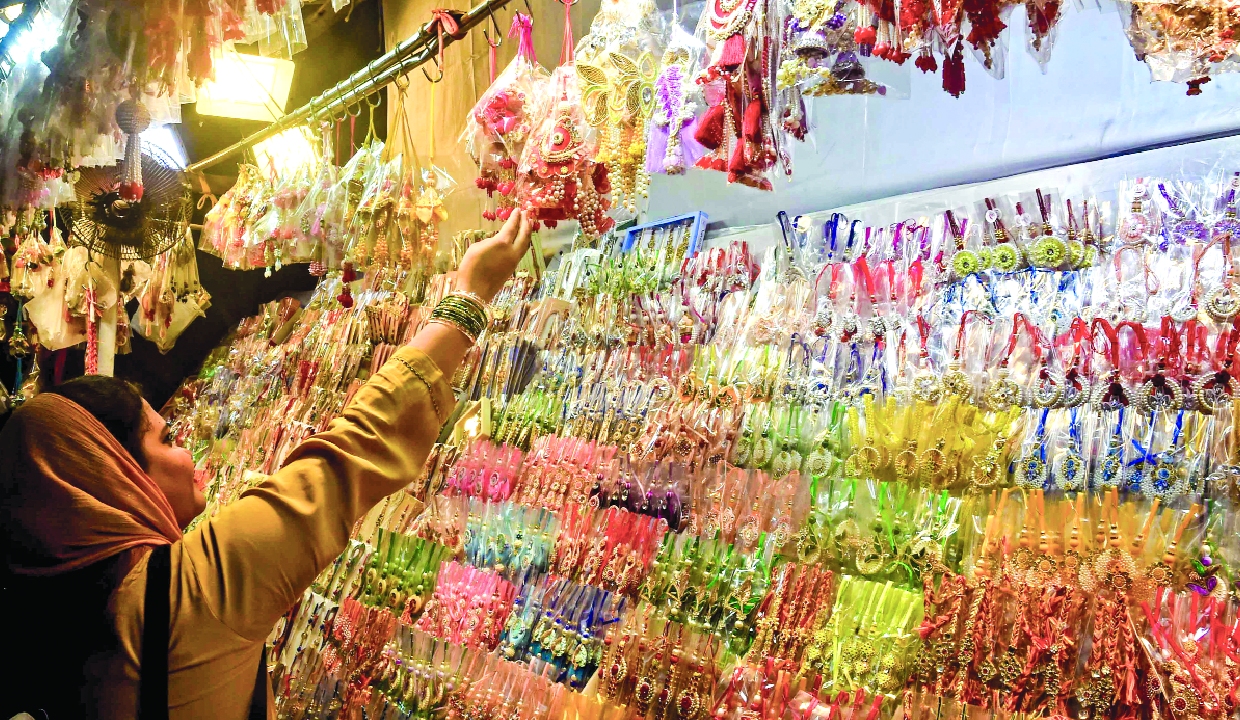
Raksha Bandhan this year promises to be different. Rakhis, now selling in markets all over the country, carry messages ranging from traditional sibling affection to invoking messages and the initiatives of the Union Government, including Viksit Bharat, Atmanirbhar Bharat, Operation Sindoor, BrahMos and women’s empowerment. Traders estimate the rakhi trade this year is expected to gross Rs 25,000 crores to Rs 30,000 crores.
Showing the changing vocabulary of the market, the rakhi designs also depict Modi’s Guarantee, Nari Vandan, Har Ghar Tiranga, Lakhpati Didi, Amrit Kaal, BrahMos and Rashtra Raksha Sutra. The political themes, however, were only one part of a market increasingly being populated by handmade and locally produced rakhis.
But the market is not confined to overtly political designs. Artisans are also drawing on regional traditions — Khadi rakhis from Nagpur, Sanganeri art rakhis from Jaipur, seed rakhis from Pune, tea-leaf rakhis from Assam, jute rakhis from Kolkata, bamboo rakhis and Madhubani art rakhis from Bihar are among the varieties being sold.
Cartoon-themed rakhis featuring Chhota Bheem, Doraemon and Spider-Man too remain popular, while light-up watch-style rakhis are also attracting children. A newer attraction this year is character-based rakhi designs inspired by Avengers superheroes, giving children and young fans another option beyond conventional cartoon motifs.
The shift towards locally made rakhis has also altered the sourcing of a product that was once commonly associated with Chinese imports. The artisans said the market had seen virtually no Chinese rakhis for the past two to three years, including last year and this season.
“Earlier, rakhis used to mostly come from China. After 2020, there was a feeling that we should make our own local and swadeshi products,” Chandni Chowk MP and renowned traders leader Praveen Khandelwal said, linking the change in consumer sentiment to the aftermath of the 2020 Galwan Valley clash.
Khandelwal said the preference for indigenous products was giving women entrepreneurs, self-help groups and artisans a larger role in the seasonal economy. “Today, a swadeshi rakhi is not merely a sacred thread of protection. It has become a powerful symbol of Viksit Bharat, Atmanirbhar Bharat, women’s empowerment and national pride,” he said.
The wider festive trade, including sweets, dry fruits, gifts, apparel, electronics and other items, could cross Rs 30,000 crore in the country, according to estimates by the Confederation of All India Traders (CAIT).
Delhi is expected to account for around Rs 4,000 crore of the business. The figures come as markets across Delhi, including Chandni Chowk, Sadar Bazaar, Karol Bagh, Lajpat Nagar, Kamla Nagar, Rajouri Garden, Gandhi Nagar, Khari Baoli and Laxmi Nagar, see a rush of shoppers ahead of Raksha Bandhan on August 28.
“The festival generates direct and indirect employment and income opportunities for millions of people. Rakhi artisans, women’s self-help groups, cottage industries, sweet makers, florists, gift traders, transport operators, packaging units, courier services, e-commerce delivery networks, and small retailers particularly benefit from this festive season. For millions of low-income families, Raksha Bandhan serves as an important source of additional income and employment,” he said.