PM reviews global risks in CCS meet
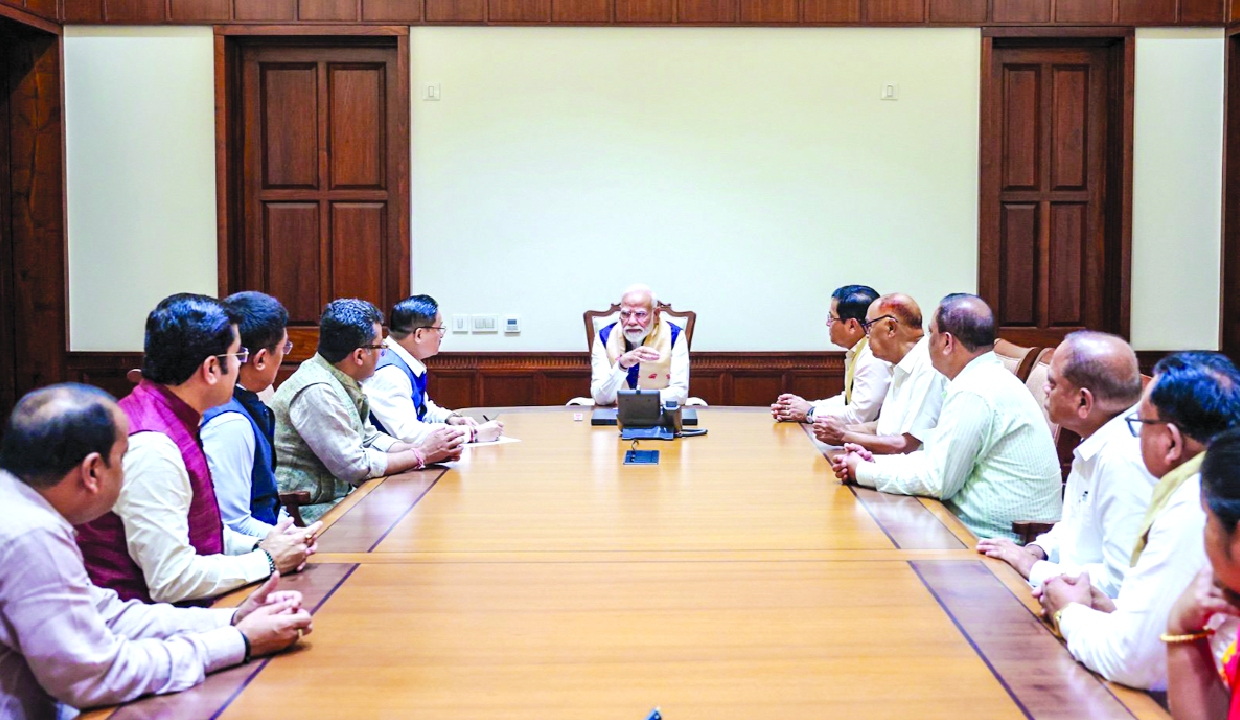
Prime Minister Narendra Modi on Thursday chaired an extended meeting of the Cabinet Committee on Security (CCS) to review the prevailing global security situation and chart measures to safeguard India’s critical supply chains amid ongoing conflicts across major maritime routes, including the Strait of Hormuz, the Black Sea, the Red Sea and the Gulf of Aden.
The two-hour meeting, held at the Parliament House complex and convened at short notice, was attended by the permanent members of the CCS, Defence Minister Rajnath Singh, Home Minister Amit Shah, External Affairs Minister S Jaishankar and Finance Minister Nirmala Sitharaman. Special invitees included Chemicals and Fertilisers Minister JP Nadda, Commerce and Industry Minister Piyush Goyal, Ports, Shipping and Waterways Minister Sarbananda Sonowal, and Petroleum and Natural Gas Minister Hardeep Singh Puri, official sources said.
According to sources, the discussions covered the security implications of multiple ongoing conflicts and the resulting disruptions to India’s imports, a large share of which transit through these volatile zones. Ministers made detailed presentations on the steps already taken by their respective ministries to ensure uninterrupted inflow of essential commodities, particularly petroleum, natural gas and fertilisers.
The safety of Indian citizens living and working in conflict zones and the protection of Indian seafarers were reviewed at length. Nearly one crore Indians reside and work in West Asia, making their security a key concern. The Prime Minister is learnt to have issued specific directions to the ministers to prioritise the safety of Indians abroad, protect the country’s economic interests, and explore alternative routes and mechanisms to overcome supply-chain bottlenecks. India depends on imports to meet more than 88 per cent of its energy requirements and also sources a significant volume of fertilisers from overseas.
Prior to the escalation involving the United States, Israel and Iran, roughly 40 per cent of India’s energy imports passed through the Strait of Hormuz. With the conflict remaining unresolved, energy shipments from West Asia have been severely affected. Imports through the strait continue to remain minimal because of intermittent attacks on oil and cargo vessels. In the Red Sea-Gulf of Aden region, the Yemen-based Houthi group last week declared that it would target Saudi Arabian tankers attempting to transit the Bab al-Mandab Strait.
The group has since attacked several ships. The Bab al-Mandab, which links the Red Sea to the Gulf of Aden and the Arabian Sea, is a critical global chokepoint for trade and energy supplies, comparable in strategic importance to the Strait of Hormuz. Available data show that average daily ship crossings through the Bab al-Mandab have already fallen to 31 over the past three days, down from 43 in the first half of July.
Russian oil imports via the Black Sea are also under pressure as the Russia-Ukraine conflict intensifies, with several recent attacks reported on vessels operating in those waters. The meeting reflected the Government’s assessment that geopolitical tensions in these maritime corridors pose both immediate security challenges and longer-term risks to India’s energy security, food security and overall economic stability.
Sources said that the CCS looked at the global political situation as a whole, while focusing on practical ways to keep supply lines open and protect Indian interests. The long CCS discussions show that New Delhi is taking a proactive approach to handling outside challenges in a world where shipping routes are often disrupted.