PM Modi, Germany’s Merz look for early FTA as ties deepen
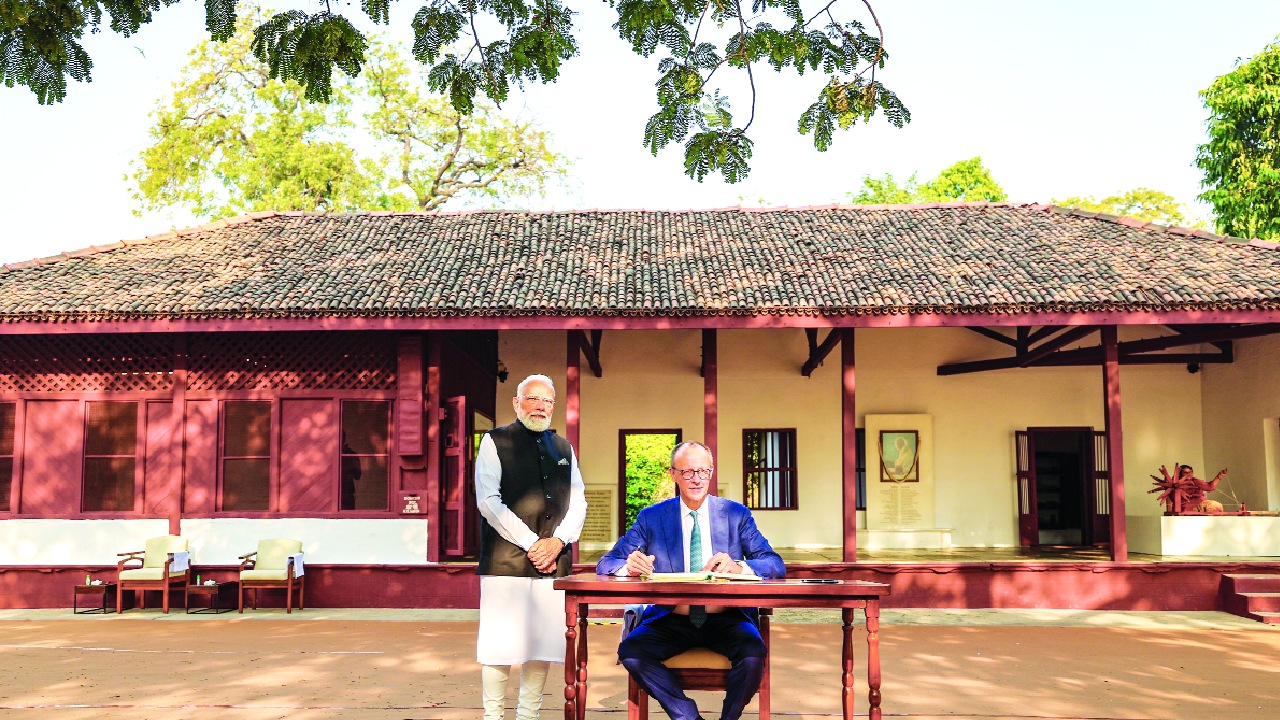
German Chancellor Friedrich Merz on Monday indicated that the European Union and India could conclude a long-awaited free trade agreement by the end of January, a development that could significantly recalibrate global trade relationships at a time of rising protectionism and stalled negotiations between New Delhi and Washington.
Speaking to reporters in Ahmedabad after talks with Prime Minister Narendra Modi, Merz said top EU leaders were prepared to travel to India to formalise the agreement if negotiations are completed within the proposed timeline. He described India’s commitment to finalising the deal as the most significant outcome of his visit.
“The big win of this visit is the clear commitment by India to get the trade agreement with the European Union done by the end of January,” Merz said.
The proposed pact comes on the heels of the EU’s recent vote in favour of the Mercosur trade agreement, which Merz said underscored Europe’s ability to diversify its economic partnerships. He stressed that stronger ties with India would complement, not replace, the EU’s relationship with the United States.During the visit, Merz and Modi oversaw the signing of 27 declarations of intent and announcements spanning a wide range of sectors. These included defence cooperation, rare earth supply chains, artificial intelligence, health worker recruitment, clean energy, and even the promotion of hockey talent, reflecting the broadening scope of India-Germany engagement.
Prime Minister Modi hailed the deepening bilateral relationship, noting that trade between India and Germany had crossed the $50 billion mark for the first time. “Our bilateral trade has reached its highest level ever, surpassing the $50 billion mark. More than 2,000 German companies have a long-standing presence in India, reflecting their unwavering confidence in our economy and the opportunities available here,” Modi said, referring to discussions held earlier at the India-Germany CEO Forum.Beyond trade, Modi highlighted steady progress in technology and clean energy collaboration. He announced the decision to establish an India-Germany Centre of Excellence to further cooperation in renewable energy, innovation and knowledge-sharing. “Technology cooperation between India and Germany has strengthened year after year, and its impact is clearly visible on the ground today,” he said.
Several Memorandums of Understanding were signed during the visit to expand institutional and sectoral cooperation. Chancellor Merz’s trip, his first official visit to India, included delegation-level talks reviewing collaboration in trade, investment, education, skilling and mobility, while also exploring new opportunities in defence, security, science, research and sustainable development.
Recent data highlight the scale of the partnership. Bilateral trade in goods and services stood at $51.23 billion in 2024–25, with Germany remaining India’s largest trading partner within the European Union, accounting for nearly a quarter of India’s total trade with the bloc. Trade in services alone grew by 12.5 per cent during the same period, reaching a record $16.65 billion.
Investment ties have also remained robust. Germany is India’s ninth-largest foreign direct investor, with cumulative inflows of $15.40 billion since April 2000. In FY 2024–25, German investments in India totalled $469 million.With both sides signalling urgency and political will, the proposed EU–India free trade agreement is now being viewed as a potential milestone in strengthening Indo-European economic ties and shaping a more diversified global trade architecture.