Plea on gifts under Muslim law: SC asks petitioners to approach Law Commission
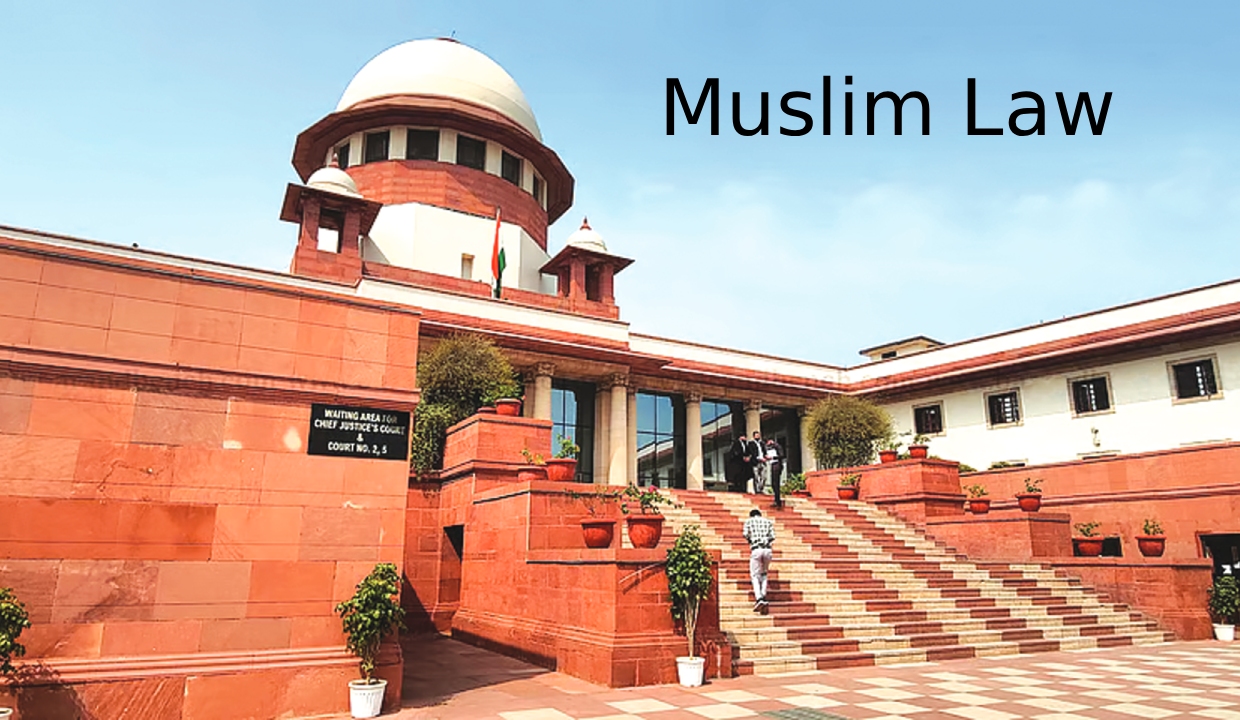
The Supreme Court on Thursday asked two petitioners, who had challenged a provision of a 1882 law which exempts gifts executed under the Muslim law from registration, to approach the Law Commission of India.
A bench headed by Chief Justice Surya Kant said the appropriate recourse for the petitioners would be to approach an expert body like the Law Commission of India, which has been entrusted with the responsibility of recommending suitable amendments in existing laws or for the enactment of new laws.
The counsel appearing for the petitioners said the plea has challenged the constitutional validity of Section 129 of the Transfer of Property Act, 1882, as well as Section 2 of the Muslim Personal Law (Shariat) Application Act, 1937, so far as the word “gift” was concerned.
He said the gifts made under the Muslim personal law were exempt from the requirements of paying stamp duty, while the same exemption is not granted to non-Muslims.
The bench, also comprising justices Joymalya Bagchi and Vipul M Pancholi, observed that if there was any loss to the public exchequer, the parliament would be the competent forum.
“The Parliament can always amend the law and can bring a new law,” the bench said. The CJI asked why the petitioners have not represented before any parliamentarian pointing out that there was some element of alleged discrimination in the law. The counsel said there was an interplay between the Transfer of Property Act and the Registration Act.
“The clash between personal law and fundamental rights so far as the concept of gift is concerned, has to be determined by this court,” he said. The bench said the law is of 1882.
“Suddenly, in 2026, you remember that it violates Article 14 and when you remember it, you did not deem it appropriate even to inform those persons who are the best one to rectify it,” the bench said. The CJI observed that the “best forum” would be the Law Commission.
“In our considered opinion, the appropriate recourse for the petitioners would be to approach the expert body like the Law Commission of India, which has been entrusted with the responsibility of recommending suitable amendments/changes in the existing laws and for the enactment of new laws, as may be required from time to time,” the bench said.
It said such an expert body being functional as of now, it see no reason to entertain the writ petition at this stage.
The bench disposed of the plea with liberty to the petitioners to approach the Law Commission.