Piotech

Cummins India sees a good opportunity in the data centre business
Power solutions provider Cummins India has said it is seeing a “good opportunity” in the data centre business, which is witnessing a significant boom driven by AI adoption and data localisation. A part of the US-based Cummins Inc, Cummins India Ltd is involved in the power generation, aftermarket and export businesses with five manufacturing plants, assembly and distribution facilities. “Data centres have been a part of our portfolio for a while. We do see growth in data centres coming in India, so we have an important role to play,” Shveta Arya, Managing Director, Cummins India Ltd, said during an interaction.
These centres require 99.99 per cent uptime for customers, and they have different levels of backup power, she said. “They have their own prime power electricity that comes to the grid or a substation, then they use gensets for backup, which is very important for their operations to run at a 99.99 per cent uptime. So, we definitely see a play and an opportunity for us as the data centres grow in the Indian market,” she said.
“We also continue to see the data centre market slowly, steadily picking up,” she had said last month during the post-Q2 earnings conference call. As per the report, India has 1.4 gigawatt (GW) of operational data centre capacity, with around 1.4 GW under construction and another about 5 GW in the planning stage.
Agentic AI to drive autonomous enterprise by 2026: Wipro CTO

The global technology landscape is set to undergo a decisive shift by 2026, moving from isolated experiments to the era of Agentic AI, where networks of autonomous agents manage complex business workflows, according to Wipro Chief Technology Officer Sandhya Arun. While 2025 was a year of foundational shifts and the meaningful adoption of Generative AI, the focus in 2026 will shift to AI systems operating at scale, embedded within critical business operations.
“Enterprises are moving from isolated agentic AI experiments to pragmatic, enterprise-wide strategies focused on measurable business outcomes,” Arun said, noting that by 2026, networks of collaborating AI agents are expected to manage complex workflows across diverse functions, including IT, HR, finance, marketing, and supply chains. A key aspect of this transition is the fundamental change in the human workforce’s relationship with technology. As AI gains autonomy, the human role will evolve from execution to orchestration.
“We will see a growing shift towards specialised, industry or domain-native models rather than broad, general-purpose ones. These models will be trained on industry-specific datasets and built with contextual intelligence such as ontology, risk controls, safety and regulatory requirements — embedded into the solution from the start. Smaller, focused models will deliver deeper expertise and better accuracy in specific areas, while also being more cost-effective and less resource-intensive,” she noted.
Indigenous startup Digantara to track missiles from space
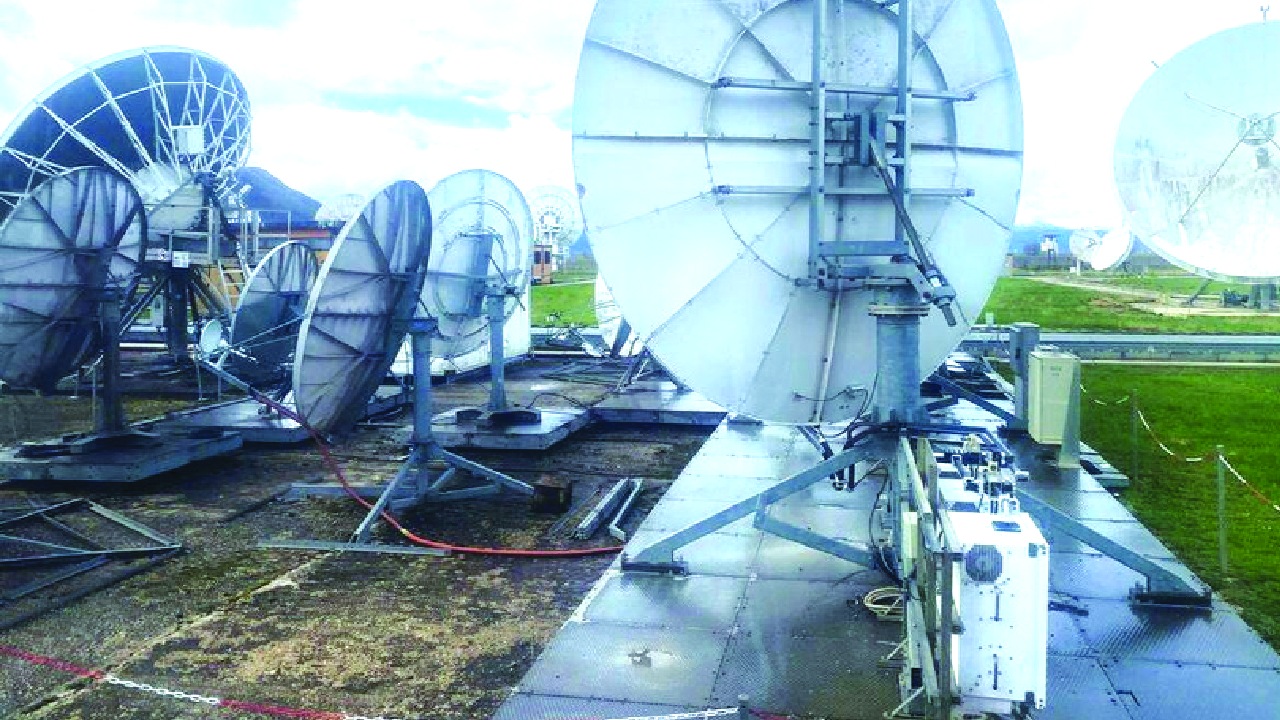
Indian startup Digantara, which specialises in monitoring space debris, has ventured into the domain of tracking missiles using satellites, citing greater interest from Governments across the world for such information. Space debris and traffic monitoring has emerged as a key segment of the global space economy as companies launch more satellites in low Earth orbit for high-speed internet and Earth observation applications.
“We were tracking fast-moving space objects. So, with that experience and lessons that we learnt there, we will use the same architecture to work on missile tracking and detection from space,” Anirudh Sharma, co-founder and CEO of Digantara Industries said.
The company operates ‘SCOT’, a commercial space-surveillance satellite launched in January 2025 and plans to put 15 more such satellites in orbit in 2026-27 to boost its space monitoring capabilities.
Digantara also plans to launch two Albatross satellites in 2026-27, dedicated to early missile warning and precision tracking and ‘Skygate’, an expanding network of ground-based sensors that enables persistent observation across the critical theatres of operations.
Its integrated infrastructure, ‘AIRA’, unites advanced hardware, data and processing capabilities across space and ground systems to create a multidomain surveillance capability.
(All inputs from PTI)