Panel turns heat on big tech
India lost an estimated Rs 22,495 crore to cybercrimes in 2025. Investment fraud made up over 75 per cent of these losses
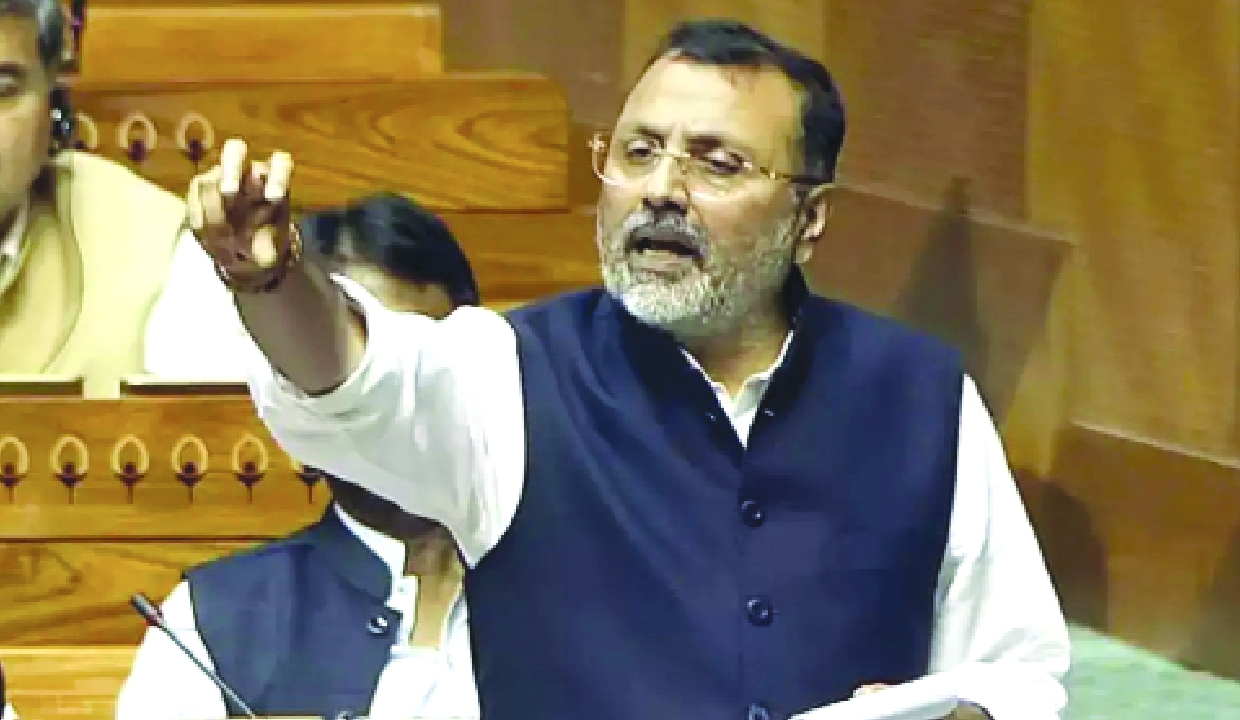
On Monday, Chairman of the Parliamentary Standing Committee on Communications and Information Technology, Nishikant Dubey, said that as digital platforms become more common in communication, business, government, and daily life, there is a need for clear legal and social responsibility. Dubey said that managing digital platforms is now important for public safety, economic security, and trust. He also raised concerns about how current Indian laws handle intermediaries’ responsibilities.
At a committee meeting about regulating social and digital platforms, officials from Google, Meta, X, and YouTube were asked if current rules make platforms accountable enough when they allow or fail to stop large-scale harm. Dubey questioned why fraud is not listed separately in monthly compliance reports, since it is the most common type of cyber harm. India saw about 28.15 lakh cybercrime complaints in 2025, with losses estimated at nearly Rs 22,495 crore.
Investment fraud made up over 75 per cent of these losses, totalling about Rs 16,800 crore.
The committee pointed out that a lack of transparency could mean platforms are not doing enough to check problems. One platform said it banned over 72 lakh Indian accounts in one month but did not explain why. Another platform put 92 per cent of user complaints under the Other issue category.
The committee also looked at how platforms may enable fraud. Hyderabad City Police data showed that from 2024 to mid-2026, there were 2,367 cybercrime cases linked to Meta platforms. Almost 90 per cent involved WhatsApp, and nearly two-thirds were about fake investment schemes. Three fake trading apps led to reported losses of about Rs 48.87 lakh.
Dubey asked whether National Cybercrime Reporting Portal (NCRP) complaints should go straight to platforms; what the fastest response time for scam ads could be; whether failed SEBI checks should stop trading app promotions; how repeat advertisers are blocked; and why platforms do not share fraud detection numbers.
The committee called the temporary removal of Prime Minister Narendra Modi’s official Facebook post about the NEET exam a serious failure, not just a technical mistake. Dubey asked for a full record of what happened from the report to the post’s restoration, public explanations for account actions, and publication of user reports with the actions taken. He also wanted to know what protections are in place for emergency Government messages and if stronger laws are needed to prevent such problems.
Liability concerns grew around Child Sexual Abuse Material (CSAM). Dubey referred to a BBC Eye investigation that claimed Instagram ran paid ads leading users to CSAM channels. He said that if this is true, it shows a failure in the ad review system. The committee asked how these ads passed internal checks, how many were found in India and worldwide, what disciplinary actions were taken, what technology improvements were made, and what steps will prevent this from happening again.
The committee invoked Section 79(3)(b) of the IT Act, under which intermediary immunity does not apply when a computer resource controlled by the platform is used to commit an unlawful act, and asked whether the Ministry of Home Affairs or I4C had detected the activity before the BBC report. Section 69A blocking powers were also referenced, with the observation that action reportedly followed only after public exposure.
The committee also looked at new AI rules. The updated IT Rules, starting 10 February 2026, require platforms to watch AI-generated content, but there is still no special way to report deceptive material.
The chairman asked for details about visible labels, how official fact-checks are shown to users who see false information, protections against deepfake investment scams, how harmful ads are caught before they go live, and if platforms will allow outside audits of their AI moderation systems.
The committee asked platforms to give specific, evidence-based answers and clear promises to improve due diligence, reporting, and oversight. They requested written replies to any unanswered questions within ten days, and said the proceedings will stay confidential.