Panel calls for a national day to commemorate colonialism victims
A public dialogue examining India’s colonial history alongside its newly signed free trade agreement with Britain has culminated in a call for a National Day of Commemoration for Victims of Colonialism.
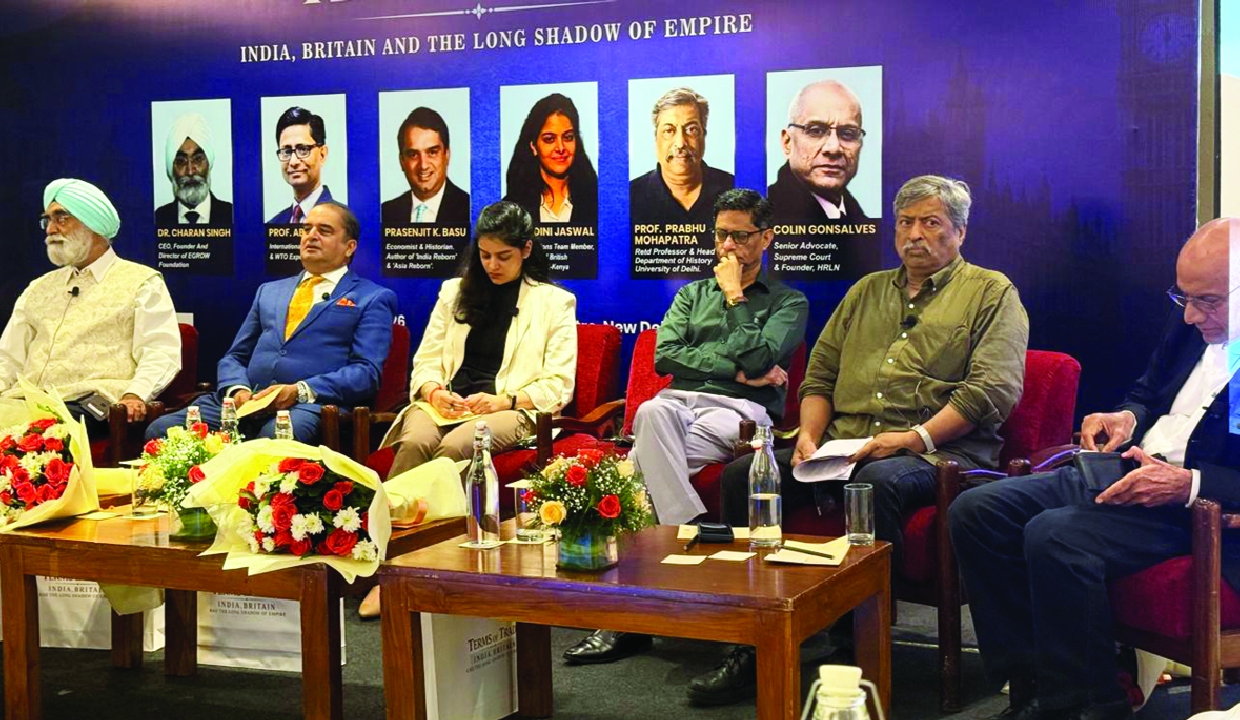
Titled “Terms of Trade: India, Britain, and the Long Shadow of Empire,” the dialogue was convened by Urzu Media at the India Habitat Centre on Friday. It brought together economists, historians, trade policy experts and a senior human rights lawyer to discuss how nearly two centuries of colonial rule shaped India’s economy, institutions and collective memory, and how that history still informs policy choices today.
Closing the event, participants said they would begin wider consultations with historians, academics, museums, civil society groups and policymakers to finalise a date. The day is envisioned as covering economic exploitation, famine, displacement and the freedom struggle as connected chapters, rather than isolated episodes such as Jallianwala Bagh or Partition.
The panel included Charan Singh of the EGROW Foundation, trade expert Abhijit Das, economist-historian Prasenjit K Basu, Delhi University’s Prabhu Mohapatra, advocate Colin Gonsalves, and Chandini Jaswal of the Museum of British Colonialism, moderated by Richa Jain Kallra. Vijay Kumar Sundaresan of the India Pride Project also spoke on repatriating India’s stolen artefacts.
While the trade agreement provided the immediate backdrop, speakers were divided on its merits. Singh argued the pact favours Britain, citing India’s fall from roughly a quarter of world GDP in the 1600s to about 1 percent at independence. Das cautioned against unrestricted use of Indian data by foreign players, while Gonsalves criticised the government for not making the treaty text public. Basu, however, defended the agreement as beneficial for both economies.