Over 8.5k complaints against judges since 2016: Meghwal
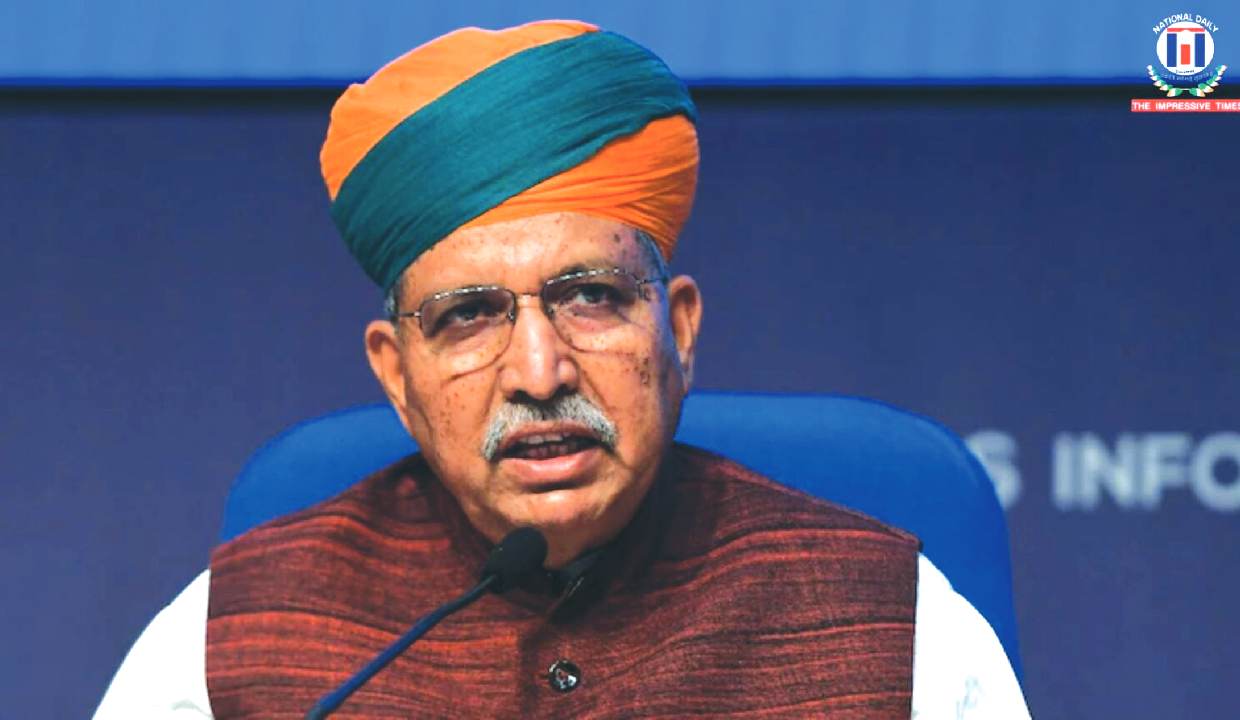
Over 8,600 complaints against sitting judges have been received by the office of the Chief Justice of India (CJI) since 2016, the Lok Sabha was informed on Friday. In a written reply, Law Minister Arjun Ram Meghwal said 8,639 complaints have been received against sitting judges between 2016 and 2025. The highest number of complaints (1,170) was received in 2024 by the office of the CJI against sitting judges.
Complaints received against Judges and Chief Justices of the High Courts are handled by the judiciary through an “in-house mechanism”.
He recalled that in May 1997, the Supreme Court adopted two resolutions — “The Restatement of Values of Judicial Life”, which lays down certain judicial standards and principles to be observed and followed by SC and HC judges; and “In-house Procedure”, which takes suitable remedial measure against judges who do not follow the universally accepted values of judicial life including those in the “Restatement of Values of Judicial Life”.
According to the established in-house procedure for the higher judiciary, the CJI is competent to receive complaints against SC judges and chief justices of the High Courts. Similarly, the chief justices of High Courts are competent to receive complaints against the conduct of the High Court judges.
Complaints against members of the higher judiciary received on the Centralised Public Grievance Redress and Monitoring System (CPGRAMS) or in any other form are forwarded to the CJI or chief justices of High Courts competent to receive such complaints, he explained.
Law Minister also told the House that all transfers are to be made in public interest, as it explained the entire process of transferring High Court judges in response to a question on instances of “interference” by the executive in such transfers. “All transfers are to be made in public interest —for promoting better administration of justice throughout the country.” He was asked whether the Government is aware of the “recent instances of interference by the executive in the transfer of judges of lower judiciary and High Courts.”
On the issue of the transfer procedure followed for HC judges, the Union Minister said that as per the Memorandum of Procedure (MoP) for appointment and transfer of High Court judges, the proposal for transfer is initiated by the Chief Justice of India in consultation with four senior-most judges of the Supreme Court.
The MoP also provides that the CJI is also expected to take into account the views of the chief justice of the High Court from which the judge is to be transferred and also the chief justice of the HC to which the transfer is to be effected.
Besides, views of one or more Supreme Court judges who are in a position to offer an opinion are also considered.
The personal factors relating to the judge concerned, including the chief justice, and his response to the proposal, including his preference of places, should invariably be taken into account by the CJI and the first four judges of the Supreme Court before arriving at a conclusion on the proposal, he explained.
In October last year, the Supreme Court Collegium had modified its decision to transfer Madhya Pradesh High Court judge Justice Atul Sreedharan from Chhattisgarh to the Allahabad High Court, citing “reconsideration sought by the Government”.