Open graveyards in open skies
There are probably tens of thousands of furious flyers, who want the CEO of IndiGo Airline, Peiter Elbers, to go. There may be a few hundred, who desire that he is arrested for the way the airline treated thousands of passengers over the past two weeks, as thousands of flights were either delayed or cancelled. But even the worst critics of IndiGo will not like Elbers to suffer the fate of another CEO of a past, and similarly successful, private airline.
Three decades ago, to be precise, in 1995, Thakiyuddin Abdul Wahid left for his office in the western suburbs of Mumbai. He had received several threats from the city’s underworld, even as the leadership of the most dreaded gang had shifted lock, stock, and barrel to the United Arab Emirates. But Wahid, who had launched the East-West Airlines, which was the country’s first private sector airline, and doing reasonably well, seemed unfazed. He should have heeded to the warnings, as on his way to the office, he was shot dead.
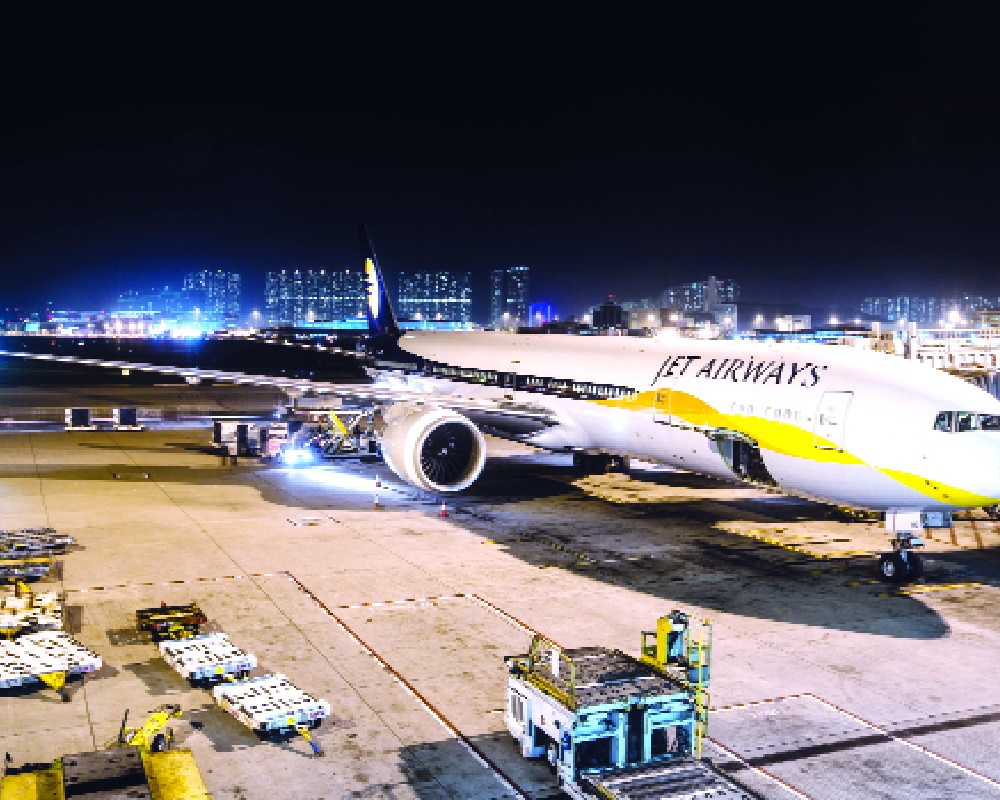
The police stated that the shooters possibly belonged to one of the gangs that operated in the city. With the brutal and public killing came the hastened end of East-West Airlines which, like Wahid, died an unsung death. Started in 1993, the airline was history by 1996. Interestingly, in 1993, Naresh Goyal promoted Jet Airways, which later emerged as the most successful airline in India. More than two decades later, Jet crashed, was declared bankrupt, and sold off to a new buyer as part of the insolvency exercise.
Goyal, who worked for years in the travel agency business, started his career in East-West. Back in the early 1990s, Jet and East-West were rivals. With the demise of the latter, Jet became an even stronger player in the domestic market. There is more of history, when one talks about the travails and troubles of the Indian aviation industry, and its private and state-owned players. These remind us of the situation that IndiGo finds itself in today.
In 1995, the Tata Group tied up with Singapore Airlines, one of the best-known, and arguably one of the best airlines in the world, to launch a domestic airline to ply on both local and international routes. Incidentally, the Tata Group was the promoter of India's national carrier, Air India, which was later taken over by the Government, merged with the state-owned Indian Airlines, and then privatised and sold to the same group. There were speculations and allegations, though unproven, that Jet was responsible for the non-take-off of the Tata-Singapore Airlines venture.
So successful was the lobbying by Jet in preventing the entry that there was a time when the then chairman of Tata Group, the late Ratan Tata angrily spoke about vested interests that were damaging the Indian aviation sector by blocking worthwhile investments from gold-plated firms like Singapore Airlines. In any case, the Tatas had to wait for more than two decades before it could enter the Indian airwaves with its proposed venture with Singapore Airlines. Vistara was launched in 2016, and the Tatas later took over Air India.
There are several other examples of major engine failures in the aviation sector. Most of us may not remember a relatively-unknown NEPC Airlines, which belonged to NEPC Group that specialised in non-renewable energy. The background of the promoters, and the source of the finances were questionable, and the airline died a quiet death a few years after it launched the operations. Around the same time, there was the famous or notorious Subrata Roy of the Sahara Group, who decided to jump into the cockpit. Sahara Airways, in retrospect, seemed more like a pomp-and-show business aimed to satisfy the late Roy, rather than a serious effort.
As the passenger and freight market grew, Captain Gopinath launched Air Deccan, possibly the first low-cost airline in the country. Since the launch in 2003, it proved to be a major success as it offered flight tickets at amazingly affordable prices. IndiGo entered the fray as another low-cost operation in 2006. There were two promoters. Rahul Bhatia was associated with the travel agency business, and Rakesh Gangwal, who lived in the US, was a known expert in the aviation sector. Of course, not to be outdone, the flamboyant Vijay Maliya launched Kingfisher Airline.
Giving this short, and summarised history of private aviation in India is not to recap past events. It is to pinpoint a major highlight, trend, and pattern. In most cases, possibly in every case, the most successful private player at any given point in time, or the upcoming ones that dreamed of flying high, either crashed, or were sold off. We know about Jet and East-West, as well as NEPC. Jet took over Sahara, and Kingfisher gobbled Air Deccan. Later, Kingfisher went out of business, and took down Mallya, and his spirits with it.
IndiGo may survive the current problems, and controversies, but its credibility has taken a huge hit. Till date, Captain Gopinath accuses that the promoters of IndiGo sabotaged Air Deccan by mishandling the latter’s backend Internet-based operations. When Kingfisher hit air pockets, it died a messy death in 2012 with thousands of non-refunded canceled tickets, hundreds of employees who found themselves out of jobs, and without salaries for months. Mallya left India in 2016, and remains a fugitive in the UK.
Questions were repeatedly raised about the finances behind many successful airlines. East-West’s Wahid was believed, rightly or wrongly, to have links with the underworld. Jet’s money initially came through the Isle of Man, which is known for banking secrecy laws. Mallya was accused of siphoning off banks’ money from his ventures. Jet’s Goyal, once celebrated as the hero of Indian aviation, was arrested by the Enforcement Directorate for money laundering, and possible bank fraud at an old age. It was a sight to watch the pitiable condition of Goyal pleading for bail.
Months before the IndiGo debacle, Gangwal, the co-founder who fought with his previous partner, and exited the airline, sold a huge portion of his and family’s existing stake. Although this is in the realm of speculation, one can question whether Gangwal knew what was about to happen. To be fair, he had charged that the airline was being mismanaged, and could go down under any time. This was the reason for his tussle with Bhatia. But finances, arrogance, overconfidence, and hubris are only some of the factors why private and state-owned players fail to remain in the air for too long.
The author has worked for leading media houses, authored two books, and is now Executive Director, C Voter Foundation; views are personal