Op Sindoor: Forces were ready for ground ops
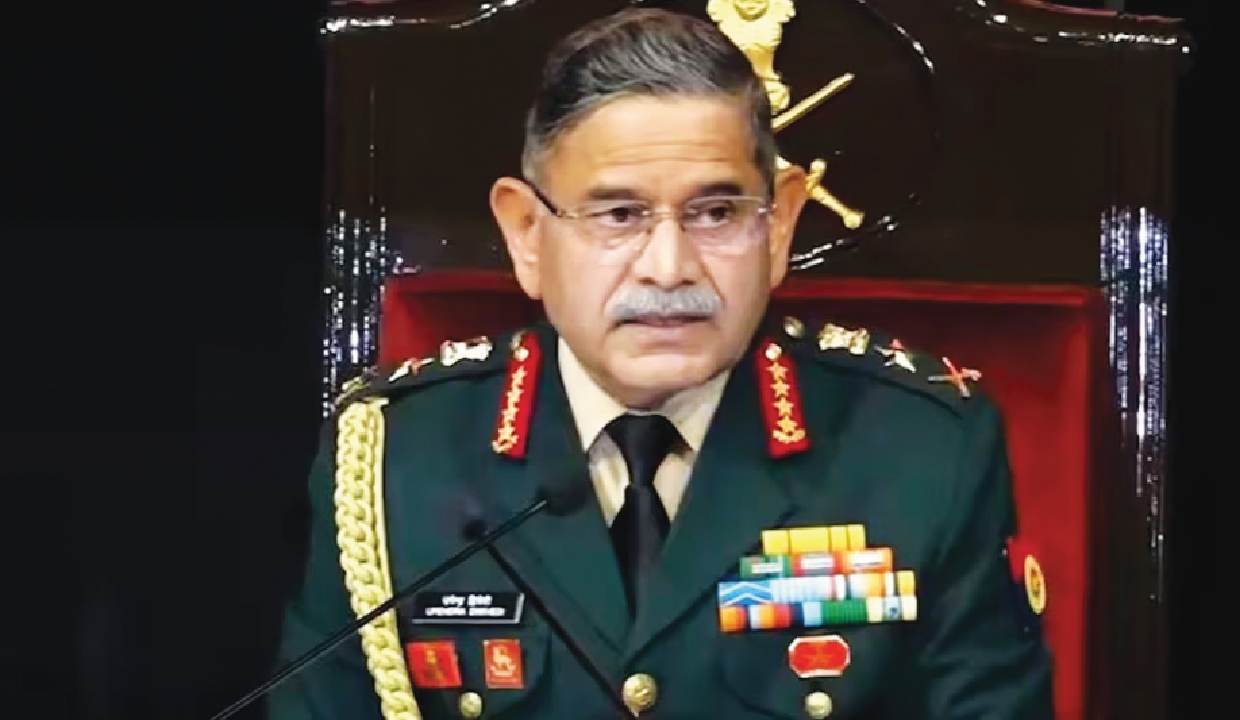
Armed forces were fully geared up to launch ground operations if Pakistan tried any misadventure during Operation Sindoor last year, Army Chief General Upendra Dwivedi revealed here on Tuesday.
He also mentioned key turning points, including the coordinated mobilisation of three Services and “certain orders” forced Pakistan, which suffered huge losses during Operation Sindoor, to seek a ceasefire with India on May 10 last year. Indian military strikes started on May 7.
Addressing a press conference here ahead of the Army Day, General Dwivedi revealed that a set of “certain orders” were given to the armed forces to prepare for any eventuality if the India-Pakistan conflict escalated.
“On the morning of May 10, certain orders regarding what needed to be done if the fight escalated were issued to all three-armed forces. The message of what would happen if the fighting continued was understood by whoever needed to understand it,” he said, adding that he could not fully reveal everything in public.
The Army chief said the intent behind those orders was clearly conveyed through ground realities. Pakistan, he said, had access to satellite imagery that showed the movement of Indian naval assets, strike corps and aircraft. “When they connected the dots, they realised that it was the right time to stop the fight,” he said, adding that Pakistan soon contacted India through Director General of Military Operations (DGMO) Lt General Rajiv Ghai to seek a ceasefire understanding.
General Dwivedi said the main turning point was the successful precision strikes on terror camps in Pakistan and Pakistan-Occupied Kashmir (POK). Referring to the initial phase of the operation, he said the 22-minute strikes on terror targets shook the “decision-making cycle on the other side,” while referring to Pakistan without naming it. “They were shaken and took time to understand what had happened. Since they could not comprehend it immediately, they resorted to throwing stones and firing drones and missiles — whatever they had at their disposal,” the Army chief said.
He said those actions reflected chaos, panic and mismanagement within the Pakistani establishment. “They could not understand what was happening. There was complete confusion,” the Army Chief said.
General Dwivedi stressed that India responded in a calibrated manner, while underlining that New Delhi did not intend to escalate the conflict further. “We gave a measured response. We did not want to push the fighting forward. We achieved the politico-military aim of the operation,” he said.
He also said Operation Sindoor was the “best example of tri-service synergy under a clear-cut political directive and full freedom to act or respond.”
The Army Chief said the decision to respond decisively after the Pahalgam attack was taken at the highest level and that the operation was planned and executed with precision. Making these assertions, General Dwivedi said, “In those 88 hours, you saw that the Army’s mobilisation to expand the conventional space was such that if Pakistan made any mistake, we were fully prepared to launch ground operations.”
The Army Chief noted that earlier assessments suggested that the space for conventional operations was shrinking, with conflicts potentially escalating rapidly from sub-conventional to the nuclear domain.
However, he said India’s response during Operation Sindoor demonstrated a different reality on the ground.
“This time, the action we took — especially the kind of firing that took place in Jammu and Kashmir and the way we addressed it — showed that we expanded the conventional space,” he said, adding that Indian forces eliminated around 100 Pakistani personnel during the course of the operation.
India launched Operation Sindoor on May 7 in response to a deadly terror attack in Jammu and Kashmir’s Pahalgam on April 22, which was carried out by The Resistance Front, a proxy of Pakistan-based terror group Lashkar-e-Taiba (LeT). The Army chief said Operation Sindoor, which was launched to target terror sites in Pakistan and Pakistan-occupied Kashmir (PoK), is on and warned Islamabad that any “future misadventure” will be “dealt with effectively”. Underlining synergy between the three Services, General Dwivedi said, “Operation Sindoor was conceptualised and executed with precision. Through 22 minutes of initiation on May 7 and an orchestration that lasted 88 hours up to May 10, the operation reset strategic assumptions by striking deep, dismantling terror infrastructure, and puncturing the longstanding nuclear rhetoric,” he told reporters.
General Dwivedi said that since the ceasefire was announced, the situation along the western front and in Jammu and Kashmir “remains sensitive but firmly under control”.
On the broader security environment, General Dwivedi pointed to a sharp rise in armed conflicts worldwide over the past year. “These global shifts underline a simple reality — nations that stay prepared prevail. In this backdrop, Operation Sindoor demonstrated India’s readiness, precision and strategic clarity,” he said.
He also acknowledged the role of multiple national stakeholders in the operation, including central armed police forces, intelligence agencies, civic bodies, State administrations and several ministries such as the Ministry of Home Affairs and the Railways.