New scheme on welfare shelf
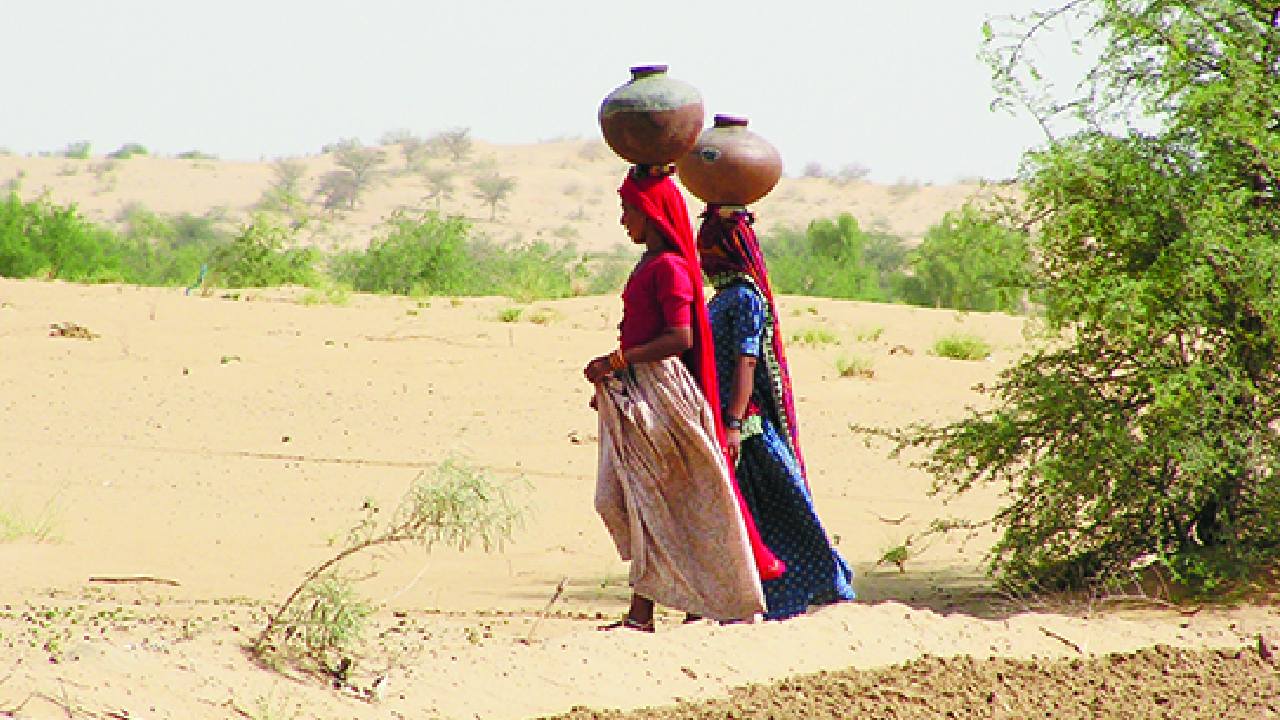
Ruling regimes have a tendency, which is logical from an electoral perspective, to launch newer and grander welfare schemes in succession to keep the voters impressed. Over the past 11 years, we have witnessed the importance of Swachch Bharat, Ayushman Bharat, JAM, and other forms of milk, honey, and butter. One gained prominence for a couple of years, drifted into the background, only to be overtaken by a new one, and so it went on and on. Given the budget allocations for 2026-27, it seems that the new avatar of the old MGNREGA, the rural employment guarantee scheme, or VB-G Ram G, is likely to emerge as the ‘showcase’ welfare scheme in the future. According to an analysis by PRS Research, the allocation is more than INR 95,000 crore, or more than INR 88,000 spent on MGNREGS in 2024-25. The 2026-27 allocation accounts for 40 per cent of the rural development department’s budget.
Given the controversy surrounding the change in name, which was raked by the Opposition, and positive spin by the ruling regime related to change in the norms, the Government will need to prove that G-Ram-G is a better, more efficient, and more productive scheme. One of the ways is to raise the central budget and, if possible, expenditure, if revenue receipts go up, to scotch the charges that the new version will allow the Centre to spend less, and force the states to contribute more. This year, the allocation for MGNREGS was a mere INR 30,000 crore, or two-thirds less the revised estimates in the previous year. This implies a possible conscious effort, or a consequence of lower revenue receipts, which nudged the Government to drastically reduce the expenditure. One need not forget that free dry rations and MGNREGA proved to be saviours in terms of welfare schemes in the post-pandemic period. The latter enabled income earnings for millions who lost urban jobs, and were forced to trudge back to their home towns and villages.
According to PRS, there are other aspects of MGNREGA that the ruling regime wishes to expose to prove that their version is much better. In the older scheme, wages accounted for 70 per cent of the overall spend. Material costs formed another 26 per cent. The Centre accounted for 90 per cent of the total expenditure, including 20 per cent on materials. In the last decade, the average annual employment per household under the scheme was 48 days, instead of the promised 100 days. “Less than 10 per cent of the… households complete 100 days…. Of the 70 million households that demanded work between 2017 and 2025, which was mandated to be fulfilled as per the old scheme, 60 million got work,” states a media report. Critics argue that the older version was a failure because minimum wages were not always paid. Of the 31 states and UTs, this was the case in 20, as per PRS Research.
Under G-Ram-G, the ruling regime will desire to better the metrics, which are updated under the new rules. The new Act offers guaranteed work for 125 days a year, instead of 100 days. The expenditure ratio in most states, apart from those in the Himalayas and North-East, will change from 90:10 to 60:40, which will imply a higher burden on the states. According to the Opposition, this will limit the overall expenditure on the scheme as the Centre will reduce its exposure, and most states, given their precarious financial state, will find it difficult to cough up money to part fund it. If the states do have the money, the non-BJP-ruled ones may wish to spend on local schemes, rather than a central one. The BJP-ruled ones can play around with respective expenditures depending on the political and economic needs. The ruling regime will wish to better the wages too to send a strong message.
For the BJP, this is imperative and necessary. Apart from the political criticism, the issue has reached the courts. A PIL in the Madras High Court cites several reasons to disband G-Ram-G, and go back to MGNREGA. The petition states that the older scheme was one of the world’s largest social security initiatives, which was studied and hailed by global entities. Experts acknowledged its transformative nature. Hence, a change is unnecessary. In addition, as mentioned above, the burden on the states will go up, and they may not be able to finance the scheme. G-Ram-G has bid “goodbye” to one of the most crucial facets of MGNREGA, which gave greater autonomy to the village Panchayats. This was in accordance with constitutional norms, which are gone under the new avatar. The Centre, as per Section 4 of the new Act, will “determine the state-wise normative allocation of work… based on objective parameters.” In addition, the states can select the beneficiaries from the areas pinpointed by the Centre.
Of course, the states, which will finance 40 per cent of the expenditure, have certain flexibility and freedom. But they too have inbuilt legal caveats. For example, they can follow local laws and rules to provide unskilled manual jobs but the financial assistance will be decided by New Delhi, and cannot exceed the entitlements under G-Ram-G. Although the states can formulate rules under the new Act, the rules must “fix the eligibility conditions, procedure for payments to the beneficiaries, maintenance of accounts and so on strictly as per the provisions of the (central) Act.” The PIL insists that these and other provisions in the new Act, eight in total, need to be declared “null and void,” as is the case with Section 37, which states that MGNREGA (and its rules) “stands repealed from the date when the Centre decides to do so through the issuance of an official notification.”
In the future, the legal tussles will accompany the political ones, even as civil right activists and other observers keep a tab on the socio-economic benefits of G-Ram-G compared to MGNREGA. Given the pains that the Centre took to change the name, and introduce new norms for the better, as it claims, the ruling regime will try hard to prove itself correct. The success or failure of G-Ram-G can tip the forthcoming state elections across constituencies. It may even have a huge impact on the national elections, if the budgetary allocations, and actual expenditure remain high, and keep growing every year. Since many of the earlier welfare schemes have been pushed to the background for various reasons, and some of the new ones faced official criticism, including from the Comptroller and Auditor General, G-Ram-G may be the scheme that retains the BJP in power.