New book ‘When Branding Met Movies’ launched at World Book Fair
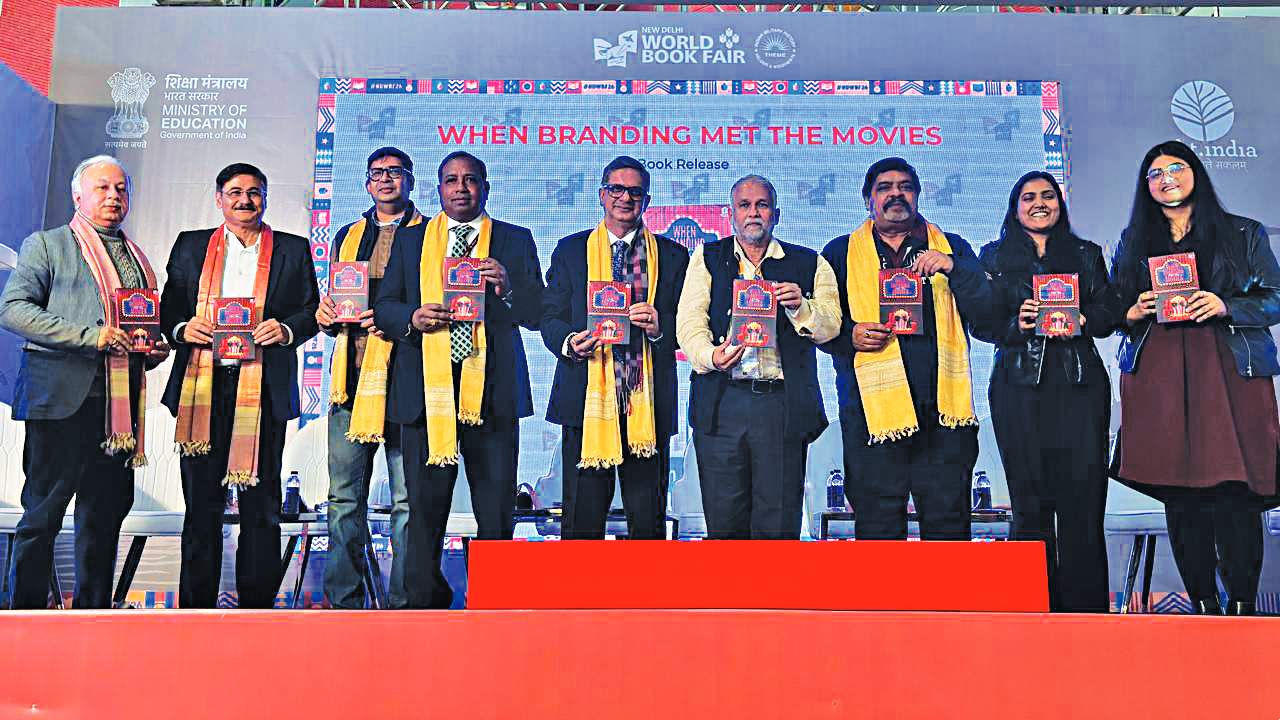
What makes a film linger in public memory long after the credits roll? Why do some movies evolve into cultural movements while others quietly fade away? These questions lie at the heart of When Branding Met Movies, a new book launched on Monday at the World
Book Fair. Authored by Chaitanya Prasad, Zoya Ahmad, and Vaishnavie Srinivasan, the book explores the powerful intersection of cinema and branding, examining how films increasingly transcend storytelling to become immersive cultural experiences. Published by the National Book Trust (NBT), the book offers a fresh and accessible perspective on the forces that shape cinema’s lasting impact.
Drawing examples from Bollywood, Hollywood, regional cinema, and independent films, `When Branding Met Movies’ takes readers through what the authors describe as “the magic beyond the script.” It looks at how star personas, filmmakers’ identities, production houses, fashion, film
festivals, social media strategies, and marketing ecosystems together create cinematic recall. As the authors note, cinema today goes beyond entertainment—shaping emotions, memory, and cultural identity.
The book launch was followed by a discussion attended by senior policymakers and film industry leaders, including C Santhil Rajan, Joint Secretary, Ministry of Information and Broadcasting; Dr Ajay Nagabhushan, Joint Secretary (Films), Ministry of Information and Broadcasting; Dheeraj Singh, Vice-Chancellor, FTII Pune; filmmakers Utpal Borpujari and Ajay Kumar; Milind Sudhakar Marathe, Chairman, National Book Trust and Colonel Yuvraj Malik, Director, NBT.
Emphasising that images and words are inseparable, the speakers noted that perspectives from communication and branding enrich film discourse. Cinema was described as one of the few shared cultural experiences in India that brings diverse audiences together—allowing viewers to laugh, cry, and emotionally inhabit lives on screen.
The panel also underlined the responsibility filmmakers carry in representing societies truthfully, given cinema’s power to shape perceptions, especially in an era where global films and series allow audiences to travel across cultures subconsciously.