NDMC launches intensive sanitation campaign
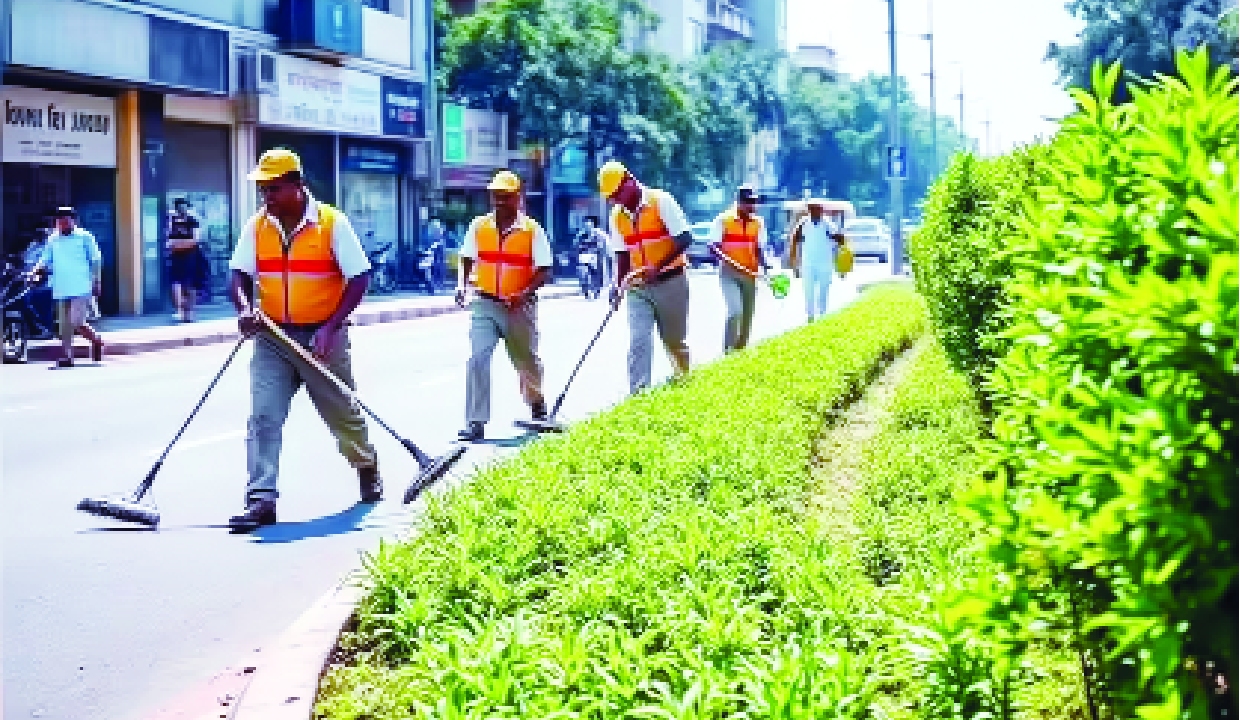
The New Delhi Municipal Council (NDMC) on Monday launched an intensive sanitation campaign across its jurisdiction to make the Capital area clean, green, and dust-free.
NDMC has deployed about 1,574 sanitation workers to carry out cleaning and waste management activities under the drive.
The campaign covers a wide range of tasks, including the removal of garbage and construction debris, the cleaning of parks, underpasses, schools, Government buildings, and places of worship.
Announcing the drive on March 9, NDMC Chairman Keshav Chandra directed senior officials to closely monitor sanitation operations and ensure effective implementation across all sanitation circles.
As part of the campaign, NDMC has appointed 14 heads of departments as nodal officers, each responsible for supervising sanitation activities in one circle. These officers will oversee field operations, coordinate staff deployment, and ensure daily monitoring and reporting.
The chairman has also started visiting one sanitation zone every day to review on-ground conditions and ensure improvements in hygiene and cleanliness across the NDMC area. Officials said the campaign aims to strengthen waste management, reduce road dust, and improve the overall urban environment in the national Capital’s central administrative district.
One of the major challenges during this season is the large quantity of dry leaves falling from avenue trees. According to NDMC data, about 43 tonnes of fallen leaves are collected every day during the leaf-falling season. These leaves are gathered from roads, markets, footpaths, and green belts.
The collected leaves are transported to the waste-to-compost plant in Okhla, where they are processed into organic compost. The compost is later reused for horticulture and maintenance of green areas in the city. To manage leaf collection and waste transportation, the civic body has deployed eight open trucks, five hywa trucks, and seven compactors.
NDMC also handles a total average waste load of around 310 tonnes per day. Out of this, about 246 tonnes is dry waste that is sent to waste-to-energy facilities, while approximately 64 tonnes of wet waste and horticulture waste are processed for composting.
Mechanised cleaning has also been intensified as part of the sanitation drive.